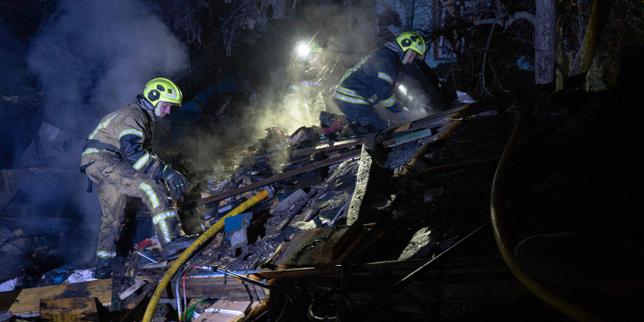
Headline says 600 drones aimed at Moscow. Fifteen injured in Kyiv.
Pulse spikes. Thumb hovers. Another live ticker telling you the sky is falling.
Stop falling for it. Raw drone counts in modern air war are the cheapest, noisiest vanity metric in defense journalism. A headline claiming hundreds of unmanned aerial vehicles launched toward a capital sounds apocalyptic. Usually, it tells you very little about what actually survived air defenses, what hit a high-value node, and what was simply cheap foam, decoy chaff, or long-range one-way attack munitions flying hundreds of kilometers into layered point defenses.
Live-blog coverage loves big numbers. Big numbers keep tabs open. Big numbers also confuse launch volume with kinetic effect, and treat a wounded civilian population in one capital and an incoming swarm toward another as symmetrical proof of escalation. They are not. They are symptoms of an attrition war where both sides are burning industrial capacity to force the other side to spend expensive interceptors on cheap airframes.
I have spent years studying modern air-defense economics, defense procurement, and crisis reporting, and I have watched newsrooms and analysts blow credibility every single week by treating raw launch figures as battle damage assessments. When a mayor announces hundreds of inbound drones, that is an operational warning and a political signal—not a verified tally of impacts. Confusing the two turns serious readers into doomscrollers.
Why "600 Drones" Is the Wrong Question to Ask
When you read that more than 600 drones were launched toward Moscow while fifteen people were injured in strikes on Kyiv, your brain wants a clean scoreline. Who hit harder? Who lost control of the airspace? Who is winning the night?
Wrong questions.
In high-intensity conflict, a "drone" is not one weapon. It ranges from a tiny reconnaissance quadcopter or loitering munition to a long-range one-way attack airframe carrying a warhead across hundreds of miles, all the way down to decoys designed purely to light up radar screens and drain interceptor magazines. Lumping 600 launches into one dramatic number without separating decoys, intercepted targets, downed debris, and actual impacts is like counting every shot fired at a shooting range and calling each one a bullseye.
Let's define the terms cleanly so we stop talking past each other:
- Launch count is how many airframes left the rails or runways. It measures industrial output and salvo size, not success.
- Intercept / suppression includes kinetic kills by surface-to-air missiles, guns, or interceptor drones, plus electronic warfare spoofing or GPS jamming that knocks targets off course.
- Terminal effect is what actually detonates on or near an intended target—or falls as burning wreckage onto a street or building.
The Cost-Exchange Trap Nobody Wants to Admit
Here is the real reason mass drone waves keep happening despite heavy air defenses. Air defense is an economics problem before it is a physics problem.
A long-range attack drone may cost a fraction of a modern surface-to-air interceptor missile. Even if air defenses shoot down 80% or 90% of an incoming wave, the math stays brutal if the defender has to fire two expensive missiles per target—or if the attacker sends enough volume to saturate sensors, exhaust crew fatigue, and force air defenses to reveal their positions.
Imagine a scenario where an air-defense battery faces a wave of 100 cheap one-way drones and has only 40 medium-range interceptors ready in that sector. Even if every single interceptor hits its mark, 60 drones still make it past that layer to short-range guns, electronic warfare, or the target itself. That is why raw launch totals make headlines: they look like overwhelming force even when interception rates are high.
Classical airpower theorists from Giulio Douhet to John Boyd argued in different ways about shock, morale, and observing-orienting-deciding-acting faster than the opponent. Modern drone warfare twists Boyd's OODA loop into a grind. If a defender has to constantly re-route radars, scramble patrols, shelter civilians, and ration scarce munitions every few nights, the attacker extracts value even when half the swarm never reaches its aiming point.
What Live-Blog Headlines Miss About Kyiv and Moscow
Compare the two halves of that competitor headline again. Six hundred drones launched toward Moscow, according to the mayor. Fifteen injured in strikes on Kyiv.
On the surface, that reads like a tit-for-tat exchange. Look closer and the mechanics diverge sharply.
First, a statement from a city official about hundreds of drones heading toward a massive metropolitan region reflects early-warning tracking, regional air-defense alerts, and political messaging. Major capitals sit behind concentric rings of radar, electronic warfare, and layered air defenses. Detecting or engaging hundreds of drones across a wide operational arc is very different from having hundreds of warheads punch through downtown defenses.
Second, fifteen injuries in a major city from strikes—which in modern aerial campaigns routinely involve a mix of drones, cruise or ballistic missiles, and falling interceptor debris—points to another uncomfortable truth of urban air war: you do not need a massive penetration rate to cause human harm or force emergency shutdowns. A single drone knocked off course by jamming, or a piece of falling wreckage from an intercept over a populated district, can injure people, spark fires, and knock out power infrastructure.
Three Misconceptions Fueling Bad Analysis
- "A massive drone launch means air defenses failed." False. High launch counts often coincide with high intercept counts. You cannot judge a goalie solely by how many shots the other team took; you have to look at saves, rebounds, and what got past the line.
- "Bigger salvos equal decisive breakthroughs." False. Wars of attrition are rarely won by one dramatic night unless those strikes collapse a critical production node, command hub, or energy grid over time. Spikes happen; structural collapse is much rarer.
- "Civilian injuries in one city and drone alerts in another mean equal impact." False. Compare the operational effect of sustained strikes hitting grid substations, logistics, or residential blocks against long-range harassment or decoy-heavy swarms. Symmetrical headlines hide asymmetrical realities.
Answering the Questions People Actually Type Into Search
When a major strike night hits the news, readers rush to search engines with the same predictable questions. Most of the answers online are either breathless speculation or vague platitudes. Let's tear into the real ones.
"Does a wave of 600 drones mean air defenses are overwhelmed?"
Not automatically. It means the attacker is testing capacity, saturating sensors, or trying to force high expenditure of interceptors. Air defenses are "overwhelmed" only when they run out of layered options—radars blinded, magazines depleted, electronic warfare defeated—and high-value targets start taking clean hits at scale. Until you see verified damage reports matching the scale of the launch, treat "600 launched" as an input, not an outcome.
"Why do strikes keep happening if air defenses intercept so many?"
Because stopping 85% of a threat is not the same as stopping 100%, and even a 100% physical intercept still costs money, crew hours, and wear on equipment. If sending cheap drones forces the other side to burn pricey missiles, stay on alert, and divert resources to protect cities and infrastructure, the sender keeps pulling the trigger. Attrition is a ledger, not a single battle.
"How should ordinary readers track a major strike night without losing their minds?"
Wait twelve to twenty-four hours before forming a strong view. Live updates are great for knowing where sirens are wailing right now; they are terrible for knowing what actually happened strategically. Watch for three things after the initial noise settles:
- Independent or verified damage confirmation rather than raw launch claims.
- Target category: military logistics, energy/industrial sites, or urban/civilian areas.
- Interceptor and munition burn: whether the night points to sustainable routine pressure or a major escalation in payload weight and speed.
Where My Contrarian Take Can Burn You
I am telling you to discount raw drone counts and ignore live-blog adrenaline. Fair enough. Now let me tell you where that skepticism can bite you if you take it too far.
Downside one: Dismissing volume can blind you to saturation. Even cheap, low-payload, or decoy drones matter when they force air defenses to fire early, reveal radar emissions, or exhaust stockpiles before heavier missiles arrive. Treating a 600-drone wave as "just noise" is how defenders get caught short on the fifth night of a rolling campaign.
Downside two: Treating strikes as "mere attrition" can downplay human and economic toll. Fifteen injured is not a statistic to someone in a hospital bed or a family staring at a blown-out window. And even minor strikes on transport, power, or manufacturing compound over months. Analytical detachment should never turn into moral numbness.
Downside three: Fog of war cuts both ways. Just as early launch numbers can be inflated or incomplete, early claims that "everything was shot down" or "nothing hit" are often premature too. Healthy skepticism applies to both sides' narratives, not just the dramatic ones.
What You Should Do Instead of Refreshing the Live Feed
If you want to understand modern air warfare—or make sharper decisions in defense, risk, business continuity, or geopolitical analysis—change how you consume these events.
- Audit the denominator. Whenever you see a big number of launched drones or missiles, immediately ask: How many were decoys? How many were intercepted? How many actually reached their target? No denominator, no serious analysis.
- Track cost per effect, not headlines per hour. Ask who is spending more per unit of real operational impact tonight, and who can sustain that tempo next month.
- Separate tactical shock from strategic shift. One massive salvo is a tactical event. A sustained pattern of strikes degrading a specific capability over weeks is a strategic trend. Do not confuse a thunderstorm with climate change.
Next time a headline screams that 600 drones are flying toward a capital and people are injured in another, close the live ticker, check the math, and watch what actually breaks.



