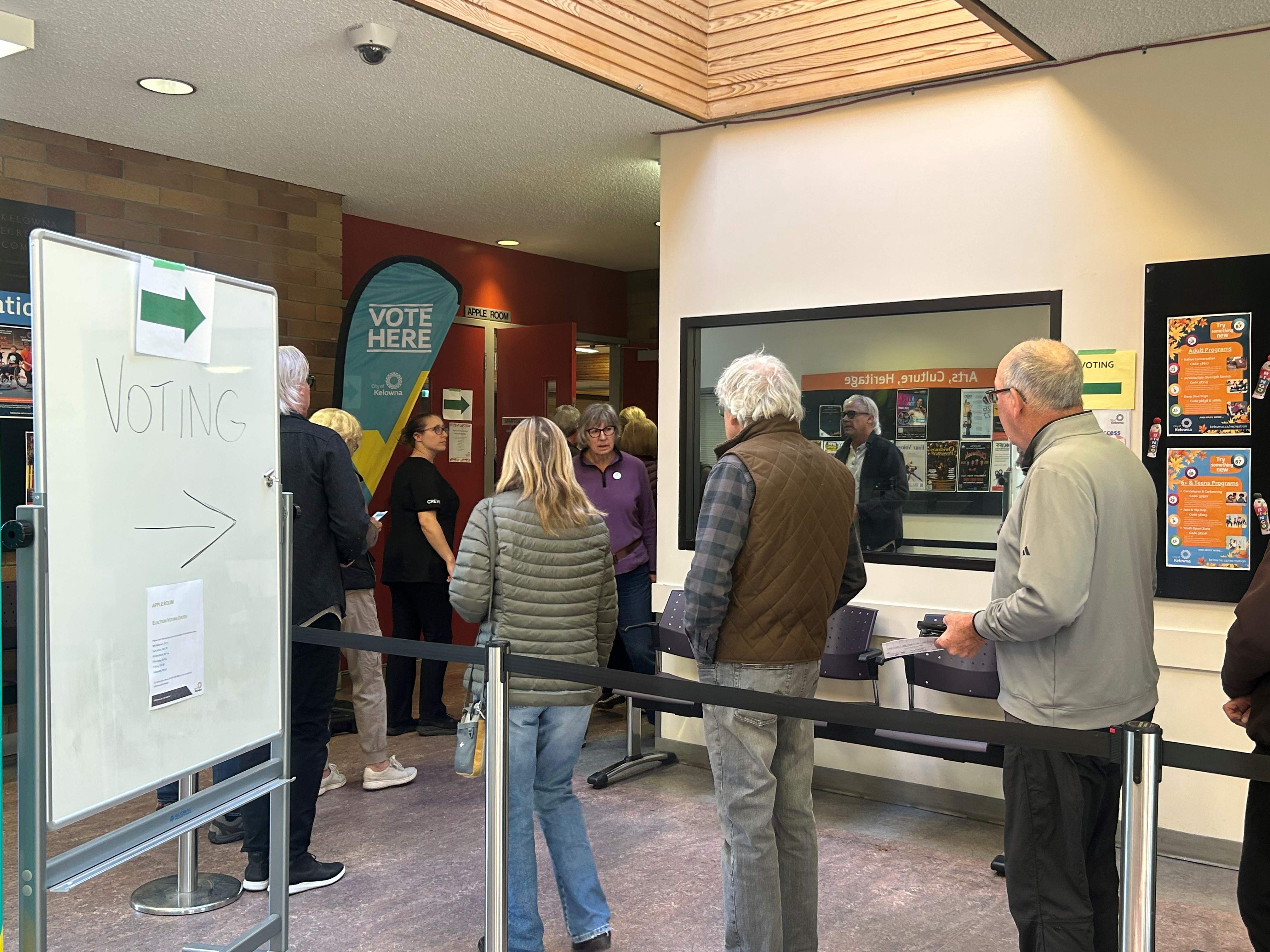
Record early ballot counts do not automatically rescue low municipal turnout; in Kelowna, a nearly 50 percent surge in advance voting during the 2026 civic election produced only a modest lift in total participation, rising from roughly 30 percent in 2022 to 31.4 percent across roughly 124,000 eligible voters.
Standard coverage of advance polls treats rising early numbers as an unambiguous sign of civic momentum. That framing confuses channel substitution with net turnout expansion. A voter casting a ballot on an advance day instead of general election day changes when the vote arrives in the administrative queue, not necessarily whether a non-voter enters the electorate. Evaluating election participation requires separating timing shifts from true baseline growth, identifying friction points in municipal ballot access, and tracking how early mobilization shapes campaign strategy.
Deconstructing the Standard Advance Poll Narrative
Typical pre-election reporting on Kelowna advance voting relies on a thin chain of logic: officials report high early ballot tallies, compare them to prior cycles, and ask whether early enthusiasm will spill over into general voting day. That structure captures surface-level movement while omitting the mechanics that govern municipal turnout.
Three analytical blind spots weaken conventional coverage:
- Conflating volume with reach. Raw counts of advance ballots tell you how many ballots were processed early, not what share of the eligible population is participating or whether those voters would have shown up on Saturday anyway.
- Treating turnout as a single mood ring. High advance volume can reflect convenience preferences, weather or schedule planning, institutional streamlining, or concentrated campaign outreach rather than a uniform wave of civic excitement.
- Ignoring administrative throughput. Election performance depends on queue management, voter list accuracy, staffing capacity, and identification rules—operational variables that rarely appear in headline-driven horse-race framing.
The Turnout Accounting Framework
To analyze Kelowna's advance voting rigorously, separate total ballots cast into two distinct mechanisms: substitution and expansion.
Substitution occurs when an habitual or likely voter shifts from general voting day to an advance poll day. In Kelowna's 2026 municipal cycle, more than 18,000 residents voted before general voting day—a nearly 50 percent jump from the prior election—out of 38,976 total ballots cast. Even with that sharp climb in early ballots, overall turnout moved by roughly one percentage point over the 2022 baseline of about 30 percent. That gap demonstrates that a substantial portion of early voting came from voters redistributing their timing rather than adding tens of thousands of brand-new participants.
Expansion occurs when friction drops low enough—or salience rises high enough—that marginal voters who usually abstain decide to cast a ballot. In 2026, total participation reached 38,976 voters, representing more than 4,000 additional voters compared with 2022. That real gain matters in local elections, where council and school trustee races can turn on narrow margins, yet it remains small relative to the roughly two-thirds of eligible Kelowna residents who still did not vote.
In economic terms, voting behaves like a low-stakes purchase under time and information costs. Anthony Downs's calculus of voting frames participation around perceived benefits, probability of affecting an outcome, and direct transaction costs. Municipal elections typically carry lower perceived individual stakes than provincial or federal contests, so even modest reductions in transaction cost—such as extra advance days, campus or neighborhood polling sites, or faster check-in—can pull marginal voters across the threshold, even when they do not trigger a massive turnout surge.
Operational Friction and Administrative Mechanics
Turnout outcomes are shaped on the ground by election administration, not just campaign slogans. When voters encounter long lines, confusing eligibility checks, or inconvenient locations, drop-off rises even among motivated residents.
Voter Roll Integration and Check-In Speed
A major structural change in Kelowna's 2026 municipal election was using the B.C. provincial voters list for the first time in a civic vote, cutting paperwork and speeding check-in, with well over 95 percent of voters checking in via that list. Faster check-in reduces queue lengths and lowers per-voter service time, which directly eases bottlenecks during peak advance hours.
Staffing Capacity and Station Readiness
Advance polls compress demand into specific windows ahead of general voting day. Adequate staffing keeps lines moving and prevents early frustration from discouraging late-arriving voters. In 2026, the City received more than double the number of election worker applications compared with 2022, strengthening operational coverage across voting locations.
Identification Rules and Verification Friction
Administrative convenience has hard boundaries. Municipal voters in Kelowna must bring identification—typically two pieces showing signature and current address—to avoid delays. Any gap between a resident's current street address and their identification creates verification friction, particularly among renters, recent movers, and post-secondary students.
Why Campus and Neighborhood Sites Matter
Multi-site access across community hubs, recreation facilities, and post-secondary campuses lowers travel and scheduling barriers for distinct segments of the electorate. A single centralized poll imposes higher travel time on outlying neighborhoods and students, whereas distributed locations reduce spatial friction.
Cause-and-Effect Chains Missable in Surface Coverage
Tracking advance ballots day by day reveals cause-and-effect dynamics that single-number snapshots obscure.
First, early ballot momentum compresses persuasion windows. Once a voter casts an advance ballot, their decision is locked in before late-breaking debates, endorsements, or final-week campaign pushes arrive. Campaigns that concentrate resources only on the final 72 hours forfeit influence over the growing share of the electorate that votes early.
Second, front-loaded ballot collection changes turnout forecasting. Heavy early voting pulls ballots out of the general-day pool, which means raw general-day line lengths can look calmer even when cumulative participation is healthy. Conversely, strong early numbers can create a false sense of security if campaigns assume early volume guarantees a high general-day surge.
Third, civic engagement extends beyond the ballot itself. Participation signals can show up in parallel channels—such as election worker recruitment or community initiatives like Kelowna's 2026 resident-designed "I Voted" sticker contest, which drew more than 60 submissions across ages 10 to 71. Those activities broaden awareness and social signaling around the election, though creative engagement still cannot substitute for clear information on candidates, municipal tax and service trade-offs, and polling logistics.
Limits of Early-Voting Reforms and Strategic Playbook
Expanded advance voting is an operational improvement, not a cure-all for low local turnout. Expanding early days helps convenience-constrained voters, yet structural hurdles remain: low baseline awareness of municipal responsibilities, uneven voter list coverage among mobile residents, and documentation requirements that still trip up unprepared voters. Adding advance hours without clear voter communication simply spreads existing demand across more days.
For election administrators, campaign strategists, and civic analysts evaluating future Kelowna municipal cycles—such as the next scheduled cycle in 2030—apply a disciplined four-step sequence:
- Benchmark cumulative share, not isolated daily counts. Compare running advance totals against prior full advance periods and as a percentage of total ballots cast, rather than treating a single strong day as proof of a turnout boom.
- Audit check-in and ID bottlenecks early. Track provincial voter list match rates, same-day registration or verification delays, and peak-hour wait times on the first two advance days so staffing and signage can be adjusted before the final advance push.
- Shift persuasion and get-out-the-vote schedules forward. Align voter contact, issue messaging, and reminders ahead of advance poll openings rather than saving core outreach for general voting day.
- Separate durable turnout gains from timing shifts. After final results are tallied, evaluate net voter count and eligible-voter percentage alongside advance share to see how much of the early surge expanded the active electorate.
The strategic play for the next municipal cycle is straightforward: treat advance voting as an early-capture and throughput system, pairing pre-advance persuasion and friction-free check-in with targeted outreach to mobile and low-propensity residents so early ballot records translate into sustained, broad-based participation rather than calendar reshuffling.