The wool coat hung over the arm like an accusation of ignorance.
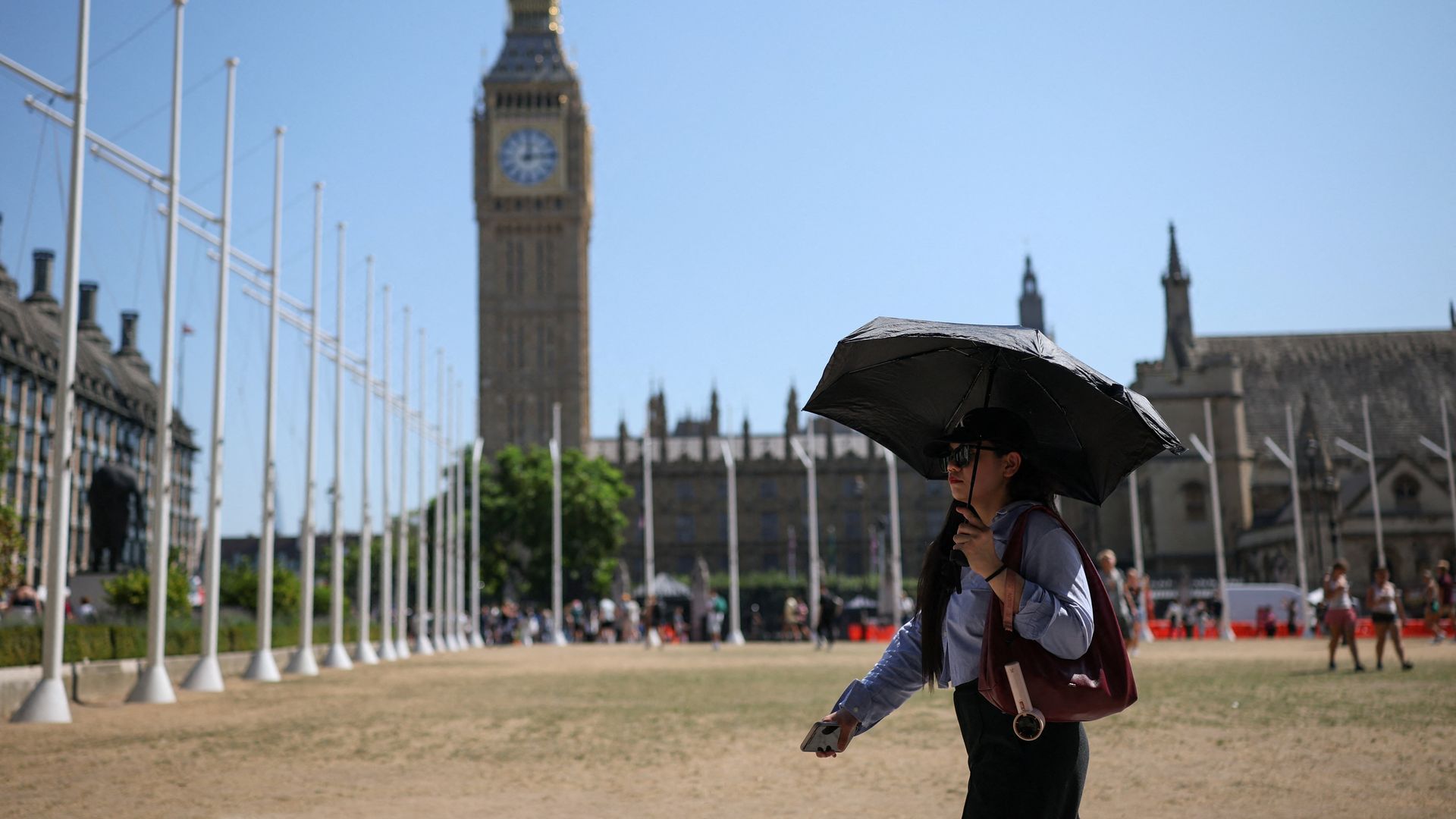
By nine in the morning, the pavement in central London was already radiating a dull, amber heat that belonged to an entirely different latitude. Commuters who had left home wrapped in scarves and quilted jackets stood near station exits, looking down at their sleeves with bewildered expressions, slowly peeling off layers as if shedding winter skin. In the parks, dew evaporated into a heavy, shimmering haze that blurred the edges of Victorian iron gates and plane trees. The air tasted of baked dust and dry grass, completely devoid of the sharp, iron-tinged bite that usually heralded this turn of the calendar.
Across the country, the numbers ticking across digital weather boards defied expectation. Thermometers in East Anglia and parts of the Midlands were climbing toward figures that meteorological archives reserved for the height of July, not the bruised, shortening days of autumn. Weather forecasters on morning broadcasts pointed at anomaly maps rendered in deep, bruised reds and fiery oranges, their voices carrying that peculiar brand of nervous cheerfulness reserved for unprecedented events. Remarkable, they called it. An exceptional plume of warm air, dragged northward from the continent on the back of a stubborn, stalled jet stream.
Words like remarkable sound polite. They sound like something you might say while admiring an unusually large pumpkin at a village fair or a particularly impressive display of autumn leaves. But meteorological anomalies of this magnitude are not polite. They are tectonic shifts in sensory reality. They are moments when the invisible architecture of the atmosphere fractures, reminding everyone living beneath it that the baseline has moved.
To understand why a spike in temperature matters in Britain, one must first understand the nation's profound, almost cellular entanglement with its climate. In this damp, maritime corner of Europe, weather is not merely a background condition; it is the primary protagonist of daily life. It dictates mood, dress, architectural design, and the national conversational repertoire. Britons do not talk about the weather because they have nothing else to say; they talk about it because it is an erratic, unpredictable tyrant that governs their existence. When that tyrant suddenly changes its character—wearing a sun hat in October or sweating through a wool suit when frost should be silvering the windshield—the psychological vertigo is immediate.
Consider Arthur.
Arthur is seventy-two years old and has spent forty of those years tending an allotment plot tucked behind a railway embankment in Northamptonshire. He is a man who knows the soil by its scent and texture, a creature of deep seasonal habit. For decades, Arthur's calendar has been written in root vegetables and frost dates. He knows precisely when to tuck the brassicas under fleece, when to harvest the last stubborn runner beans before the black rot sets in, and when the earth hardens enough to signal that winter is settling its heavy haunch over the county.
This morning, Arthur walked down the gravel path of his allotment in a faded flannel shirt, sweat already beading at the nape of his neck. His soil, which should have been damp, dark, and rich with the microbial decay of cooling autumn, was dry and cracked at the surface like sun-baked pottery. His winter cabbages looked confused. Their leaves, accustomed to the crisp shock of morning dew and bracing drafts, were limp and listless, panting in the dry midday glare.
Arthur stood leaning on his garden fork, staring down at a row of late-season spinach that was prematurely bolting, sending up thin, desperate flower stalks in a race against an invisible clock.
"They don't know what year it is," Arthur muttered to nobody in particular, wiping his brow with a calloused thumb.
That is the hidden cost of these anomalous warm spells. It is not simply about being comfortable in a t-shirt when you expected to shiver. It is the profound cognitive dissonance of a living system out of sync. Nature runs on an ancient, intricate clockwork of cues—photoperiods, soil temperatures, moisture levels, barometric pressures. When a sudden surge of heat sweeps across the land out of season, it trips the biological wires of flora and fauna alike. Insects emerge from diapause, thinking spring has somehow arrived overnight. Migratory birds hesitate over estuaries, caught between the genetic imperative to fly south and the confusing warmth of northern pastures. Trees push out second, vulnerable flushes of green leaves that will be shredded by the first genuine frost that inevitably follows.
Meteorologists explain this phenomenon through the language of pressure systems and thermal ridges. High-pressure blocks establish themselves over continental Europe, acting like massive, unmoving invisible domes. These domes trap air, baking it day after day beneath clear skies, before steering it westward on sluggish easterly currents. As the air crosses the Channel, it compresses and warms further, spilling over the English countryside like water washing over a low dam.
Yet, translating these events into dry mechanics strips them of their emotional gravity. The atmosphere is an ocean of gas we swim through without thinking, until it suddenly grows feverish.
Step away from the rural allotments and into the labyrinth of the London Underground, and the human dimension of the heat becomes visceral. Deep beneath the asphalt, the Victorian brick tunnels retain heat with terrifying efficiency. During a standard summer, these subterranean caverns are notoriously stifling, testing the endurance of millions of daily commuters. When unseasonable warmth strikes late in the year, the brickwork has had no time to cool off from the preceding months. The tunnels become thermal traps.
By four in the afternoon, the platform at Oxford Circus resembled a humid greenhouse. Office workers in tailored wool trousers and heavy blazers swayed slightly in the stagnant air, clutching iced coffees that had melted into lukewarm puddles within minutes. Faces flushed red; collars were unbuttoned with aggressive haste. A young woman sitting on a bench stared blankly at the arrival board, her damp hair clinging to the back of her neck, her breathing shallow and measured.
In these moments, the city reveals its underlying fragility. Our infrastructure is a historical artifact, engineered for a climate that existed a century ago. Buildings designed to trap heat against the bitter bite of North Sea gales now act as ovens when the ambient temperature climbs past twenty-five degrees Celsius in a month when fires ought to be crackling in hearths. Air conditioning units hum and shudder against the masonry, drawing unprecedented loads from the national grid, while city planners quietly acknowledge that the cities of the future will require entirely different vocabularies of survival.
Why do we look away from these warnings so easily? Why does an unseasonably warm autumn afternoon elicit a collective shoulder-shrug and a trip to the local beer garden rather than a deep, collective shudder?
The answer lies in human psychology. We are creatures of immediate sensory comfort. When the sun shines brightly in October, the reptilian part of our brain—the ancient survival engine that equates warmth with safety, abundance, and life—lights up with a quiet, chemical satisfaction. We sit outside on wooden benches outside pubs, pints of pale ale catching the low, golden slant of the autumnal sun, and we tell ourselves that it is lovely. We trade long-term anxiety for short-term dopamine. It feels good to shed the jacket. It feels good to feel the sun on bare arms when the calendar says you should be shivering.
We are seduced by the weather's beauty while ignoring its treason.
This is the great paradox of the climate era. The symptoms of planetary destabilization often arrive dressed in disguise. They do not always look like disaster movies—raging torrents of mud or splintered roofs silhouetted against lightning. Sometimes, they look like a perfect, cloudless Tuesday in October where the temperature hits twenty-four degrees and everyone agrees it is simply glorious weather for a walk.
The danger lies precisely in that seduction. Every time an anomalous heat event is normalized as "a lovely bonus week of summer," the baseline shifts a fraction of an inch further into the unknown. We adapt our wardrobes, we adjust our holiday plans, we find new ways to air-condition our bedrooms, and in doing so, we normalize the abnormal. We become like the proverbial frog in the slowly heating pan of water, except the water smells faintly of elderflower and beer gardens, and everyone is posting photographs of it on social media with sun-emoji captions.
By dusk, the amber glow over the London skyline curdled into a bruised, metallic purple. The temperature dropped, but grudgingly, holding onto its heat like an old stone wall after a furnace has been doused.
In his allotment, Arthur had finally put away his tools. He latched the wooden gate behind him, the padlock clicking shut with a dry, hollow sound in the cooling air. He looked back once at his rows of tired, confused brassicas, standing silently in the gathering twilight. Out there, beyond the railway line and the distant hum of the motorway, the atmosphere continued its vast, invisible choreography—locked in a dance with an ocean that was slowly losing its memory of normal.
The coat remained draped over his arm, heavy and unnecessary, a ghost from a season that was beginning to feel like a rumor from the past.