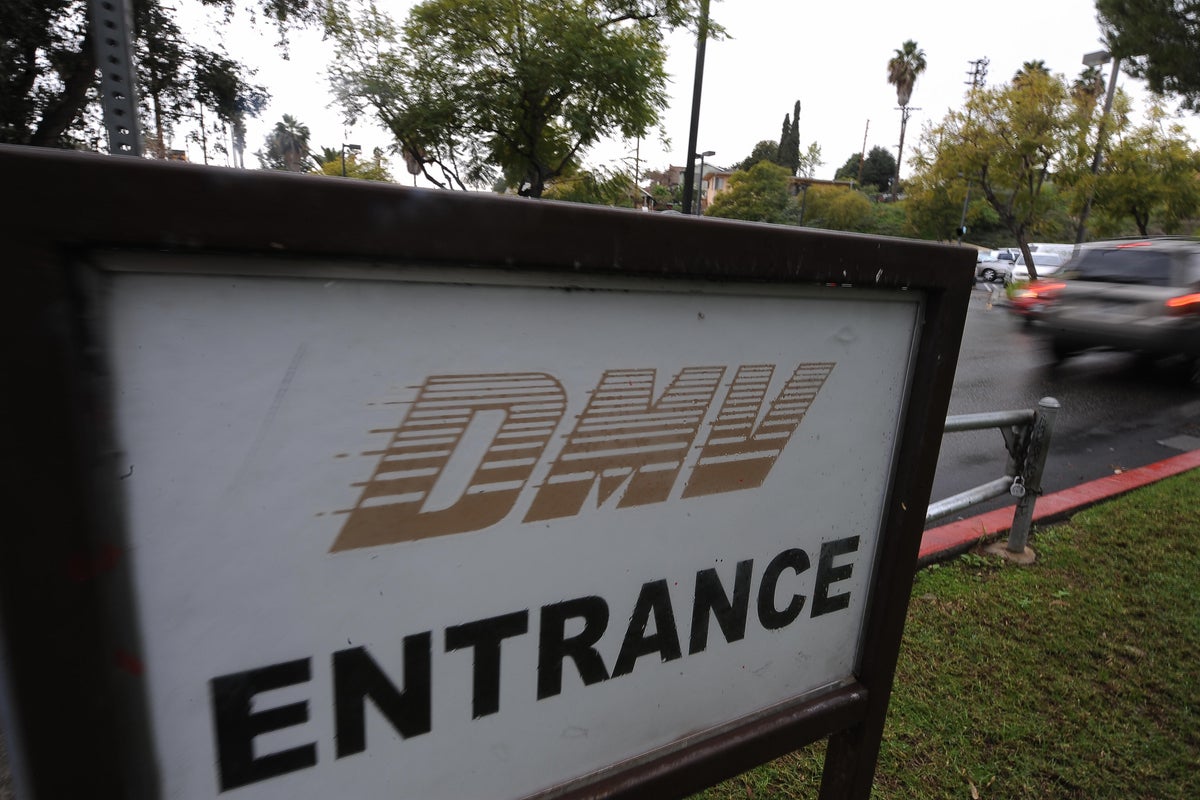
The California Department of Motor Vehicles (DMV) issued mandatory retesting notices to approximately 11,000 drivers following the detection of statistical anomalies in online knowledge examinations administered between July 2025 and April 2026. The agency's demand—requiring impacted license holders to retake and pass the written exam within 30 days under threat of administrative cancellation—highlights a critical friction point: the tension between automated fraud detection models and constitutional due process in public administration.
By evaluating the mechanism of the breach, the statistical risk of false positives, and the legal exposures generated by mass administrative actions, a structural framework emerges for how government entities must handle widespread digital compromise. In other news, read about: The Night the Medicine Ran Out in a Country of 200 Million.
The Triad of Vulnerability in Online Testing Systems
Digital transformation initiatives across state-level agencies frequently trade security controls for administrative throughput. The California DMV's remote testing environment compromised core security protocols across three primary dimensions:
- Authentication Weaknesses: Remote proctoring environments that rely on basic webcams or asynchronous identity checks lack continuous multi-factor verification. This allows third-party proxies to complete examinations on behalf of registered applicants.
- Asymmetric Information Arbitrage: Commercial syndicates monetize standardized test banks by deploying automated browser extensions, real-time screen scraping, or remote desktop protocol (RDP) tools to transmit questions to third-party test takers during live sessions.
- Latency and Pattern Homogeneity: When large clusters of test takers exhibit identical completion speeds, uniform response latency per question, or matching incorrect answer selections, it indicates the use of organized answer keys or automated script execution rather than human cognition.
While remote testing expands public access and reduces physical office congestion, omitting strict zero-trust client security architectures creates predictable vulnerability vectors. NPR has also covered this important topic in extensive detail.
Machine Learning Fraud Detection and the False Positive Dilemma
The DMV's internal monitoring flagged test results by identifying non-random statistical clusters. In risk analytics, anomaly detection algorithms flag outliers based on predefined variance thresholds. However, applying these models to public regulatory enforcement introduces administrative risks.
P(Fraud | Anomaly) = [ P(Anomaly | Fraud) * P(Fraud) ] / P(Anomaly)
Applying Bayes' Theorem demonstrates the core mathematical risk of mass notifications. If the baseline prevalence of cheating ($P(\text{Fraud})$) across the testing population is low, even a highly accurate anomaly detection model with a low false positive rate ($P(\text{Anomaly} \mid \text{Clean})$) will produce a substantial volume of false accusations relative to true positives.
When an administrative body issues blanket retesting orders based purely on statistical variance rather than conclusive proof of wrongdoing, innocent individuals suffer real collateral damage. Legitimate test takers who completed their exams rapidly due to prior preparation or familiarization are captured in the same operational dragnet as actual bad actors.
Constitutional and Administrative Due Process Deficits
The administrative execution of the retesting mandate creates substantial legal liability for the state through two primary structural flaws:
1. Shifted Burden of Proof
In standard legal and regulatory frameworks, the state bears the evidentiary burden to establish misconduct before imposing penalties or revoking privileges. The current retesting mandate inverts this relationship: the agency presumes test invalidity based on proprietary internal algorithms and requires the driver to prove competency within a strict 30-day window under threat of license revocation.
2. Lack of Algorithmic Transparency
Public sector entities deploying machine learning or statistical rulesets to alter a citizen's legal status must satisfy procedural due process requirements. Withholding the specific criteria or anomalies that triggered an individual retesting notice prevents citizens from meaningfully challenging the agency's determination.
This lack of transparency forces drivers to absorb tangible economic costs—including taken time off work, travel logistics, and potential loss of employment dependent on active driving privileges—to clear their record of an unproven accusation.
Criminal Referral vs. Administrative Remediation
By referring selected cases to local district attorneys for potential criminal prosecution while concurrently issuing thousands of administrative reevaluation notices, the DMV is pursuing a dual-track response strategy.
- The Criminal Track: Focuses on organized syndicates, commercial actors selling test-passing services, and systematic fraud rings. Criminal prosecution requires proof beyond a reasonable doubt, necessitating forensically sound evidence such as financial transactions, IP log traces, and intercept communications.
- The Administrative Track: Uses a lower evidentiary standard to mitigate public safety risks by forcing re-evaluations. However, using administrative power as a broad net creates severe operational bottlenecks at physical DMV field offices, which must suddenly process thousands of mandatory, non-walk-in appointments.
Distinguishing between malicious third-party vendors and compliant end users remains essential. Lumping casual beneficiaries or statistical outliers together with commercial criminal operations creates severe pushback from state oversight bodies and law enforcement alike.
Strategic Framework for High-Integrity Public Testing
To secure state testing infrastructure against widespread compromise without violating citizen rights, public sector administrators must implement a four-part operational framework:
- Hardware-Attested Continuous Proctoring: Replace passive, browser-based online testing with zero-trust testing software that enforces continuous biometric verification, locks down local device memory, and blocks virtual machine environments.
- Dynamic In-Person Auditing: Retain online options for lower-risk administrative filings, but implement a randomized, statistically controlled subset of mandatory in-person validation tests. This establishes a clean baseline dataset to accurately train anomaly detection models.
- Structured Evidentiary Tiers: Establish explicit criteria for administrative actions. Level 1 anomalies (minor variance) should prompt a simple randomized re-check at the next renewal cycle. Level 2 anomalies (high-confidence algorithmic flags) trigger mandatory remote re-proctoring. Level 3 anomalies (clear forensic proof of proxy or script usage) justify formal license suspension and targeted legal action.
- Transparent Administrative Appeal Paths: Provide a formal mechanism for citizens to review the specific metric underlying their flagged status, ensuring procedural fairness before executing punitive administrative actions.
State agencies must balance technological convenience with systemic security. Deploying automated detection algorithms without clear procedural safeguards damages public trust and exposes public sector infrastructure to avoidable operational and legal failures.
State regulatory bodies seeking to digitize critical licensing workflows must immediately audit their remote verification architectures and implement hardware-level client attestation before expanding online testing services.


