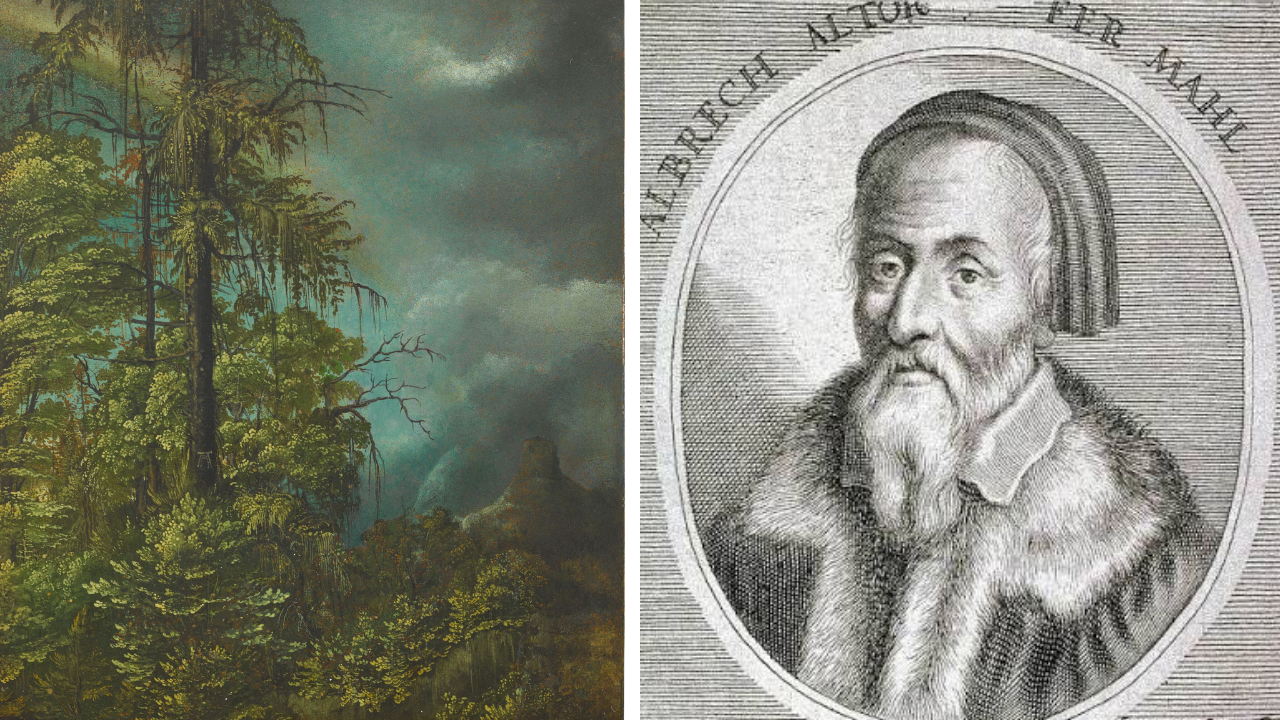
Seven decades out of public sight. That's a long time for any painting to stay quiet. When an Altdorfer landscape tied to a 1957 acquisition resurfaces with a £5 million estimate, art lovers pay attention immediately.
Most people only skim auction headlines for the big number. I think that misses the real story. Albrecht Altdorfer wasn't just another Renaissance German painter working out of Regensburg, and he wasn't painting background scenery to fill space behind saints or princes. He treated nature itself as a living, breathing subject decades before that idea felt normal.
When a work from his circle or hand sits tucked away for roughly seventy years, every detail matters. Provenance, panel wood, pigment chemistry, and stylistic brushwork all get put under a microscope. A £5 million valuation isn't handed out lightly for a small Renaissance panel, especially when attribution debates in Old Masters can swing prices wildly.
Why This Altdorfer Landscape Story Grabs Attention
Auction houses love a "sleeping beauty" story. You've probably seen dozens of them over the years. A painting hangs in a dining room or sits in a private collection for generations, then suddenly hits the market with a dramatic estimate.
Sometimes those stories are pure marketing fluff. Honestly, a lot of "rediscovered" works turn out to be workshop copies, later imitations, or over-optimistic attributions that stall in the saleroom. Other times, the provenance really is rock-solid, tracing back through documented collections to a 1957 purchase and earlier European hands.
What makes Altdorfer different from typical Old Master names is scarcity. His surviving painted oeuvre is tiny compared to contemporaries like Lucas Cranach the Elder. Any credible work connected to Altdorfer or the Danube school automatically draws intense scrutiny from museum curators, private collectors, and art historians who track every movement of early sixteenth-century German art.
The Danube School Shift in Seeing Nature
Before the early 1500s, artists usually painted trees, hills, and rivers as stage sets. Human drama stood center stage. Nature framed the action.
Altdorfer flipped that habit. In works like his famous Landscape with a Footbridge in London's National Gallery or his Danube Landscape near Regensburg in Munich's Alte Pinakothek, dense foliage, shifting light, and quiet waterways carry emotional weight on their own. Even when small figures appear, they often feel tiny against towering spruces and sprawling valleys.
Calling him a pioneer of pure landscape painting isn't an exaggeration, though historians still debate exact definitions. Some scholars point out that Altdorfer often blended religious or mythological narratives into lush environments rather than painting "pure" landscapes in the modern sense. That nuance matters if you care about accurate art history rather than catchy labels.
How a 1957 Acquisition Shapes Value and Trust
Seventy years is a neat round number to say out loud. In the art market, though, a 1957 acquisition is a real historical anchor point.
Post-war European art recovery in the 1950s had its own complex dynamics. Galleries reopened, private collections shifted, and dealers moved works across borders while restitution questions and postwar inventories were still sorting themselves out. Knowing who bought a work in 1957—and where it sat afterward—helps buyers judge both legal clarity and physical preservation.
If a painting stayed in a single collection from 1957 until today, there's a real upside. Fewer hands usually mean fewer amateur restorations, fewer harsh cleanings, and less churn through speculative sales. On the flip side, staying out of scholarly view for seventy years means art historians may not have examined the physical surface closely in decades.
What Art Experts Look at Before Bidding £5 Million
When a work carries a £5 million tag, nobody relies on gut instinct alone. Serious buyers bring in specialists who look past pretty brushwork.
- Attribution certainty: Is the work securely by Albrecht Altdorfer himself, or is it cataloged as circle of, studio of, or follower of Altdorfer? That single word on a condition or catalogue note can change value by millions.
- Support and media: Many early German works were painted on beechwood, limewood, or spruce panels rather than canvas. Panel warping, old cradles, splits, or past transfers affect both stability and price.
- Technical imaging: Infrared reflectography and pigment analysis help reveal underdrawings and distinguish original sixteenth-century paint from later touch-ups.
- Exhibition and literature history: Prior appearances in museum shows or scholarly catalogues raisonne build confidence that the work has already weathered expert inspection.
I've seen collectors get burned when they fall in love with a romantic backstory and ignore technical caveats. A great story makes a painting memorable. Verified scholarship makes it worth five million pounds.
Common Misconceptions About Old Master Rediscoveries
People outside the art world often assume a high estimate means a settled fact. That's rarely how Old Master auctions work.
First, an auction estimate is a range of educated expectation, not a guaranteed floor or ceiling. Fierce bidding between two determined collectors can push a lot past expectations, while lukewarm interest or attribution doubts can keep bidding quiet.
Second, "hidden for 70 years" doesn't always mean locked in a dark cellar like a movie plot. Often a work simply hung in a private home, country house, or family collection away from public exhibitions and auction catalogues. Still, seventy years without public exposure feels dramatic—and kinda mysterious—when the work finally steps back into the light.
Third, big headline prices for Old Masters aren't happening every week. While marquee works by artists like Rembrandt, Botticelli, or Raphael command huge sums when they appear, the broader Old Master market has faced stiff competition from modern and contemporary art over the past two decades. When a sixteenth-century German work commands £5 million talk, it reflects rare supply meeting specialized demand.
Practical Ways to Follow and Evaluate a Major Sale Like This
You don't need a multi-million-pound budget to follow a story like this smartly. If you want to read past the hype and understand what's really happening around the painting, start with these concrete steps:
- Check the exact attribution wording. Read the catalogue entry carefully for phrases like "by," "attributed to," or "circle of." Those exact words tell you how firm the scholarly consensus is.
- Trace the provenance chain. Look at every named owner, gallery, and date—especially the 1957 entry—and check for gaps in the timeline.
- Read the condition report, not just the press release. Look for notes on panel joins, paint loss, varnish, or past restoration work.
- Compare against museum holdings. Look up works by Albrecht Altdorfer held by major institutions such as the National Gallery in London or the Alte Pinakothek in Munich to see how his handling of light and foliage looks at its benchmark best.
- Watch the hammer result, not just the estimate. A strong estimate gets clicks, but the final hammer price plus buyer's premium shows what real market conviction looks like on the day.
Art headlines move fast, and numbers grab eyes in a split second. Taking ten minutes to check attribution, provenance, and condition turns a flashy headline into a story you actually understand.