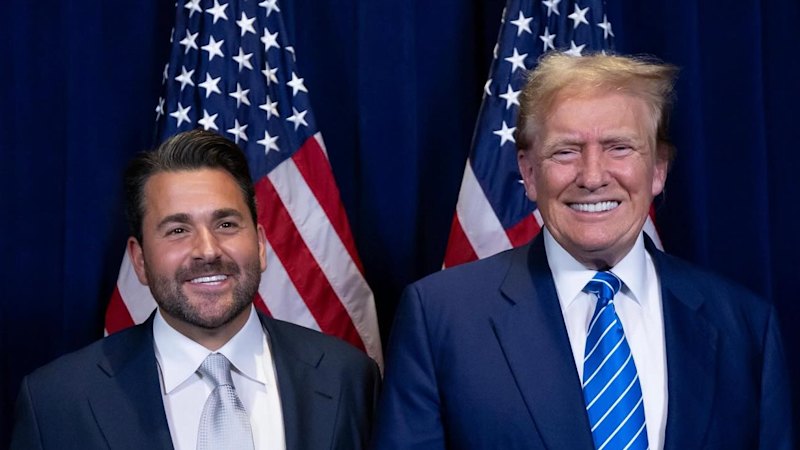
In the transactional geography of the second Trump administration, loyalty is the only currency that doesn't devalue. Nicholas Adams, the Australian-born firebrand and self-anointed "Alpha Male," discovered this early on. For years, he performed a specific, high-octane version of American patriotism—one part Hooters regular, one part Bible student, and two parts steak-eating provocateur. It was a brand built on the premise that traditional masculinity was under siege and that Donald Trump was its only commander.
That performance nearly paid off in the ultimate professional validation. In July 2025, the White House announced the nomination of Adams as the United States Ambassador to Malaysia. It was a move that sent tremors through the State Department and prompted a collective intake of breath in Kuala Lumpur. By February 2026, however, the dream was dead. The nomination was quietly dropped, leaving behind a trail of questions about where the line between digital influence and diplomatic reality truly lies.
The Diplomatic Impossible
The selection of Adams was never about traditional statecraft. Malaysia is a complex, Muslim-majority nation sitting at the heart of Southeast Asian trade routes and South China Sea tensions. It requires a delicate touch. Adams, a man who once suggested his birthday should be a public holiday celebrated with "girthy cigars," does not do delicate.
Critics viewed the move as a reward for a decade of unwavering sycophancy. Adams didn't just support Trump; he mythologized him. He claimed the former president had a better backhand than Roger Federer. He founded the Foundation for Liberty and American Greatness (FLAG) to drill "American exceptionalism" into the minds of schoolchildren. In the eyes of the administration, this wasn't just trolling—it was an ideological resume.
The logic behind the nomination was clear. By placing a "cultural thought leader" in a strategic post, the White House sought to bypass the "deep state" bureaucracy of the State Department. They wanted a messenger who would export the MAGA brand without the filter of career diplomats. But the reality of the Senate confirmation process proved to be a far more rigid filter than the X algorithm.
When Performance Art Hits a Wall
The core of the Nick Adams phenomenon is the "Alpha Male" persona. It is a digital construct of hyper-masculinity that occupies a strange space between sincere belief and parody. He posts videos emerging from saunas, declaring himself a "walking, talking masterpiece of masculinity." He tells his followers to raise their children to be like Kyle Rittenhouse, not Harry Styles.
To his detractors, Adams is a "Twitter troll" or a "performance artist" whose antics are so over-the-top they must be satirical. To his followers, he is a rare voice of "rizz" and "testosterone" in a world they perceive as increasingly feminized. But the United States Senate remains a place where "rizz" is not a recognized qualification for plenipotentiary powers.
During the preliminary vetting, the sheer volume of Adams' digital paper trail became an anchor. His past comments—ranging from the objectification of women to hardline stances on immigration—became easy ammunition for both Democrats and skeptical moderate Republicans. In a world of high-stakes international relations, the "Alpha Male" brand looked less like leadership and more like a liability.
The Strategy of the Lightweight
There is a cynical school of thought in Washington that explains the Adams nomination through the lens of priority. Some analysts suggest that the administration purposefully nominates "lightweights" to countries it deems less critical. By sending an influencer to Malaysia or a surgeon to Singapore, the White House signals that these regions are secondary to its domestic-focused agenda.
However, this ignores the real-world friction such moves create. Malaysian officials and local analysts described the nomination as an "insult." In the diplomatic world, who you send is what you think of your host. Sending a man who publicly obsesses over Hooters to a conservative Islamic country is not just unconventional; it is a deliberate disruption of the status quo.
The eventual withdrawal of Adams' name in early 2026 indicates that even for a disruptive administration, there are limits to the "loyalty-over-experience" model. The collapse of the nomination wasn't just a personal failure for Adams; it was a realization that the infrastructure of international relations still requires a level of decorum that cannot be faked with a viral tweet.
The Business of Being Alpha
Even without an ambassadorship, the Nick Adams machine remains lucrative. The "Alpha Male" brand is not just a philosophy; it is a retail operation. Adams sells merchandise—hats, mugs, and shirts—that allow his followers to buy into the identity he projects. His books, such as Alpha Kings and Green Card Warrior, serve as manuals for a specific demographic of American men who feel left behind by modern social shifts.
This is the true "new job" for Nick Adams. He isn't a diplomat. He is a high-level surrogate and a cultural entrepreneur. By positioning himself as the most "persecuted" demographic in America—the straight, white, Christian man—he has tapped into a vein of grievance that is far more profitable than a government salary.
The "Alpha" movement thrives on conflict. Each headline decrying Adams as "misogynistic" or "unqualified" is processed by his followers as proof of his effectiveness. In the digital economy, outrage is the primary driver of engagement. Whether he is in a sauna or a senate hearing, the goal is to remain the center of the conversation.
The Residual Influence
The Nick Adams saga reveals a deeper shift in how political power is distributed. We are moving into an era where "clout" is seen as a legitimate substitute for "competence." While Adams won't be heading to Kuala Lumpur, his rise from a suburban Sydney councillor to a presidential nominee for a major diplomatic post is a blueprint for the next generation of influencers.
The path is now clear. Build a massive digital following by being as loud and uncompromising as possible. Align that following with a powerful political movement. Use that leverage to demand a seat at the table where real decisions are made. The fact that Adams fell at the final hurdle doesn't change the fact that he was allowed to run the race.
His story is a reminder that in the modern political landscape, the mask and the man are often indistinguishable. Whether Adams believes his own rhetoric is irrelevant. The audience believes it, and more importantly, the person in the Oval Office believed in its utility. The ambassadorship may have vanished, but the "Alpha" archetype is now a permanent fixture of the political mainstream.
The next Nick Adams won't be an Australian deputy mayor with a thing for pigeons. He will be a native-born digital native who has watched this play out and learned how to avoid the pitfalls. The era of the influencer-diplomat has not ended; it has simply undergone its first major stress test.
Would you like me to research the current status of other controversial Trump administration nominees for 2026?