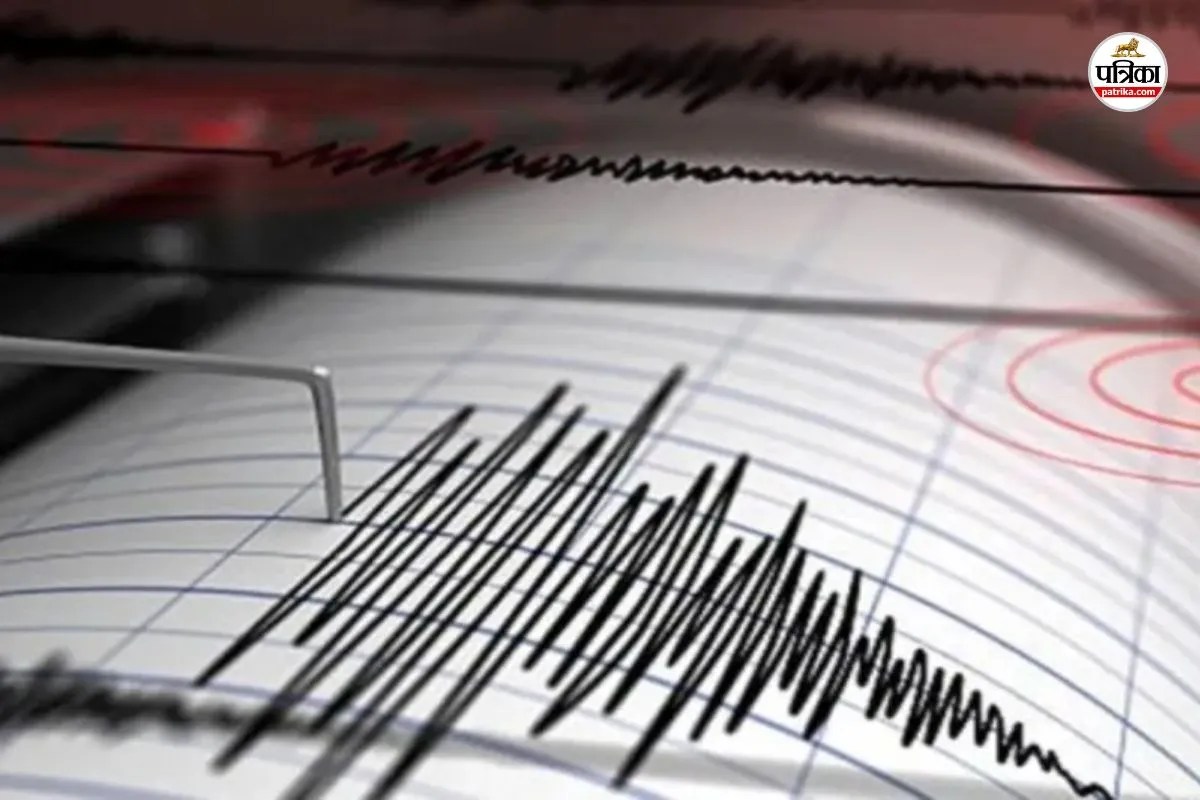
The seismic event that struck Central Sulawesi, Indonesia, on June 16, 2026, exposes a critical vulnerability in urban centers located along shallow crustal fault systems. Registering at a magnitude of $M_w$ 6.7 to 6.8, the physical destruction from this rupture was driven less by its raw magnitude and far more by its shallow focal depth of 10 kilometers. In seismological terms, shallow depth minimizes the geometric attenuation of energy as seismic waves travel to the surface. This mechanical reality created extreme ground motion across the Palu, Sigi, and Donggala regencies, triggering an immediate and justified evacuation of the population. Understanding this event requires moving past superficial news updates to examine the precise physics of structural mechanics, fault geometry, and real-time public risk mitigation.
The core threat vector of this specific rupture can be understood through three primary variables: the mechanics of shallow normal faults, the historical psychological trauma of the local population, and the structural structural vulnerabilities of building infrastructure in the region.
The Kinematics of the Palu Fracture
The primary driver of high surface intensity during this event was the shallow depth of the hypocenter, the exact point within the Earth where the rupture begins. When an earthquake occurs at a depth of 45 kilometers, as early macroscopic estimates suggested, the volume of rock through which the compressional (P) and shear (S) waves must pass dampens their peak ground acceleration (PGA). However, the finalized metrics from the United States Geological Survey (USGS) and the German Research Centre for Geosciences (GFZ) confirmed a depth of exactly 10 kilometers.
This shallow displacement occurred along a normal fault with a west-northwest strike. A normal fault occurs when the crust is pulling apart, causing the block of rock above the fault plane to slide downward relative to the block below. This structural movement generated an intensity of VII on the Modified Mercalli Intensity (MMI) scale in Palu, translating directly to very strong perceived shaking capable of damaging poorly constructed masonry. The spatial distribution of the energy impacted populations across vast gradients:
- 16,000 people experienced severe shaking (MMI VII).
- 165,500 people experienced very strong shaking (MMI VI).
- 574,000 people experienced strong shaking (MMI V).
- 3.2 million people felt light shaking across the broader tectonic boundary.
The structural impact was immediate. Instead of total structural collapses, the shallow shear waves caused widespread partial failures. Concrete roof structures collapsed in Palu, and the ceiling of the Sigi Regent Office building gave way entirely. High-voltage electrical lines experienced massive displacement, inducing short circuits and ground-level sparks when operators lost balance. At the local university, structural cracks severed the integrity of the main auditorium. This pattern points to a highly specific infrastructure problem: the buildings withstood the vertical compressional waves but failed when subjected to horizontal ground shearing.
The Psychological Feed-Forward Loop and Coastal Evacuation
Public behavior during the event cannot be explained purely by active ground movement. The immediate flight to high ground and open spaces was driven by a learned psychological mechanism from the devastating 2018 Palu earthquake and tsunami. In complex systems theory, this is known as a feed-forward loop, where past historical data heavily shapes the immediate operational response to a fresh stimulus.
When the ground began to shake for roughly 60 seconds, the population did not wait for official government alerts. Local residents evacuated coastal zones based entirely on the physical intensity of the tremor. Although Indonesia's Meteorology, Climatology, and Geophysical Agency (BMKG) explicitly determined that this specific normal fault movement lacked the vertical displacement required to trigger a tsunami, the structural self-evacuation acted as an essential insurance policy against catastrophic error.
The evacuation mechanics of local commercial infrastructure highlight this operational reality. Large hotels in Palu executed pre-arranged evacuation protocols, clearing guests out of multi-story structures within minutes of the initial shock. Hospitals immediately shifted operations, moving patients with active IV drips onto open outdoor pavements. This change in environment introduces distinct medical risks, including secondary infections and a lack of sterile monitoring space. Yet, it remains the standard tactical baseline because the physical risk of structural collapse outweighs the controlled risks of outdoor medical care.
Aftershock Decay and Economic Loss Functions
Following the initial rupture at 11:27 AM local time, the crust began a process of stress redistribution. Within hours, the BMKG recorded nine discrete aftershocks ranging between magnitudes 3.5 and 4.6, while the USGS logged a stronger $M_w$ 5.2 secondary event.
The frequency and decay of these aftershocks generally follow Omori's Law, an empirical relation stating that the rate of aftershocks declines roughly inversely with time after the main shock. Mathematically, this is expressed as:
$$n(t) = \frac{k}{(c+t)^p}$$
Where $n(t)$ is the rate of earthquakes measured at time $t$ after the main shock, and $k$, $c$, and $p$ are constants that adjust based on regional tectonic properties.
For emergency management teams, this mathematical decay presents an operational dilemma. While the mathematical probability of an equal or larger rupture decreases over hours and days, the structural integrity of buildings shaken by the main event is already degraded. A secondary shock of magnitude 5.2 hitting a building with existing structural cracks can cause a collapse that the primary 6.8 shock failed to achieve.
This structural degradation directly drives the economic loss function of the disaster. The USGS issued a yellow alert for economic losses, projecting damage costs between 10 million and 100 million dollars. This financial reality stems from several specific factors:
- Immediate asset destruction: The direct financial cost to repair municipal buildings, including universities and government offices.
- Structural assessment backlogs: The economic loss caused by closing businesses and hotels while waiting for structural engineers to verify that a building is safe to re-enter.
- Supply chain bottlenecks: Interrupted power delivery from damaged electrical poles slows down normal regional commerce.
Structural Engineering and Policy Imperatives
The physical outcomes of the June 2026 Sulawesi earthquake show that traditional seismic enforcement metrics must be updated. Building codes often focus primarily on preventing catastrophic pancake collapses to minimize immediate deaths. However, this approach ignores the massive economic and social paralysis caused by widespread partial damage and interior ceiling collapses.
The immediate policy shift must focus on retrofitting existing public architecture with flexible joint components and lighter, modular interior materials. Concrete roofs and heavy plaster ceilings, like those that failed in the Sigi Regent Office, present an unacceptable risk to human life even when the main structural pillars of a building hold firm. Furthermore, regional disaster agencies must develop specialized outdoor medical infrastructure. Since hospitals will always evacuate their wards during significant shallow earthquakes, cities located near major faults require pre-positioned, rapidly deployable outdoor medical shelters equipped with independent power and structural stabilization.
Operational priority should be given to creating localized micro-grids for electricity. When a single power line fails and causes ground-level hazards, it must not take down the energy supply of adjacent emergency response centers. True resilience depends on an area's ability to compartmentalize damage, maintaining functional municipal systems even while the ground undergoes structural realignment.