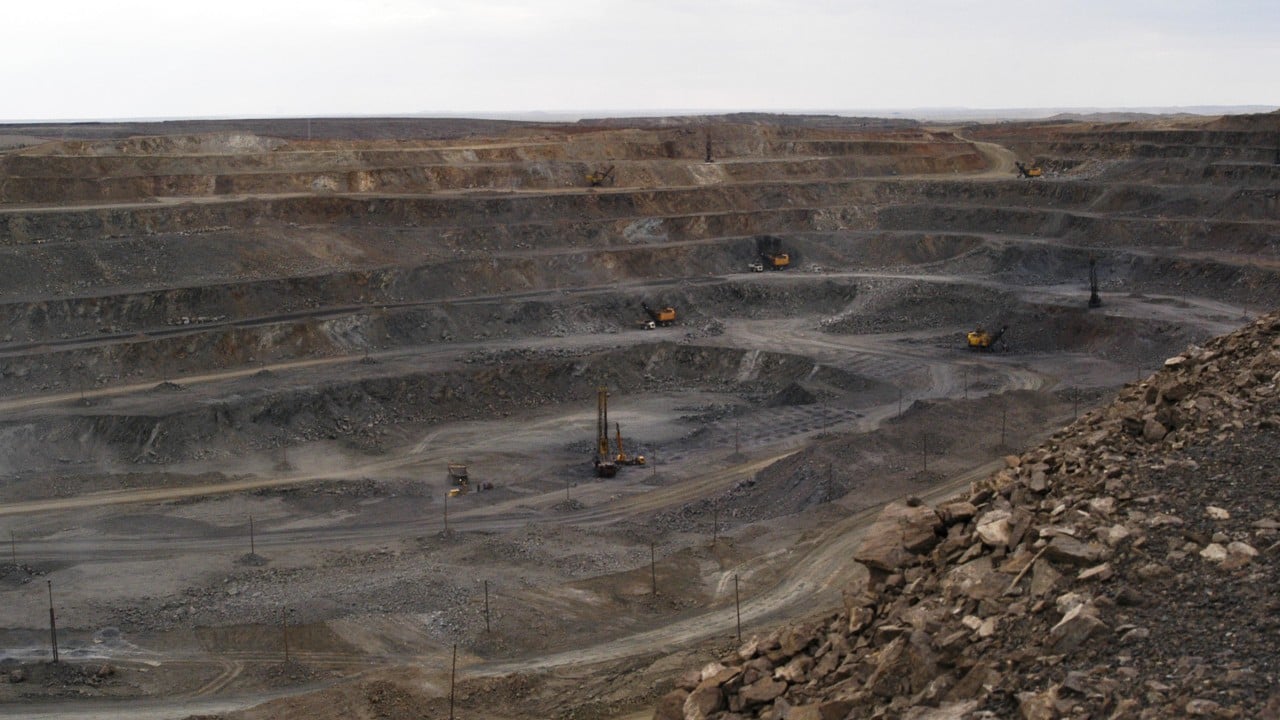
Geopolitical analysts routinely mischaracterize China’s dominance over the critical minerals sector as a geological monopoly. This diagnostic failure distorts Western strategic planning. The structural reality is that China’s leverage does not reside primarily in its extraction volume or domestic ore reserves. Instead, the strategic bottleneck is concentrated within a capital-intensive, technically demanding midstream processing ecosystem that converts raw unseparated oxides into high-purity metals and permanent neodymium-iron-boron (NdFeB) magnets.
By financing upstream mining projects or downstream component manufacturing while leaving the intermediate chemical refining steps unaddressed, Western industrial policy creates a dangerous illusion of diversification. A producer can cease purchasing Chinese ore entirely and still remain structurally dependent on Chinese intellectual property, chemical precursors, and processing infrastructure to turn that ore into a functionally useful product. Deconstructing this system requires analyzing the specific economic and technical mechanisms that preserve this imbalance.
The Three Pillars of the Midstream Monopoly
China’s control over the rare earth supply chain functions via three mutually reinforcing locks. Breaking this dominance requires understanding that each lock operates on a different economic or technical vector.
1. The Resource and Input Asymmetry
Public debate frequently treats all 17 rare earth elements as structurally identical, hiding the actual points of vulnerability. The global supply of light rare earth elements (LREEs)—such as lanthanum and cerium—is highly diversified, with significant extraction capacity operating in the United States and Australia. The true chokepoint is found in heavy rare earth elements (HREEs), specifically dysprosium and terbium. These elements serve as mandatory metallurgical additives that allow permanent magnets to function under the extreme thermal conditions common to electric vehicle drivetrains and defense guidance systems.
China’s competitive advantage in HREEs is driven by low-cost extraction from domestic ion-adsorption clay deposits. Hard-rock HREE deposits found outside of China require aggressive acid digestion, complex multistage hydrometallurgy, and significant capital expenditure. Conversely, ion-adsorption clays allow for lower-cost extraction through ambient-temperature ion-exchange leaching. China further secures this raw material advantage via a grey-market supply corridor originating from the Kachin region of Myanmar, which accounts for roughly half of its heavy rare earth inputs. This dual sourcing pipeline allows Chinese processors to control approximately 90 percent of global heavy rare earth production and 99 percent of global processing capacity.
2. The Technical Learning Curve and Solvent Extraction Lock
Possessing rare earth ore is useless without the operational capacity to separate chemically similar elements. This process relies on solvent extraction, a chemical engineering methodology where unseparated oxides pass through hundreds of continuous liquid-liquid stages to achieve high purity levels.
While the fundamental chemistry of solvent extraction has been understood for decades, the operational expertise needed to run these facilities at scale with stable, consistent output requires years of continuous production experience. Defense and automotive supply chains require strict, repeatable purity tolerances across production runs. Achieving this consistency represents a structural barrier to entry. China has solidified this advantage by implementing strict export licensing frameworks that restrict the transfer of rare earth mining, processing, and magnet-manufacturing technologies to foreign entities.
3. The Industrial Ecosystem and Demand Lock
China has built a complete vertically integrated rare earth industrial chain, functioning as both the dominant supplier and the primary consumer. Domestic manufacturing sectors—principally electric vehicle production and wind turbine assembly—account for roughly 70 percent of total global rare earth demand.
This internal consumption creates massive economies of scale that alter the investment economics for non-Chinese competitors. A standalone Western processing facility must operate as a merchant refiner, exposed to global commodity price volatility. Chinese state-owned enterprises, by contrast, operate within consolidated groups that smooth out volatility by matching upstream extraction directly with downstream industrial demand. This structural insulation was finalized through the merger of major domestic producers into state-directed megastructures: Northern Rare Earth, which manages light rare earths, and China Rare Earth Group, which controls heavy rare earths.
The Cost Function of Western Supply Chain Diversification
The economic challenge facing Western alternatives is best understood by analyzing the cost function of a non-Chinese rare earth supply chain. Capital expenditure represents only the initial barrier. The ongoing operational challenge stems from structural cost disparities across three specific categories.
[Upstream Mine] ---> (Midstream Solvent Extraction Chokepoint) ---> [Downstream Magnet Fabrication]
      ^                                     ^                                      ^
      |                                     |                                      |
High Western CapEx                    99% China Capacity                     IP/License Restrictions
- Chemical Consumables and Environmental Management: Solvent extraction requires large volumes of hydrochloric acid, oxalic acid, and sodium hydroxide. Neutralizing the acidic wastewater and managing radioactive byproducts (such as thorium and uranium) generates significant compliance costs. Western regulatory standards require sophisticated, high-cost environmental containment and remediation systems. Chinese facilities have historically minimized these internal costs by utilizing lower-cost localized disposal methods, externalizing environmental impacts to maintain lower pricing.
- Yield Loss and Process Optimization: In a standard solvent extraction circuit, minor deviations in pH, flow rate, or organic-to-aqueous phase ratios can ruin entire batches or reduce yield metrics. A new processing plant typically faces years of sub-optimal yields during its commissioning phase. This operational learning curve directly inflates cash-burn rates, leaving early-stage facilities vulnerable to targeted predatory pricing from incumbent producers.
- The Co-Product Pricing Problem: Rare earth ores contain a natural distribution of elements, but market demand is highly asymmetrical. NdFeB magnets primarily require neodymium, praseodymium, dysprosium, and terbium. Elements like lanthanum and cerium are mined in large quantities alongside them but command low market prices. A Western processor must generate enough margin from magnet-feed materials to offset the net losses incurred by producing excess, lower-value light elements.
Strategic Limits of Western Counter-Strategies
Western attempts to mitigate this vulnerability have relied on two primary policy mechanisms: direct capital subsidies for domestic mines and downstream export restrictions. Both strategies suffer from core structural limitations.
Capital allocation frameworks that prioritize upstream mining projects fail to address the midstream refining deficit. Funding a domestic mine simply creates an exporter of unseparated concentrates that must still be shipped to Chinese facilities for separation and reduction into metallic form. Financing the beginning and end of a supply chain does not secure the intermediate steps.
Downstream trade barriers and entity listings also run into operational workarounds. High-performance technology supply chains frequently use transshipment networks through secondary jurisdictions, particularly in Southeast Asia. Industrial components or refined inputs can be redirected, documentation altered, or pass-through corporate structures utilized to bypass direct destination controls.
Furthermore, industrial buyers frequently favor legal documentation compliance over comprehensive supply chain verification. As long as regulatory structures prioritize formal corporate declarations over rigorous physical or isotopic tracing of material origins, midstream inputs processed via Chinese technology can easily find their way back into Western components.
Tactical Realignment for Western Supply Networks
To build a genuinely independent rare earth supply chain, policymakers and industrial buyers must shift from subsidizing extraction to de-risking the midstream chemical processing layer.
First, public and private capital must be directed toward scaling independent toll-separation facilities capable of processing mixed chemical concentrates from multiple non-Chinese mining operations. Consolidating the midstream stage creates the volume necessary to compete with Chinese processing scale.
Second, procurement frameworks must pivot from multi-year supply agreements tied to raw ore volume toward contracts specified around certified, non-Chinese refined metals and alloys. This shifts the financial incentive toward domestic refining performance rather than simple raw extraction.
Finally, industrial research must prioritize developing alternative commercial magnet chemistries, such as iron-nitride compounds or advanced manganese alloys, alongside recycling technologies for end-of-life electronics. Until midstream chemical processing capacity is established outside of state-directed ecosystems, capital investments in raw mining will yield only minor gains in supply chain independence.