Standard summit reporting treats diplomatic gatherings as a simple tally of arriving dignitaries, street protests, and headline pledges. That framing misses the structural mechanics of multilateral diplomacy under stress. When the 2026 Commonwealth Heads of Government Meeting (CHOGM) convened in St. John's, Antigua and Barbuda, from November 1 to November 4, 2026, it brought together delegates from 56 member states representing roughly 2.7 billion people—and made Antigua and Barbuda the smallest nation ever to host the summit.
Conventional coverage typically pairs two surface observations—leaders arriving amid external geopolitical friction and demonstrators demanding historical accountability—without connecting either to institutional incentives or capital allocation. A rigorous strategic analysis separates diplomatic signaling from binding commitments, maps the bargaining power of small states against larger economies, and exposes where historical grievances intersect with sovereign balance sheets.
Deconstructing Surface Summit Coverage
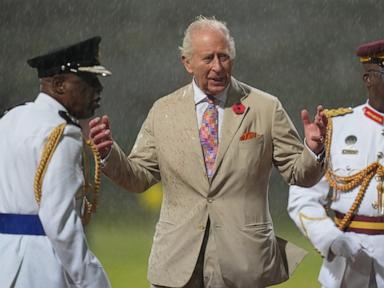
Typical news narratives around high-profile summits rely on a predictable sequence: arrival imagery, protest soundbites, broad themes such as trade or climate, and a headline figure for new pledges. For the 2026 Antigua gathering—chaired by Prime Minister Gaston Browne under the theme "Accelerating Partnerships and Investment for a Prosperous Commonwealth," and marking the first CHOGM during Secretary-General Shirley Ayorkor Botchwey's tenure—surface reporting highlights the presence of King Charles III, more than 3,000 to 4,000 delegates, street demonstrations over reparatory justice and slavery, and over US$500 million in announced commitments across renewable energy, youth skills, and trade.
The first analytical flaw in surface reporting is treating attendance and protest visibility as a single causal story. Protests outside a summit venue draw media oxygen toward moral and historical demands, while closed ministerial sessions and investor roundtables negotiate capital flows and regulatory coordination. Reporting them side by side without separating their mechanisms makes the summit appear simultaneously paralyzed and triumphant.
The second limitation lies in treating announced pledges as settled economic outcomes. A headline figure of more than US$500 million across renewable energy, skills development, and trade signals institutional intent and blended-finance appetite. What matters operationally is disbursement speed, concessionality versus commercial debt terms, and whether small island states have the administrative capacity to absorb funds without adding unsustainable debt service.
Four Analytical Dimensions of Multilateral Diplomacy
To evaluate a summit like CHOGM 2026 with precision rather than impressionism, four structural dimensions govern how outcomes actually form.
Asymmetric Bargaining Power and Small-State Leverage
The Commonwealth spans major economies and microstates under a non-binding consensus model. In classical international relations—specifically liberal institutionalism and coalition bargaining theory—smaller states lack unilateral market or military coercion, yet they gain leverage when larger powers compete for diplomatic legitimacy, voting alignment, or regional access.
Hosting CHOGM in Antigua and Barbuda shifts focal attention toward Small Island Developing States (SIDS). Small states face high per-capita infrastructure costs, narrow export bases, and acute exposure to climate shocks and external borrowing costs. Their core strategic objective at a summit is converting rhetorical solidarity into lower capital costs, climate adaptation finance, and tailored technical assistance.
Historical Accountability Versus Forward Capital
Demonstrations calling for an apology and reparatory justice over the trans-Atlantic slave trade and colonial legacies expose a structural tension between moral reckoning and institutional continuity. Protesters and advocates press for explicit acknowledgment and concrete repair rather than expressions of regret.
From a political-economy standpoint, governments and monarchs resist open-ended financial liability that could create unquantified fiscal precedents or domestic political backlash. When institutional leaders pivot toward forward-looking initiatives—such as youth innovation, digital skills, health commissions, or green investment—they often attempt to channel historical grievances into programmatic partnerships. Whether that pivot resolves underlying legitimacy friction or widens the gap between public demands and official communiqués depends on whether concrete commitments follow symbolic gestures.
Issue Linkage and Parallel Track Architecture
Modern summits rarely succeed through a single plenary room. Organizers structure parallel tracks—ministerial meetings on small states and foreign affairs, youth and civil society forums, business engagements, and side initiatives such as health and family platforms—to feed draft language and commitments into the final communiqué.
This creates a specific bottleneck: breadth of participation can dilute enforceable prioritization. When a communiqué spans trade, investment, climate thresholds, democracy, digital access, health systems, and youth inclusion simultaneously, every constituency sees its priority named, while accountability for any single deliverable becomes diffused.
Signaling Credibility Under Global Fragmentation
When global politics experiences heightened friction, middle and smaller powers look for hedging mechanisms outside rigid superpower blocs. A voluntary association of 56 states cannot act as a hard security alliance or a single customs union. Its comparative advantage lies in convening trust, standardizing technical cooperation, and offering diplomatic forums where smaller states are not sidelined by bilateral great-power deals.
Fact Versus Hypothesis in Summit Assessment
Rigorous analysis requires separating verified events from analytical inference:
- Known facts: The 28th CHOGM took place in Antigua and Barbuda in early November 2026 under Chair Gaston Browne and Secretary-General Shirley Ayorkor Botchwey, with King Charles III participating, protests occurring around reparatory justice and slavery, and over US$500 million in commitments announced across areas including renewable energy, youth skills, and trade.
- Educated hypotheses: Hosting the summit in a small Caribbean state increases visibility for small-state financing and climate adaptation priorities, yet high-level pledges will only translate into durable economic resilience if backed by clear implementation timelines, grant or concessional structures, and domestic execution capacity.
- Unverified or dynamic variables: Exact project-level disbursement schedules, private-versus-public capital splits behind headline pledge totals, and long-term shifts in bilateral reparations negotiations remain subject to post-summit follow-through rather than summit-week announcements.
Operationalizing Summit Outcomes
Practitioners evaluating or executing initiatives launched at a multilateral gathering should apply a disciplined four-step filter rather than taking communiqué language at face value.
- Audit the capital stack. Separate grants, concessional loans, guarantees, and commercial equity inside any headline pledge figure to estimate true fiscal relief for recipient economies.
- Map execution bottlenecks. Identify the specific ministries, development banks, or private sponsors responsible for procurement, permitting, and delivery over the next 12 to 24 months.
- Track measurable milestones. Replace broad thematic goals—such as boosting trade or supporting youth—with concrete indicators likeMW of renewable capacity commissioned, vocational placements completed, or trade facilitation rules adopted.
- Separate symbolic diplomacy from binding policy. Recognize where royal visits, cultural events, or spousal and civil-society forums build soft-power goodwill versus where formal policy or funding mandates are actually enacted.
Limits of This Framework and Strategic Play
No analytical framework predicts political surprises or guarantees that non-binding summits will overcome entrenched domestic constraints. Multilateral communiqués lack enforcement mechanisms, sovereign debt rules are shaped far beyond any single conference room, and political transitions in member capitals can alter priorities rapidly. Furthermore, relying solely on institutional metrics risks overlooking grassroots legitimacy pressures that shape long-term political stability.
The decisive strategic play for governments, investors, and policy teams following a summit like CHOGM 2026 is to treat the event as a deal-sourcing and coalition-building catalyst rather than a finished solution. Focus immediate execution on bankable, small-scale projects—such as distributed renewable energy, targeted workforce pipelines, and practical health or digital systems—where committed capital, clear local ownership, and verifiable milestones can compound before diplomatic momentum fades.