Operational Mechanics of Maritime Interdiction
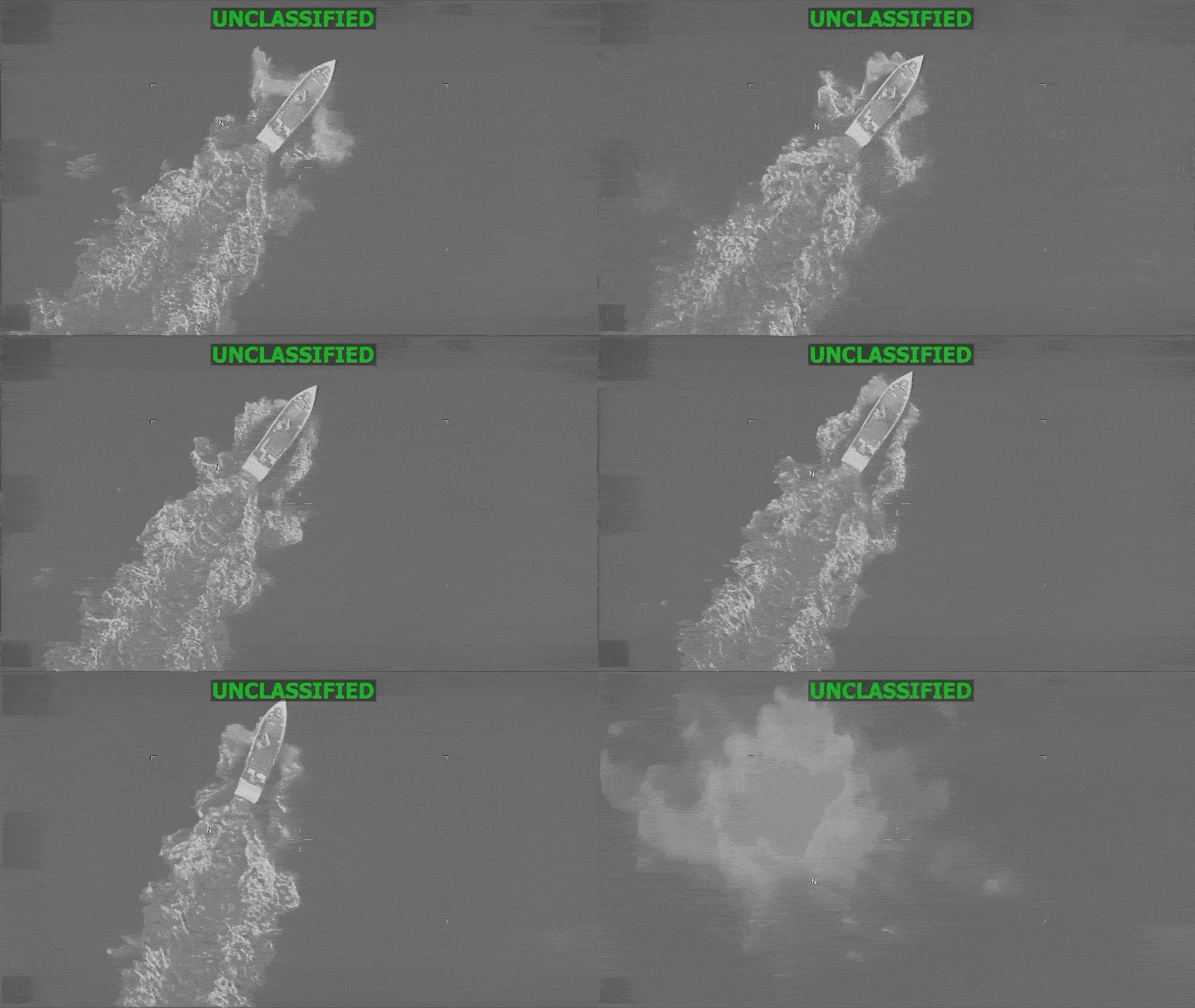
Kinetic strikes executed against non state maritime vessels operating in international waters represent an intersection of defense logistics intelligence architecture and international maritime law. When military assets neutralize a narcotics transit vessel, the action is rarely an isolated tactical event. Instead, it serves as the terminal node of a complex operational chain comprising surveillance acquisition, legal threshold validation, force allocation, and terminal execution. Understanding this specific operational architecture requires stripping away the sensationalism of standard reporting to examine the structural variables governing modern counter narcotics operations.
Naval operations in zones like the Caribbean basin or the Eastern Pacific rely on persistent ISR platforms. Intelligence, surveillance, and reconnaissance assets establish baseline tracking of suspect vectors long before an interdiction vector closes the distance. The primary bottleneck in this workflow is not technological capability but intelligence latency. Transnational criminal organizations adapt their logistics footprints continuously, utilizing semi submersible hulls, modified commercial fishing vessels, and high speed go fast craft to blend into legitimate maritime traffic.
Countering these vectors demands a multi layered sensor network. Maritime patrol aircraft, satellite tracking, and signals intelligence feed a centralized targeting cell. This cell evaluates the vector against predefined Rules of Engagement and operational authorities. When a kinetic strike is authorized, it indicates that standard law enforcement boarding protocols were deemed unfeasible due to operational risk, force protection constraints, or the tactical posture of the target vessel.
The Cost Function of High Speed Maritime Trafficking
To understand why military kinetic assets are deployed against narcotics vessels, one must analyze the economic and operational variables driving transnational smuggling networks. Criminal cartels operate under strict economic optimization models. Their objective is to maximize throughput while minimizing asset loss and personnel capture rates.
The variable cost of a specialized go fast vessel or low profile craft is relatively low compared to the asset value of the cargo it carries. A single multi ton shipment of cocaine represents a high margin return that easily subsidizes the loss of multiple transit platforms. Consequently, traditional law enforcement interdiction, which focuses primarily on asset seizure and crew detention, often fails to alter the long term supply curve. Cartels treat asset losses as a predictable operational expense rather than a deterrent.
When naval forces escalate from law enforcement boarding to kinetic neutralization, the economic calculus changes for the adversary. The risk profile shifts from a tolerable cost of doing business to catastrophic capital destruction coupled with personnel attrition. However, this escalation also introduces systemic friction:
- The loss of human intelligence sources when vessel operators are eliminated rather than captured and interrogated.
- The permanent destruction of physical forensic evidence that could map broader financial networks and supply chain logistics.
- The legal and diplomatic complexity of operating kinetic capabilities outside recognized zones of armed conflict or traditional law enforcement mandates.
These trade-offs govern every decision made by operational commanders. The deployment of lethal force is fundamentally a disruption strategy designed to impose friction on supply lines that prove resilient to standard judicial enforcement mechanisms.
Legal Authorities and Operational Constraints
Operating kinetic military assets in maritime environments involves navigating a complex lattice of domestic and international legal frameworks. Unlike traditional law enforcement agencies, military units operate under distinct statutory authorities that dictate their use of force.
In international waters, the principle of freedom of navigation generally protects vessels from arbitrary interference. Exceptions are carved out through bilateral and multilateral shipboarding agreements, United Nations conventions against illicit traffic in narcotic drugs and psychotropic substances, and the inherent right of self defense. When an operation transitions from a law enforcement boarding to a kinetic strike, the legal justification must satisfy stringent criteria:
- Demonstrable evidence that the vessel poses an immediate threat to regional stability, security forces, or public safety.
- Confirmation of stateless status or explicit consent from the flag state for interdiction actions.
- Exhaustion or tactical impracticality of less lethal alternatives due to hostile intent or active resistance by the vessel occupants.
This legal architecture creates a high threshold for action. Commanders must balance the strategic imperative of supply chain disruption against the risk of jurisdictional overreach or diplomatic fallout. The friction between kinetic efficiency and legal compliance remains the defining operational constraint for naval forces conducting counter narcotics missions in contested maritime domains.
Strategic Vector Analysis and Future Projections
The use of kinetic force against trafficking vessels is a tactical intervention applied to a structural problem. As long as global demand for illicit substances remains high and the economic incentives for cartels persist, maritime trafficking vectors will evolve. Cartels are already investing heavily in unmanned surface vessels and autonomous submersibles to remove human crews from the transit loop entirely.
This technological evolution will render traditional crewed interdiction models obsolete. When transit platforms are entirely unmanned, the tactical calculus changes again. The destruction of an autonomous drone does not result in personnel casualties, reducing the human political cost of kinetic strikes while simultaneously eliminating the possibility of gathering human intelligence through crew apprehension.
Future maritime security operations will require a transition from reactive kinetic strikes to proactive logistics denial. By targeting the precursor chemical supply chains at their point of origin and dismantling the financial infrastructure that enables maritime asset acquisition, defense agencies can achieve higher systemic disruption with lower operational friction. Kinetic strikes will remain a specialized tool for high risk interdictions, but long term operational efficacy depends on systematic disruption of the underlying economic network rather than terminal asset destruction alone.