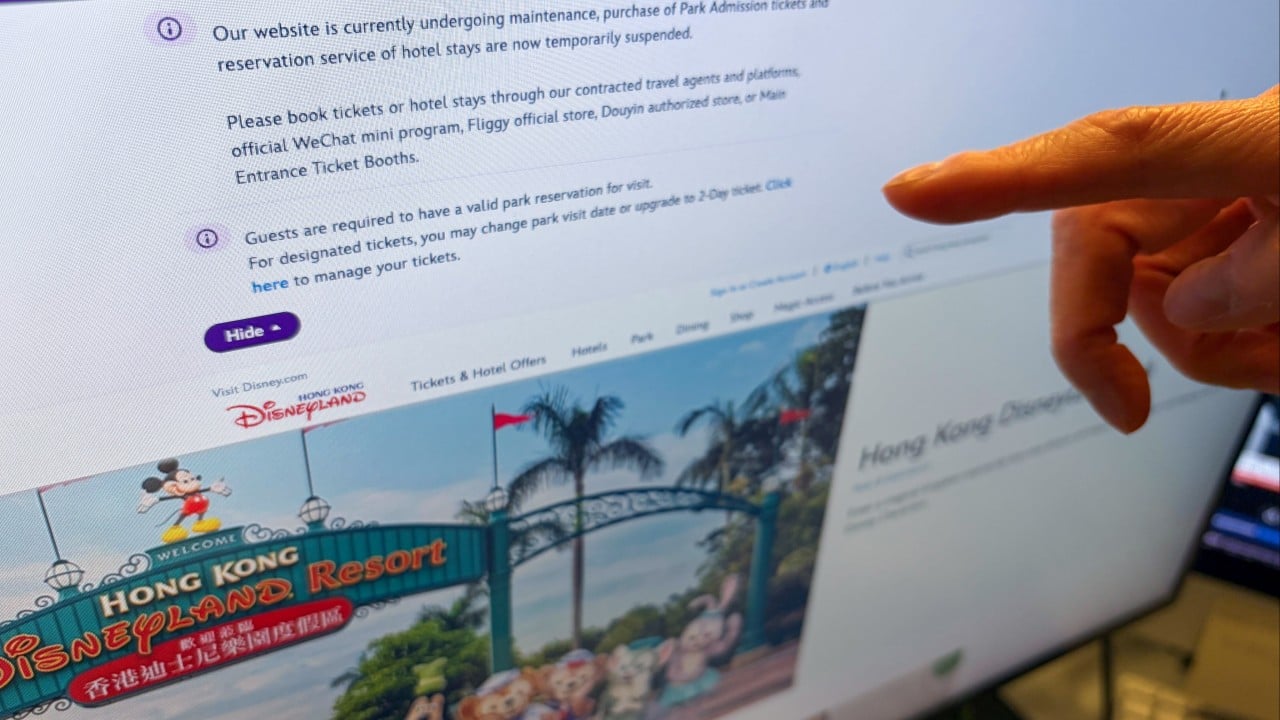
The compromise of 17,000 Hong Kong Disneyland ticket QR codes and the immediate suspension of the resort's online sales channel exposes a fundamental architectural flaw in modern event and hospitality ticketing. When an enterprise treats a static cryptographic string—a two-dimensional barcode—as a bearer instrument equivalent to physical cash, any breach of the database or transmission layer results in total, unrecoverable asset loss. The suspension of direct-to-consumer digital sales is not merely a public relations buffer; it is a mandatory circuit breaker required to halt the arbitrage of stolen inventory across secondary markets before physical redemption occurs at the turnstiles.
To understand the operational mechanics of this failure, one must separate the surface-level incident from the underlying system vulnerabilities. A QR code is simply a visual encoding of a string of text, typically a Uniform Resource Identifier (URI) or an alphanumeric token linked to a specific record in a centralized database. Because the QR code itself contains no dynamic state, whoever possesses the image file possesses the right of entry. Unlike credit card networks that utilize continuous fraud scoring, tokenization, and velocity checks at the point of sale, traditional theme park turnstile infrastructure prioritizes throughput. Turnstiles must validate thousands of entries per hour with sub-second latency, which historically forces engineers to rely on local caching and static barcode validation rather than multi-factor cryptographic handshakes.
The Architecture of Static Bearer Tokens
In high-volume venue management, digital tickets generally operate under one of two models: Static Bearer Tokens or Dynamic Cryptographic Tokens. The Hong Kong Disneyland incident demonstrates the systemic risk inherent in the former.
When a consumer purchases a ticket online, the ticketing engine generates a unique database entry containing the ticket tier, validity window, and redemption status. It then maps this entry to a static QR code delivered via email or a web portal. From an information security perspective, this creates three distinct points of failure:
- At-Rest Database Exposure: If an attacker gains read-access to the ticketing database or an unsecured cloud storage bucket containing generated ticket PDFs, they can exfiltrate the valid tokens en masse without altering the database state. The legitimate buyer remains unaware until they attempt to scan the code at the gate.
- In-Transit Interception and Enumeration: If the URL structure used to retrieve ticket images lacks sufficient entropy—for example, using sequential integers or predictable hashing algorithms—attackers can execute automated enumeration scripts (Insecure Direct Object References) to scrape thousands of valid QR codes directly from public-facing web servers.
- Third-Party API Leakage: Theme parks rely heavily on Online Travel Agencies (OTAs) and wholesale distributors. These partners connect via Application Programming Interfaces (APIs) to pull ticket inventory. A single compromised partner credential allows an attacker to query and download bulk allocations of active QR codes.
Once exfiltrated, these 17,000 codes transform into liquid assets. Because the token is static, duplicating the image file costs zero marginal capital. The attacker can sell the exact same QR code to multiple unsuspecting buyers on secondary marketplaces, initiating a race condition where only the first individual to reach the physical turnstile gains entry.
The Economics of Secondary Market Arbitrage
A breach of 17,000 tickets represents a severe operational and financial liability, distinct from standard data breaches involving Personally Identifiable Information (PII). When names, addresses, or hashed passwords are stolen, the financial impact on the corporation is delayed, manifesting months later through regulatory fines, legal settlements, and churn. When active inventory is stolen, the financial impact is immediate and kinetic.
Assuming a conservative baseline retail value of approximately $80 to $100 USD per single-day admission ticket, 17,000 compromised units represent between $1.36 million and $1.7 million in direct gross merchandise value (GMV). However, the actual operational cost to the venue operator exceeds the face value of the inventory due to three compounding factors:
- Turnstile Friction and Capacity Distortion: Theme parks manage daily attendance through strict capacity forecasting to balance guest experience with labor allocation. If thousands of stolen tickets are liquidated at steep discounts on grey-market platforms, attendance spikes unpredictably. Simultaneously, legitimate guests arriving with invalidated or already-redeemed tickets create severe bottlenecks at guest relations booths, requiring manual verification, proof-of-purchase audits, and emergency ticket re-issuance.
- Chargeback Cascades: Legitimate buyers who discover their tickets were compromised—or buyers on secondary platforms who realize they purchased duplicated codes—initiate credit card chargebacks. High chargeback ratios degrade the merchant's standing with payment processors, triggering higher transaction fees and reserve requirements.
- Brand Equity Erosion in Regional Markets: In Asian hospitality markets, third-party distribution channels and group tour operators account for a massive percentage of total volume. Suspending online sales forces consumers into offline channels or third-party platforms, surrendering direct customer relationships and valuable first-party behavioral data.
Why Online Sales Suspension Is the Only Viable Circuit Breaker
When an intrusion of this scale is detected, security teams face a containment dilemma. Simply invalidating the 17,000 compromised codes in the database is insufficient if the underlying vulnerability allowing token generation or extraction remains unpatched.
Taking the online sales portal offline serves four immediate engineering objectives:
Halting Automated Exfiltration
If the breach occurred via an exposed API endpoint or an IDOR vulnerability on the ticket-retrieval portal, keeping the web infrastructure live allows the attacker to continue scraping newly generated inventory in real time. Severing the public-facing web application immediately stops the bleeding.
Isolating the Token Generation Engine
Engineers must audit the cryptographic entropy of the ticket generation algorithm. If the system uses predictable seeds (such as timestamps combined with order numbers) to generate QR strings, an attacker who understands the algorithm can forge valid future tickets offline without ever touching the server again. Suspending sales allows the engineering team to rotate cryptographic keys and alter the token schema.
Executing Database Reconciliation
Before re-enabling sales, database administrators must cross-reference all unredeemed tickets against access logs to identify anomalies—such as bulk IP requests, unusual user-agent strings, or high-velocity downloads from specific OTA accounts. This forensic audit determines which exact subset of the 17,000 codes must be voided and re-issued to legitimate purchasers.
Decoupling Internal Systems from Third-Party Gateways
In complex enterprise environments, the consumer web store often shares backend microservices with mobile applications, hotel booking engines, and B2B partner portals. Shutting down online sales isolates the core ticketing ledger, preventing lateral movement by the threat actor into payment processing environments or broader corporate networks.
Limitations of Static Remediation
While suspending sales and re-issuing invalidated QR codes contains the immediate crisis, it does not solve the structural vulnerability. Re-issuing a new static QR code via email merely resets the clock; if a user's email account is compromised, or if a screenshot is shared on social media, the ticket remains vulnerable to theft.
Relying solely on database voiding also introduces severe false-positive risks. If forensic logs are incomplete, security teams must choose between leaving potentially compromised tickets active (accepting financial loss and turnstile fraud) or aggressively voiding blocks of tickets (guaranteeing that legitimate guests will be denied entry at the gate). Neither outcome is operationally acceptable for a premium hospitality brand.
Furthermore, static QR codes inherently lack non-repudiation. When two guests arrive at a turnstile holding identical digital copies of the same QR code, the turnstile hardware has no mathematical way to determine which individual is the rightful owner. Resolution requires human intervention, checking government-issued identification against the original payment record—a process that destroys the efficiency of automated entry gates.
Transitioning to Dynamic Cryptographic Ticketing
To eliminate the systemic risk demonstrated by the Hong Kong Disneyland breach, high-volume venues must abandon static bearer tokens entirely. The industry standard for securing high-value digital access—pioneered by primary ticketing platforms like Ticketmaster's SafeTix and financial payment networks—relies on Rotating Cryptographic Tokens bound to specific hardware devices.
Implementing a resilient architecture requires three foundational shifts:
- Time-Based One-Time Passwords (TOTP) at the Edge: Instead of encoding a static database ID into a QR code, the mobile application generates a cryptographically signed token that refreshes every 15 to 30 seconds using a shared secret key and the current timestamp (RFC 6238). Even if an attacker intercepts a screenshot or scrapes the display layer, the barcode becomes mathematically invalid seconds later.
- Hardware Device Binding: The ticketing token must be cryptographically bound to the Secure Enclave or Trusted Execution Environment (TEE) of the purchaser's smartphone via public-key infrastructure (PKI). During ticket download, the app generates a key pair; the private key never leaves the user's device, while the public key is registered on the venue's server. Transferring the ticket requires an authenticated, server-mediated cryptographic handoff, completely eliminating unauthorized duplication and grey-market screenshots.
- Offline Asymmetric Validation at Turnstiles: To maintain sub-second throughput without relying on fragile real-time cloud lookups at the gate, turnstile scanners should be equipped with the venue's public cryptographic keys. When a dynamic QR code or NFC tap is presented, the scanner locally verifies the digital signature and timestamp validity in milliseconds, writing the redemption state back to the central ledger asynchronously.
The Strategic Imperative for Venue Operators
The compromise of 17,000 digital tickets is a predictable outcome of running legacy access-control logic on modern web infrastructure. Enterprises that continue to distribute static PDFs and unencrypted QR codes via email are effectively operating an unsecured bearer-bond market, relying on obscurity rather than cryptography to protect millions of dollars in inventory.
Venue operators and ticketing executives must immediately audit their distribution pipelines against three non-negotiable standards: eliminate static URLs for ticket retrieval, enforce strict rate-limiting and mutual TLS (mTLS) authentication on all third-party OTA partner APIs, and deprecate static email attachments in favor of app-based, time-rotating cryptographic tokens. Any ticketing system that allows a functional admission credential to be duplicated via a simple screen capture is structurally obsolete.