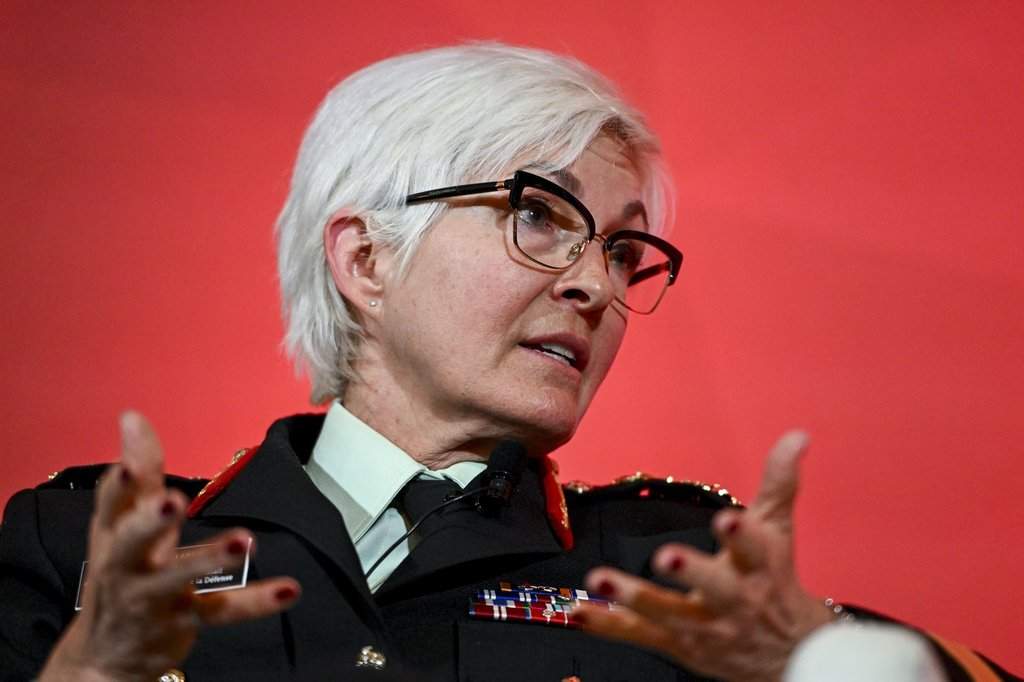
The convergence of thirty-two military delegations in Victoria, British Columbia, for the twenty-eighth annual Indo-Pacific Chiefs of Defense Conference masks an institutional crisis within multilateral security frameworks. Co-hosted by Canadian Chief of the Defence Staff General Jennie Carignan and U.S. Indo-Pacific Command chief Admiral Samuel Paparo, the gathering brings together adversaries and traditional allies under the banner of collective security. Yet, beneath the diplomatic choreography lies a fundamental friction point: the simultaneous erosion of bilateral trade architecture between Ottawa and Washington and the strategic necessity of maintaining military interoperability across fluid geopolitical lines.
The Dual Friction Model of Modern Defense Forums
Bilateral and multilateral defense summits operate under two distinct layers of engagement. The formal layer addresses technical interoperability, maritime domain awareness, and emerging technological integration such as artificial intelligence implementation. The subterranean layer functions as a risk-hedging mechanism for secondary and tertiary powers caught in great power competition.
When structural trade agreements collapse—exemplified by the recent breakdown of Canada-U.S. trade negotiations and subsequent tariff escalations—the foundational assumptions of defense planning fracture. Strategic alignment historically relies on economic integration. When trade policy turns adversarial while defense integration remains absolute, military planners confront an optimization problem with contradictory constraints.
[Economic Decoupling / Tariffs] ---> Increases Friction ---> [Bilateral Defense Planning Uncertainty]
                                                                        |
[Deteriorating Washington Reliability] ---> Forces Diversification ---> [Multilateral Hedging in Victoria]
Middle powers like Canada face a three-variable optimization challenge:
- Retaining institutional integration with the primary security guarantor, despite domestic political friction.
- Diversifying diplomatic and economic channels toward the Indo-Pacific basin to insulate against North American trade shocks.
- Managing simultaneous bilateral engagements with competing superpowers, including military representatives from Beijing, without triggering allied anxiety.
The Cost Function of Strategic Unpredictability
Traditional defense strategy assumes predictable state behavior anchored in long-term geopolitical treaties. When political leadership introduces volatility into alliance management, the cost function for allied militaries shifts dramatically.
Operational planners calculate risk using variance, not just expected value. An unpredictable political executive in Washington—coupled with shifting defense departmental priorities under leadership such as Pete Hegseth—imposes a high-variance penalty on joint planning. Supply chains for critical munitions, joint intelligence-sharing protocols, and force-posture commitments lose their baseline stability.
Concurrently, resource reallocation creates severe structural gaps. The redeployment of Pacific-based naval assets, such as carrier strike groups shifted to address crises in the Middle East, depletes regional deterrence capacity. Furthermore, the consumption of critical interceptor missile stockpiles in secondary theaters directly degrades warfighting sustainability for a primary contingency in the Taiwan Strait or the broader South China Sea.
The Asymmetry of Middle Power Influence
Canada's role as co-host highlights an operational paradox. While Canadian leadership values institutional ties with the United States armed forces—frequently reinforced through professional military education exchanges and integrated command structures like NORAD—Canada's overall standing in the Indo-Pacific power hierarchy remains marginal. Quantitative metrics such as the Lowy Institute's Asia Power Index routinely illustrate Canada's limited organic military footprint and projection capability within the theater.
To compensate for structural military deficits, Ottawa pursues middle-power diplomacy through multilateral facilitation. Hosting thirty-two defense chiefs creates a neutral venue where backchannel diplomacy can occur away from the public posturing of ministerial-level summits. Military leaders, who typically prioritize functional operational continuity over short-term political volatility, use these closed-door sessions to maintain communication channels that political leaders actively dismantle.
Strategic Execution Under Uncertainty
The three-day conference in Victoria functions as an operational pressure valve. It tests whether military-to-military communication can survive the systemic shock of political and economic trade warfare between sovereign allies.
For participating Indo-Pacific states, the primary takeaway from the Victoria summit is the acceleration of strategic hedging. Nations can no longer calculate their security architecture on the uncritical assumption of permanent American unipolarity or unshakeable continental trade stability.
Defense planners must immediately decouple long-term force structure development from short-term political cycles. Procurement strategies must account for the reality that primary security guarantors may experience severe domestic political volatility, requiring secondary states to enhance indigenous capabilities and cultivate multilateral networks that bypass traditional bilateral bottlenecks. Intelligence-sharing protocols must diversify to prevent single-point-of-failure vulnerabilities when traditional alliance structures face political paralysis.