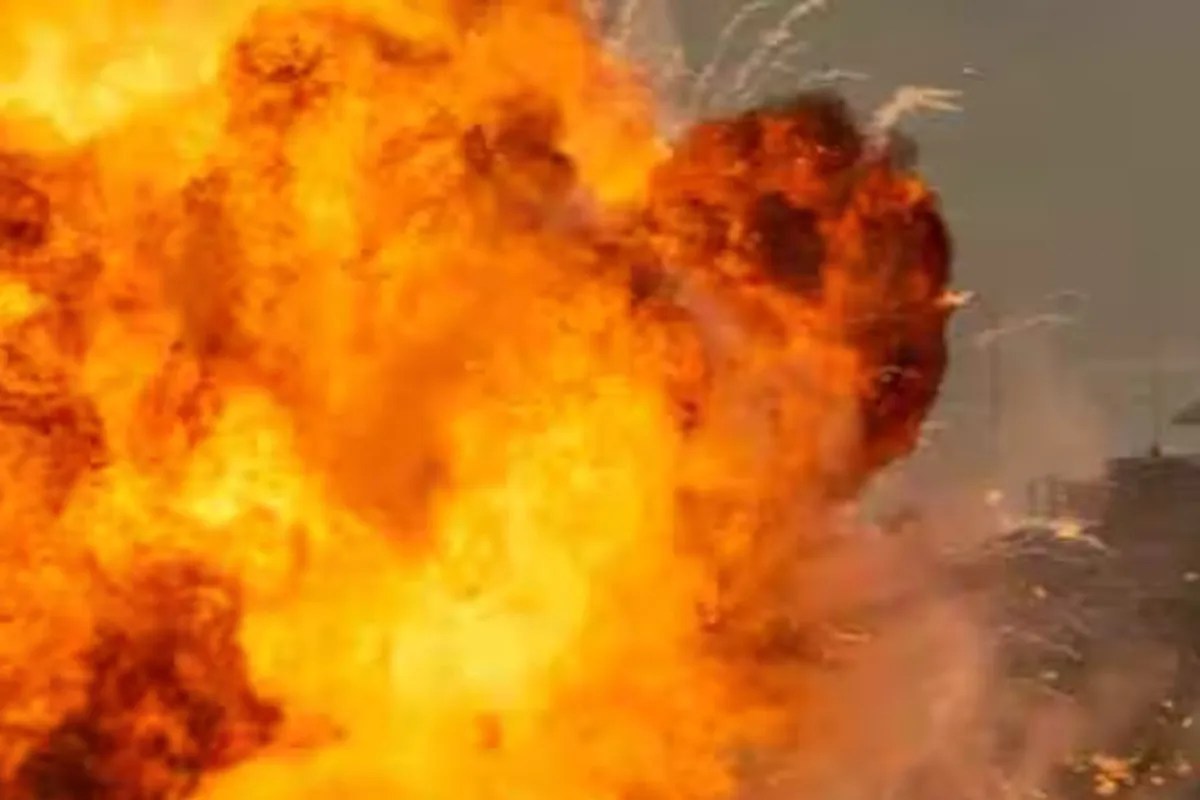
Catastrophic failures in heavy industrial manufacturing rarely stem from isolated, single-point human errors. Instead, they represent the terminal failure of overlapping risk layers within complex socio-technical systems. When an overhead crane collapses into an electric arc furnace during active maintenance or casting phases—as recorded at major heavy industrial plants like the HABAŞ metallurgy complex in Aliağa, İzmir—the resulting detonation is the physical realization of a multi-variable structural collapse. Deconstructing these events requires moving past surface-level incident reporting to examine operational risk vectors, energy release mechanics, and regulatory enforcement economics.
The Operational Mechanics of Furnace Catastrophes
Heavy metallurgy relies on the management of extreme thermal and kinetic energy states. An electric arc furnace (EAF) operates at temperatures exceeding 1,500 degrees Celsius, containing molten metal alongside high-pressure hydraulic lines and structural gas networks.
The physical vector of failure typically involves three interacting components:
- Kinetic Mass Intrusion: Overhead gantry cranes operating in close proximity to high-temperature vessels carry massive mechanical loads. When structural integrity fails—whether through cable snapping, structural fatigue, or mechanical misalignment—the crane mass drops directly into volatile zones.
- Thermal-Chemical Phase Interruption: Introducing cold structural steel, unvaporized moisture, or foreign mechanical components into a high-temperature liquid metal bath creates rapid volumetric expansion. Water or volatile compounds instantly flash-vaporize, expanding to over 1,000 times their liquid volume, which triggers a steam or gas explosion.
- Infrastructure Vulnerability: Maintenance windows inherently alter baseline safety configurations. During refractory relining or boiler replacements, standard safety interlocks are frequently bypassed or modified, widening the margin for systemic error.
The Economic Cost Function of Safety Deficits
Heavy industrial operators face a continuous optimization problem between output maximization and safety overhead. The economic cost function of a plant can be modeled through the tension between capital expenditure on preventative maintenance and the catastrophic tail-risk of operational failure.
When production facilities reduce active maintenance windows to preserve operating uptime, they systematically underinvest in redundancy. In continuous-process environments, shutting down an EAF for scheduled overhauls incurs massive opportunity costs. Consequently, operators often push equipment past its fatigue life cycle.
The financial loss resulting from a single fatal industrial accident—encompassing regulatory fines, criminal liabilities, asset damage, extended operational downtime, and reputational degradation—dwarfs the marginal cost of rigorous preventive maintenance protocols. Yet, localized optimization incentives often encourage middle management to prioritize short-term throughput over long-term asset integrity.
Systemic Oversight and Regulatory Gaps
Industrial accidents in high-hazard sectors frequently expose systemic vulnerabilities in regulatory enforcement and labor oversight. A robust safety regime requires independent verification of mechanical infrastructure, strict adherence to lockout-tagout (LOTO) protocols during maintenance, and active representation by workplace safety committees.
When enforcement mechanisms rely heavily on reactive audits rather than continuous predictive monitoring, safety standards degrade into compliance checklists rather than operational constraints. Furthermore, in regional industrial hubs heavily reliant on heavy manufacturing and scrap metal processing, economic pressures can create implicit friction against stringent safety enforcement.
Strategic Risk Mitigation Playbook
Mitigating catastrophic industrial risk demands a shift from reactive compliance to engineered resilience. Plant operators and regulatory bodies must institutionalize specific structural countermeasures:
- Autonomous Interlock Systems: Implement hardwired physical blocks that automatically halt overhead crane travel when sensors detect unverified thermal anomalies or active maintenance states within furnace zones.
- Dynamic Fatigue Tracking: Transition from time-based maintenance schedules to real-time stress and fatigue monitoring for high-load gantry structures using acoustic emission testing and strain gauges.
- Independent Auditing Protocols: Decouple safety compliance verification from internal plant management to ensure operational bottlenecks cannot override mandatory safety thresholds.
The recurrence of catastrophic plant failures highlights the limits of current industrial risk management. Eliminating these events requires treating structural safety not as an operational expense, but as a core thermodynamic constraint of heavy manufacturing.


