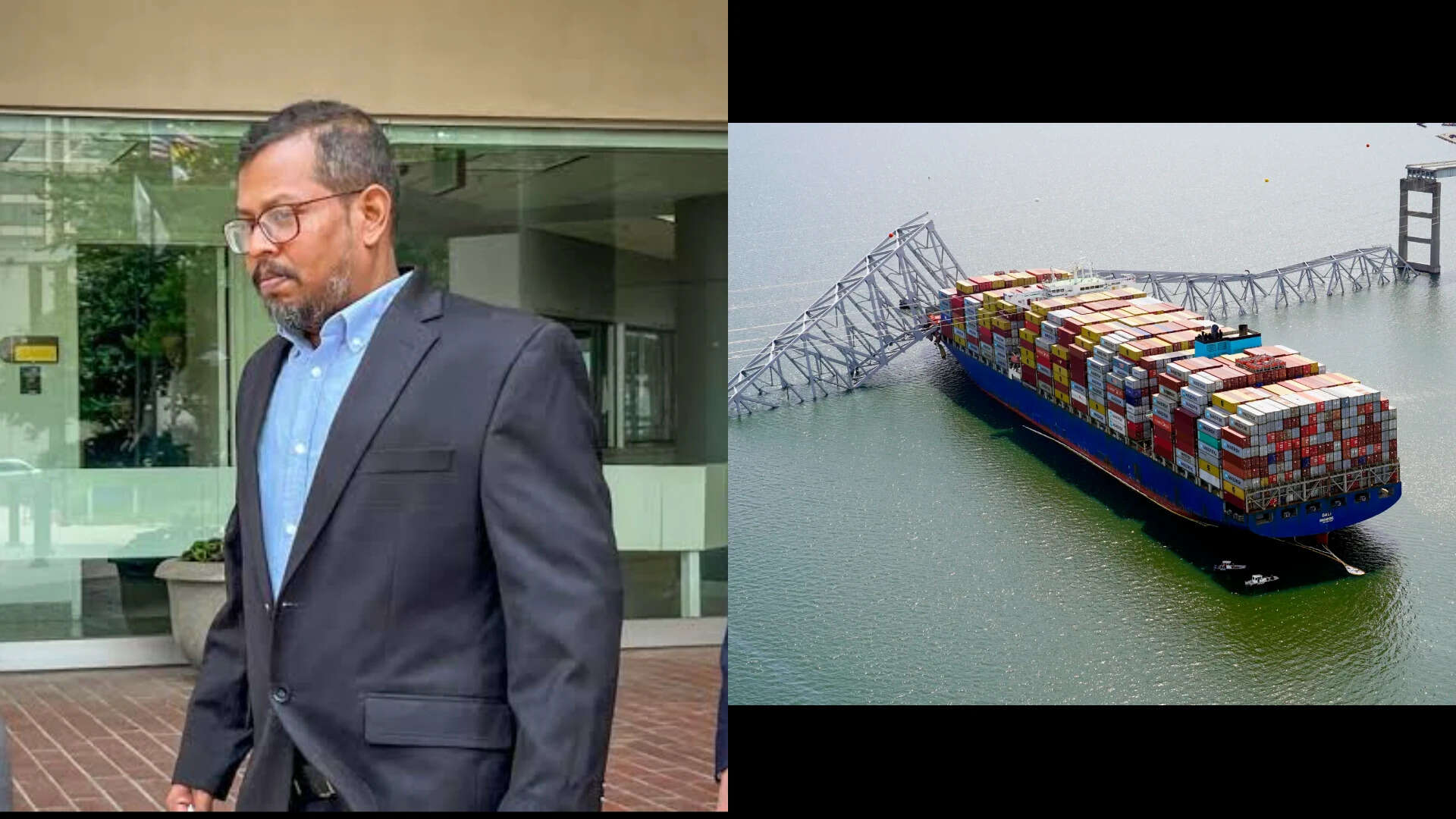
The destruction of the Francis Scott Key Bridge in Baltimore exposed a critical vulnerability at the intersection of modern maritime logistics and aging civil infrastructure. While popular narratives focus heavily on individual operator error or immediate mechanical failures, a rigorous engineering analysis reveals a multi-layered system collapse. The incident represents a predictable outcome when ultra-large container vessels operate within physical constraints designed for an entirely different era of shipping.
To understand the mechanics of the disaster, the event must be deconstructed into two distinct operational phases: the shipboard electrical cascade that rendered the vessel unmanageable, and the structural dynamics of the bridge itself, which lacked the necessary external defenses to withstand a high-energy kinetic impact. For a deeper dive into similar topics, we recommend: this related article.
The Electrical Cascade and Redundancy Breakdown
The foundational failure sequence began within the high-voltage electrical distribution system of the container vessel. Modern container ships rely on complex, integrated diesel-electric or auxiliary generator networks to power both propulsion systems and steering gear. When a vessel loses electrical power—a total blackout—it loses not only its primary means of propulsion but also the hydraulic pumps required to actuate the rudder.
The timeline of the vessel’s mechanical failure highlights a critical vulnerability in emergency switchboard architecture: For additional context on this development, comprehensive analysis is available at The New York Times.
- The Primary Blackout: The initial loss of power occurred due to an unexpected trip of the main diesel generator circuit breakers. This isolated the main generators from the high-voltage switchboard, instantly starving the ship's auxiliary systems of electrical current.
- The Recovery Attempt and Secondary Failure: Vessel logs indicate that the automated power management system attempted to bring a standby generator online. While the generator fired, a secondary failure occurred when the main distribution breakers closed onto a pre-existing electrical fault or suffered an un-isolated short circuit. This caused a second, permanent blackout.
- The Human Factor in Breaker Configuration: Post-incident investigations highlighted specific operational decisions regarding the configuration of the vessel's electrical bus ties and exhaust dampers. The chief engineer's configuration of the ship's automated power systems left the electrical grid vulnerable to a single-point failure, preventing the rapid isolation of the faulted circuit.
A resilient maritime power plant relies on the principle of physical and electrical segregation. By running the electrical grid in a "split-bus" configuration, a fault on one side of the switchboard remains isolated, allowing the redundant half to maintain steering and propulsion. On the transit out of Baltimore, the vessel was operating with a closed bus tie, meaning a singular electrical anomaly propagated instantly across the entire network, defeating the designed redundancies.
Without electrical power, the main two-stroke diesel engine stopped. Unlike smaller vessels with controllable-pitch propellers that can maintain some directional thrust through residual momentum, a direct-drive fixed-pitch propeller provides zero steering capability once engine RPM drops to zero. The vessel became a unguided projectile, carried entirely by its forward momentum and the prevailing hydrodynamic currents of the Patapsco River.
The Kinetics of Collision and Structural Collapse
The structural failure of the bridge cannot be attributed to poor material quality or defective construction; it was an inevitable consequence of basic kinetic energy equations. The Francis Scott Key Bridge was a continuous steel truss bridge, completed in 1977. At the time of its design, the maximum deadweight tonnage of transit container ships was a fraction of modern vessel capacities.
The kinetic energy ($E_k$) of a moving vessel is calculated using the formula:
$$E_k = \frac{1}{2} m v^2$$
Where $m$ represents the displacement mass of the vessel and $v$ represents its velocity. Because velocity is squared, even minor increases in speed exponentially increase the destructive potential of an impact. The vessel in question possessed a displacement mass exceeding 100,000 metric tons. Moving at a transit speed of approximately 8 knots (roughly 4.1 meters per second), the total kinetic energy delivered to the bridge pier upon impact far exceeded the structural design limits of any unreinforced concrete support.
The structural failure progressed through a definitive chain of events:
- Load Path Destruction: The vessel made direct contact with one of the two main concrete piers supporting the central truss span. This pier acted as a critical vertical load-bearing element.
- Immediate Localized Failure: The impact crushed the concrete pier, instantly removing the vertical support for the southern end of the continuous steel truss.
- Global Structural Collapse: Because the bridge was a continuous truss design rather than a series of isolated simple spans, the loss of a single major support member redistributed massive tensile and compressive stresses throughout the entire superstructure. The steel frame could not accommodate this sudden change in load distribution, causing the entire 1.6-mile main span to buckle and collapse into the river within seconds.
The fundamental vulnerability was the complete absence of robust physical diversion systems around the primary piers. The bridge relied on small, localized concrete fenders that were entirely inadequate for stopping or deflecting modern Neo-Panamax class ships.
Structural Interventions and Modern Protection Paradigms
Civil engineering practices must evolve to mitigate the risk posed by the mismatch between vessel scale and infrastructure protection. Protecting vulnerable bridge structures spanning commercial shipping lanes requires the implementation of passive, energy-absorbing barriers designed to prevent vessels from ever making contact with the primary load-bearing piers.
The first line of defense is the construction of artificial islands, or rock islands, surrounding the base of each pier. These islands are built using graded layers of quarry run, core stone, and heavy armor stone. When a drifting vessel approaches the pier, it runs aground on the shallow underwater slope of the artificial island well before its hull can impact the concrete structure. The kinetic energy of the vessel is dissipated through the friction of the hull dragging across the stone substrate, bringing the ship to a controlled stop.
The second methodology involves the installation of large-diameter cylindrical dolphins. These are independent structures driven deep into the seabed around the perimeter of the bridge supports. Built from heavy-gauge steel sheets and filled with concrete or granular material, dolphins are designed to deform plastically under impact.
[Vessel Path] ---> [Dolphin Barrier (Deforms/Absorbs Energy)] ---> [Protected Bridge Pier]
By absorbing the kinetic energy through structural deformation, the dolphin sacrifices itself to preserve the integrity of the bridge pier.
The implementation of these systems introduces distinct engineering trade-offs. Artificial islands require extensive underwater footprints, which can alter local hydrodynamic flow patterns, increase sediment deposition, and require continuous maintenance dredging. Cylindrical dolphins offer a smaller footprint but demand deep structural pile driving, which significantly increases initial capital expenditure and requires sophisticated geotechnical assessments of the riverbed or seabed composition.
The long-term operational strategy for maritime trade corridors must balance these engineering realities. Upgrading physical infrastructure to withstand modern shipping impacts is an economic necessity, but it must be paired with stringent enforcement of maritime operational redundancies. Until physical barriers are universally deployed around vulnerable infrastructure, the global supply chain remains exposed to the systemic vulnerabilities of single-point mechanical failures on ultra-large transport vessels.