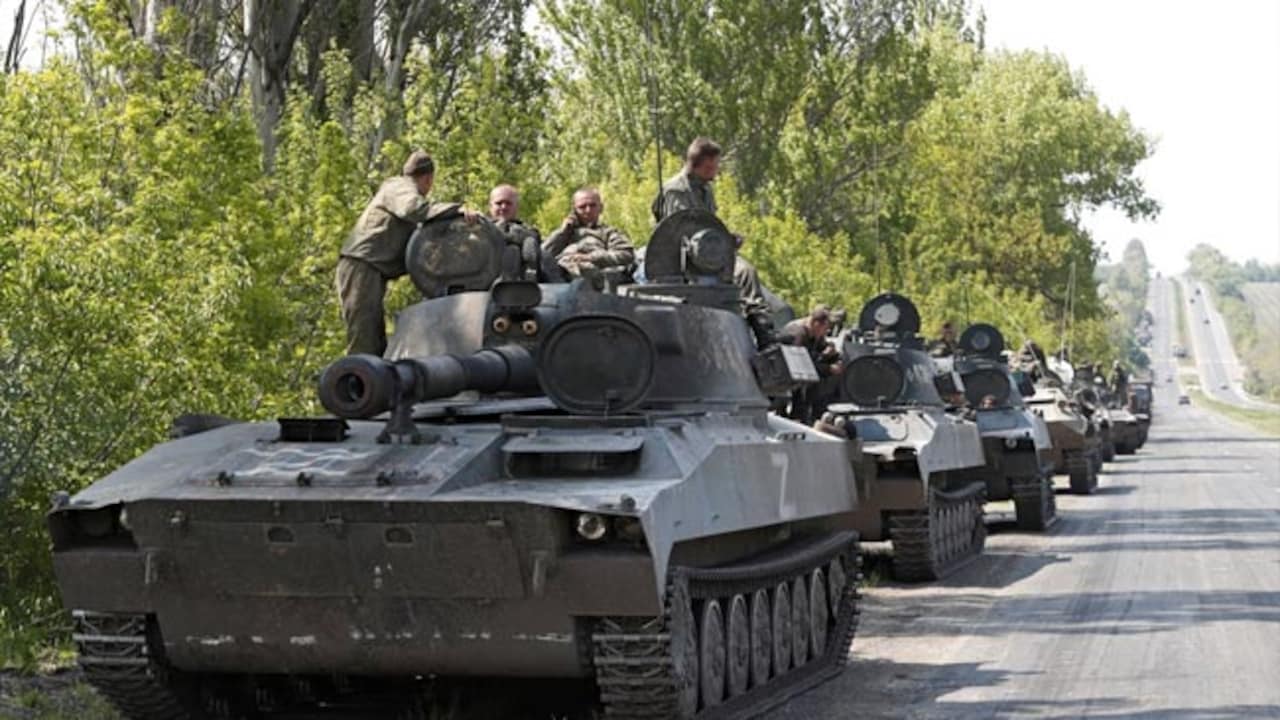
The stability of a highly centralized, authoritarian war effort depends on an absolute monopoly over structural communication. When veteran blogger Alexander Lunin published a video appeal directly to Vladimir Putin on June 25, 2026, alleging systematic torture, extortion, and extrajudicial executions within Russian military units in Ukraine, he did not merely air tactical grievances. By accumulating more than 12 million views within 24 hours on Instagram—a platform legally banned in Russia and accessible only via Virtual Private Networks (VPNs)—Lunin bypassed state information infrastructure. The subsequent Kremlin reaction, articulated by press secretary Dmitry Peskov as an intention to review the "strange wording" of the video, reveals a standardized, highly calculated operational protocol for managing emergent domestic dissent.
Understanding this incident requires moving past the surface-level drama of a soldier's rebellion. Analyzing the structural dynamics of the video, the immediate algorithmic amplification, the psychological mechanics of the subsequent retraction, and the Kremlin's containment strategy provides a precise blueprint of how modern information warfare operates within a closed political system.
The Tri-Faceted Threat Architecture of Ultra-Nationalist Dissent
The political risk of the Lunin video to the Russian state infrastructure cannot be evaluated through the framework of conventional liberal opposition. Instead, it operates within the precise parameters of ultra-nationalist, pro-war dissent—the exact structural vulnerability that animated the Wagner Group mutiny exactly three years prior. The threat architecture of this specific broadcast relies on three distinct operational mechanisms.
1. The Asymmetric Bypassing of the Roskomnadzor Firewall
Because Instagram is officially restricted within the Russian Federation, a video achieving 12 million localized views demonstrates a high saturation of VPN utilization among the civilian and military population. This creates an asymmetric information channel. The state can control terrestrial television and domestic platforms like VKontakte, but it cannot easily throttle peer-to-peer algorithmic cascades on external networks without implementing total, non-signature internet blackouts.
2. The Exploitation of the "Good Tsar, Bad Boyars" Mythos
Lunin’s initial demand for a live, on-air television audience with Putin leveraged a historical Russian political framework: the assumption that the supreme leader is inherently just, but insulated from reality by corrupt, incompetent subordinates. By framing the systemic abuse—specifically the detention of soldiers in crude pits for resisting "suicidal orders"—as an administrative failure hidden from the presidency, the dissent initially presents itself as fiercely loyalist rather than revolutionary.
3. The Threat of Kinetic Retaliation
The structural breaking point of the broadcast occurred when Lunin stated that if an audience was not granted, "the army will turn its weapons against the Kremlin." This statement instantly shifts the video from a localized labor grievance within the military apparatus to an explicit threat of a secondary military mutiny. It directly targets the primary fear of the Russian state security services: the horizontal unification of frontline combat veterans around shared structural trauma.
The Coercion Loop: Analyzing the Anatomy of a Retraction
Within 12 hours of the initial viral spike, Lunin published a second video that radically altered his analytical position. The subsequent broadcast was characterized by aggressive, profane rhetoric, an explicit denial of mutinous intent, and a claim that external actors had intentionally twisted his statements.
This rapid shift illustrates the execution of the state security apparatus's standard coercion loop. This operational sequence is designed to neutralize an information threat without transforming the dissident into a martyr for the ultra-nationalist community.
[Phase 1: High-Velocity Digital Penetration]
                 │
                 ▼
[Phase 2: Administrative Attribution & Location]
                 │
                 ▼
[Phase 3: The Asymmetric Lever Application]
                 │
                 ▼
[Phase 4: Mandatory Forced Recantation]
Phase 1: High-Velocity Digital Penetration
The unsanctioned asset publishes raw, emotionally volatile material from a regional hub (in this case, the Voronezh region, a critical logistical node bordering Ukraine). The content gains instant traction because it validates widespread, unvoiced systemic pressures, such as the high casualty rates associated with frontal infantry assaults.
Phase 2: Administrative Attribution and Location
State security services identify the exact physical coordinates and network architecture of the publisher. Because Lunin was a known veteran wearing official medals, the state did not require complex signal intelligence to verify his identity.
Phase 3: The Asymmetric Lever Application
The state confronts the actor. The leverage applied is rarely purely physical; instead, it utilizes legal and financial asymmetry. Under current Russian wartime legislation, threatening a military mutiny or "discrediting the armed forces" carries a baseline penalty of up to 15 years of imprisonment. The asset is presented with an binary choice: immediate, indefinite isolation under treason charges, or a calibrated public recantation that preserves their physical safety.
Phase 4: Mandatory Forced Recantation
The actor releases a secondary video. To maintain credibility among his original ultra-nationalist audience, the actor does not apologize meekly. Instead, as Lunin demonstrated, they adopt an angry, combative stance, blaming "the media" or "outside interpreters" for misconstruing their words. This allows the asset to save face while structurally neutralizing the political threat to the state.
The Kremlin's Linguistic Containment Framework
The official response from Kremlin spokesperson Dmitry Peskov provides an instructional masterclass in bureaucratic risk minimization. Rather than executing an immediate, heavy-handed denunciation, which would validate the video's gravity and drive further curiosity across domestic networks, the state deployed a linguistic strategy designed to minimize the event's political value.
       [Raw High-Threat Event]
                 │
                 ▼
     [Acknowledge Existence Only]
                 │
                 ▼
     [Label Wording as "Strange"]
                 │
                 ▼
[De-escalate to Low-Level Administrative Matter]
By characterizing the appeal's contents as containing "strange wording" while simultaneously claiming the administration "has not yet had a chance to look at it in detail," Peskov executed a precise double-move. First, he signal-flashed to state media outlets that the topic is not to be elevated into prime-time political discourse. Second, by calling the wording "strange," the state subtly implies that the speaker is unstable, eccentric, or operating under a cognitive deficit, thereby decoupling the individual from the broader, disciplined military apparatus.
This approach minimizes the risk of the "Streisand Effect," where an aggressive state suppression campaign inadvertently signals to the broader public that the underlying allegations are fundamentally true. The Kremlin shifts the narrative from a structural crisis of military discipline to a localized, odd incident involving a single, emotional veteran in the Voronezh region.
Institutional Fragility and the Limitations of Systemic Control
The structural limitation of the Kremlin’s information containment strategy lies in its inability to fix the underlying material causes of the dissent. While the state security apparatus can successfully force individual bloggers to walk back threats of mutiny, it cannot easily suppress the compounding administrative friction within the military chain of command.
Independent investigative documentation and accounts from military personnel who have entered processing systems indicate that complaints regarding "meat-grinder" tactics, illegal detention cells (often referred to as zindans or pits), and financial extortion by mid-level officers are chronic symptoms of an overextended military hierarchy. When commanders are under immense structural pressure to deliver territorial gains without adequate mechanized support, they substitute human capital for materiel. This operational reality inevitably produces internal disciplinary crises that occasionally burst through the digital firewall.
The strategic play for state survival relies on keeping these crises atomized. The moment a single veteran's voice shifts from an isolated social media post into a horizontally integrated network of military bloggers, the state's information control model faces a systemic bottleneck. The Lunin incident proves that while the Russian state retains the absolute capacity to suppress individual actors through immediate legal and physical leverage, its digital perimeter remains highly porous, vulnerable to sudden, high-velocity narrative shocks originating from its own conservative base.
For a detailed visual discussion on how public dissent and internal friction impact organizational stability within modern military systems, analyze The Z-patriot revolt analysis. This video provides critical structural context on how regional broadcasts bypass state security firewalls and the psychological framework of veteran communities responding to prolonged conflict environments.


