The floorboards in the old municipal archive building always groaned in the exact same place—about three paces past the arched oak doorway where the draft from the courtyard hit your ankles. I remember standing there in the autumn of 2012, holding a brittle, onion-skinned translation of a letter written from a jail cell in Pretoria a century prior, trying to understand what a man meant when he wrote that anger was a fuel that burned the house down around the chef.
Outside, the street was noisy. Inside, it was deafeningly quiet.
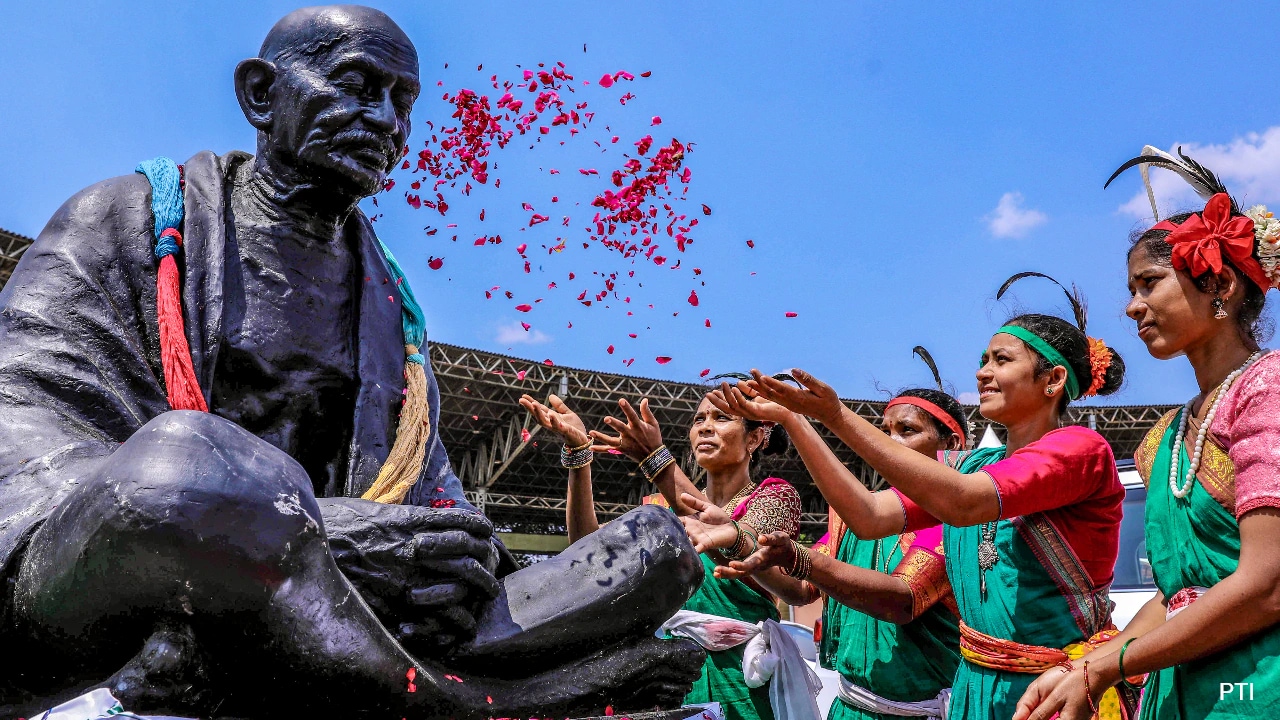
History has a habit of turning flesh-and-blood agitators into bronze statues. We sanitize them. We sand down their rough edges, bleach the mud off their sandals, and lock their radical, disruptive ideas into glass cases where they can’t threaten anyone’s breakfast. Mahatma Gandhi suffers from this posthumous domestication more than most. We treat him like a greeting card quote, a soft-focus patron saint of peaceful protests who conveniently ignored the messy mechanics of human fury.
Step into any modern newsroom, however, and the ghost of that quiet man looks less like a relic and more like an emergency exit.
Recently, the United Nations issued a warning that reads less like a diplomatic bulletin and more like a post-mortem on our collective sanity. People are suffering. Not just in the abstract, statistical sense that fills quarterly reports and humanitarian appeals, but in the raw, grinding, domestic way that eats away at communities from the inside out. Polarization has become our default architecture. We wake up, check our pocket-sized windows into the global anxiety machine, and immediately enlist in a war we didn’t sign up for. Every disagreement is an existential threat. Every opposing viewpoint is an act of aggression.
We have weaponized speech, commercialized outrage, and built an entire modern civilization on the lucrative premise that someone else’s humiliation is your entertainment.
Gandhi understood this pathology long before algorithms optimized it for profit. He called it Satyagraha—not merely passive resistance, which sounds like giving up while taking a beating, but soul-force. It was an active, muscular refusal to participate in the escalation of harm. It required more courage than throwing a stone, because throwing a stone lets you off the hook. A stone is simple. A stone asks nothing of your character.
Consider what happens when a society abandons that restraint.
Imagine a neighborhood grocery store owner—let’s call him Arthur, sixty-four years old, with flour permanently dusted into the cracks of his knuckles—watching the nightly news cycle bleed into his afternoon inventory. He doesn't care about geopolitics in the grand, sweeping terms of a summit communique. He cares about the price of eggs, the rising hostility of the commuters who slam his front door, and the cold, sinking feeling that the social contract is fraying like an old wool sweater. Arthur isn't a politician. He’s just tired. And fatigue, multiplied across eight billion people, is a dangerous accelerant.
When the UN points to Gandhi’s principles of peace today, it is not indulging in nostalgia. It is issuing a distress call. The international body is recognizing that our current technological and political trajectories lead to a very specific kind of ruin—one where we are entirely connected yet completely incapable of living alongside one another.
We are starving for an alternative to the endless loop of retaliation.
The core misconception of peace is that it is the absence of conflict. It is not. Conflict is oxygen; it is the natural byproduct of diverse minds rubbing against one another in a confined space. Peace is the quality of the container. When the container is built on ego, insecurity, and the desperate need to be right, any spark creates an explosion. When the container is built on radical empathy and disciplined non-cooperation with malice, the spark dies in the ash.
When Gandhi walked two hundred and forty miles to the sea in 1930 to pick up a handful of untaxed salt, the British Empire possessed machine guns, battleships, and an administrative apparatus that spanned continents. To a rational observer calculating power through the barrel of a gun, the march was absurd. It looked like theater.
Yet empires are rarely brought down by weapons of the same weight; they are hollowed out by moral incoherence. When thousands of ordinary citizens marched toward salt pans, knelt, and took blows to the skull without raising a fist, something broke inside the machinery of oppression. The oppressors were forced to look at their own reflection. They were forced to confront the ugliness of their dominance when met with unyielding, dignified humanity.
That is what we have lost. We have forgotten how to make our opponents look into a mirror.
Instead, we scream louder. We retreat into ideological bunkers where everyone nods at our grievances and villainizes our neighbors. We mistake volume for virtue. If you shout an insult through a fiber-optic cable, you feel powerful for three seconds, and then you feel hollower than before.
The UN’s appeal reminds us that the principles of peace are pragmatic tools, not spiritual luxuries. They are survival mechanisms.
Look closely at the architecture of modern burnout. It is born of friction without resolution. We spend our days defending our turf against imaginary invaders. We are exhausted because we are constantly at war in our minds, long before a single shot is fired.
Applying peace as a principle means practicing non-attachment to the need to win every petty skirmish. It means developing what behavioral psychologists call cognitive flexibility—the terrifying ability to admit that the person yelling at you might be operating out of a wound you know nothing about. It means refusing to pass the contagion of cruelty down the line.
If you have ever stood in a room where two people are screaming at each other over something trivial, you know the physical weight of it. Your shoulders climb toward your ears. Your breath shortens. Your chest tightens. Now scale that up to the planetary level. That is our global nervous system right now: hyper-vigilant, inflamed, and twitching toward catastrophe.
Gandhi called the inner discipline required to counteract this Ahimsa—not just non-injury in action, but the absence of the desire to injure in thought.
It sounds impossible. It is supposed to be. Mastery over oneself is the only frontier left that actually matters.
We don't need another treaty signed in a gilded hall by men in expensive suits who will be retired by the time the ink dries. We don't need another algorithmic patch for a social media platform designed to harvest our outrage. We need a fundamental realignment of our relationship with conflict.
We need to remember that the person across the aisle, across the street, or across the screen is made of the same fragile, temporary clay as we are.
The archives in that old municipal building are still there. The letters are slowly turning to dust, their ink fading into the gray fibers of the paper. But the challenge they laid down remains entirely intact, waiting patiently for a world smart enough, and tired enough of suffering, to finally pick it up.