The commercial viability of interplanetary spaceflight scales non-linearly with the dry mass of the launch vehicle. When SpaceX launched its 124-meter Starship Version 3 (V3) architecture from Starbase, Texas, the objective extended beyond the superficial metrics of height, volume, or raw thrust. The structural redesign of the vehicle—specifically the transition from Block 2 to Block 3—represents a calculated attempt to solve the fundamental physics problem of the payload mass fraction. By engineering out structural deadweight and increasing engine chamber pressures, the architecture targets the core economic barrier of modern aerospace: the marginal cost per kilogram delivered to low Earth orbit (LEO).
Understanding the strategic implications of this hardware iteration requires looking past the visual spectacle of a suborbital test flight. The deployment of the V3 architecture alters the unit economics of the Starlink megaconstellation, redefines the operational timeline of NASA’s Artemis lunar landing program, and tests the physical limits of stainless-steel aerothermal shielding.
The Three Pillars of Starship V3 Architecture
The redesign of the integrated Starship and Super Heavy stack is dictated by a single mathematical reality: the Tsiolkovsky rocket equation.
$$\Delta v = I_{\text{sp}} g_0 \ln \left( \frac{m_0}{m_f} \right)$$
To increase the final velocity ($\Delta v$) or the allowable payload mass within the final mass ($m_f$), an engineer must either increase the specific impulse ($I_{\text{sp}}$) of the propulsion system or radically minimize the structural dry mass of the vehicle stages. The V3 architecture addresses these variables through three highly interdependent mechanical pillars.
1. Propellant Volume Maximization and Structural Elongation
The physical dimensions of the Block 3 stack have been extended to an overall height of 124.4 meters. This elongation is not an aesthetic choice; it directly expands the volumetric capacity of the cryogenic propellant tanks. By stretching the liquid methane ($\text{CH}_4$) and liquid oxygen ($\text{LOX}$) tanks, the total propellant mass at liftoff expands to approximately 3,400 metric tonnes for the Super Heavy booster alone, alongside a corresponding increase in the upper stage capacity.
This optimization leverages a favorable geometric scaling law: volume increases cubically with structural scaling, while surface area—and therefore skin mass—increases quadratically. This structural choice improves the mass fraction of the vehicle before ignition occurs.
2. The Micro-Aesthetics of Raptor 3 Propulsion
The transition to the Raptor 3 engine removes the external complex of tubes, sensors, and secondary plumbing that characterized the first-generation variants. This optimization yields distinct advantages:
- Mass Reduction: Eliminating auxiliary hardware reduces the dry weight of each engine, which is highly leveraged when multiplied across the 33-engine array of the Super Heavy booster.
- Thermal Protection: Component consolidation allows the engine to act as its own heat shield, drastically lowering the mass of the protective shielding required at the base of the booster.
- Thrust-to-Weight Optimization: Sea-level Raptor 3 variants produce 250 tonnes of force, up from the 230 tonnes achieved by Block 2 iterations. This is driven by an increase in main chamber pressure, forcing more mass through the nozzle throat per unit of time.
3. Aerodynamic Control Surface Deconstruction
The upper stage configuration features a complete overhaul of the forward and aft actuation flaps. In prior iterations, large, heavy forward flaps required massive torque from electric motors to cross the supersonic-to-subsonic boundary during atmospheric entry. The V3 architecture minimizes the surface area of these control structures and shifts their hinge lines further leeward. This relocation shields the vulnerable mechanisms from the peak stagnation temperatures of plasma entry, simultaneously reducing aerodynamic drag and structural mass.
The Cost Function of Low Earth Orbit Deployment
The primary commercial objective of Starship is not deep-space exploration, but the radical reduction of launch costs for heavy payloads. The baseline configuration of a fully reusable Starship targets a payload capacity exceeding 100 metric tonnes to LEO. The financial mechanics of this operation rely on shifting the cost function of space launch from a capital expenditure model (expending an entire rocket per mission) to an operational expenditure model (fuel, logistics, and rapid inspection).
| Variable Metric | Block 1 Baseline | Block 3 V3 Configuration |
|---|---|---|
| Total Stack Height | 121.3 meters | 124.4 meters |
| Super Heavy Thrust | ~74,000 kN | ~81,000 kN |
| Payload Capacity (Fully Reusable) | ~15 metric tonnes | 100+ metric tonnes |
| Primary Structural Material | 3.97mm Stainless Steel | Optimised 304L/Internal Alloys |
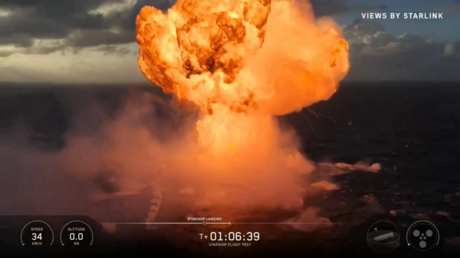
This structural leap shows why old aerospace metrics are obsolete. A launch system that achieves 90% reusability but experiences a 5% structural failure rate remains economically unviable due to the high replacement cost of hardware. The V3 iteration focuses heavily on structural survival. During the Flight 12 suborbital profile, the upper stage deployed a combination of functional and simulator payloads while actively filming its own thermal protection system via specialized Starlink assets. The data gathered maps the degradation profile of the ceramic heat shield tiles against real-world plasma friction, pointing out exactly where the structural thermal barrier remains over-engineered or dangerously thin.
The Logistical Bottleneck: On-Orbit Propellant Transfer
While the V3 architecture addresses the immediate needs of mass-to-orbit for internal programs like Starlink, its execution of deep-space profiles—such as NASA’s Artemis lunar landing contract—remains bottlenecked by on-orbit fluid dynamics. Starship cannot travel to the Moon or Mars on a single load of propellant; the upper stage expends nearly its entire fuel margin simply achieving LEO.
To send a single Starship Human Landing System (HLS) to the lunar surface, SpaceX must execute a complex orbital ballet:
- Launch a Depot Ship: A specialized Starship variant optimized purely for fuel storage is placed into LEO.
- Execute Tanker Sorties: A sequence of multiple Starship tanker flights must launch in rapid succession to fill the depot with hundreds of tons of cryogenic liquid methane and oxygen.
- Booster Catch and Recycle: The viability of this model rests entirely on the launch pad's ability to catch the returning Super Heavy booster using mechanical tower arms and prepare it for another flight within hours.
- The Thermodynamic Challenge: Transferring cryogenic liquids in microgravity is an unproven industrial process. Without gravity to separate gas from liquid inside the tanks, the system must utilize settling burns—using small auxiliary thrusters to create a minor artificial gravity vector—to ensure liquid fuel, rather than boiled-off gas, moves through the fluid couplers.
If the booster recycling cadence stalls or cryogenic boil-off rates exceed predictions within the LEO depot, the entire architecture's efficiency plummets. This structural dependency makes rapid launch pad reuse the ultimate gatekeeper of the program’s long-term unit economics.
Strategic Trajectory and Institutional Risk
The structural evolution of Starship creates a clear divergence between technical capability and institutional timelines. By introducing the V3 architecture, the manufacturing pipeline has successfully accelerated the vehicle's theoretical payload capacity. However, engineering velocity continues to clash with regulatory and infrastructure constraints.
The immediate bottleneck is no longer engine performance or structural mass fractions; it is pad infrastructure and operational cadence. To sustain the dozens of annual launches required to validate on-orbit propellant transfer, the operational footprint must expand beyond the single active orbital pad configuration utilized in South Texas.
The strategy going forward depends entirely on two metrics: the structural survival rate of the upper stage during peak deceleration heating, and the turnaround time of the mechanical recovery system on the launch tower. If the hardware can be caught, inspected, and restacked within a multi-day window, the marginal cost of accessing space will drop by an order of magnitude, rendering all current expendable heavy-lift architectures obsolete. If thermal protection tile loss continues to require extensive manual refurbishment between flights, Starship will temporarily function as a highly optimized, partially reusable heavy-lift asset rather than the rapidly cycling transport system promised by its architecture.
The technical achievement of the V3 architecture lies in its ruthless simplification of the engine envelope and its optimization of stage dimensions to maximize volumetric efficiency. The data harvested from suborbital trials will now dictate the structural tolerances of the Block 4 variants already entering production. The strategic play is clear: outbuild the physics of structural deadweight until the economic cost of reaching orbit becomes an operational afterthought.
For a deeper look into the fluid dynamics of cryogenic staging and the mechanical evolution of the Raptor engine program, you can review this detailed engineering breakdown of the Starship propulsion system, which analyzes the structural performance and ignition profiles of these vehicles during full-scale launch operations.