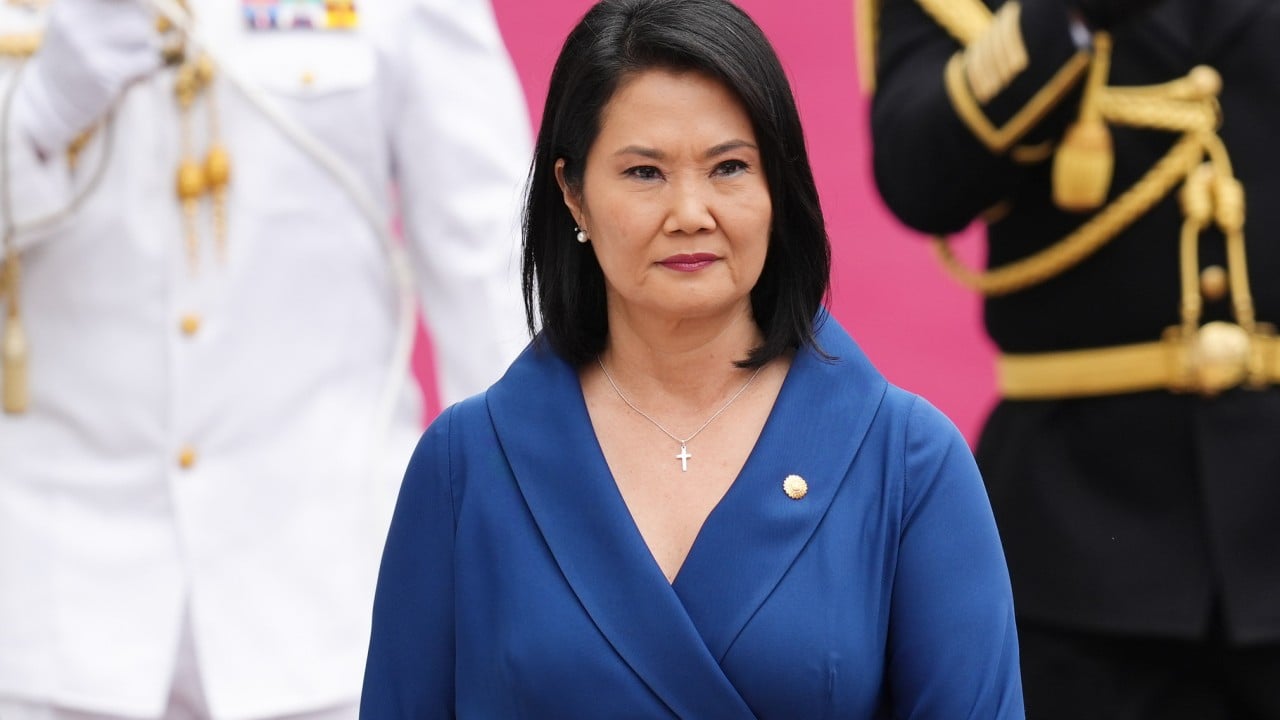
Peru has installed its ninth president in ten years, transforming political volatility from an acute shock into a chronic structural condition. Keiko Fujimori secured the presidency through a razor-thin margin of fewer than 50,000 votes against left-wing candidate Roberto Sánchez, marking the culmination of her fourth consecutive presidential campaign. This victory is not merely an isolated electoral outcome; it represents a calculated shift in the country's governance model, driven by public desperation over organized crime, economic stagnation, and institutional decay. Analyzing this administration requires moving past superficial political commentary to examine the underlying institutional mechanisms, legislative constraints, and economic trade-offs defining the new executive branch.
The Structural Drivers of the Electoral Shift
The primary catalyst for Fujimori's election victory was the complete breakdown of public security, particularly the proliferation of extortion rackets and micro-extortion networks targeting urban commerce and transport. In political economy terms, when the state fails to supply its most basic public good—physical security—the electorate's utility function shifts entirely toward order, sacrificing democratic niceties for coercive efficacy.
Fujimori capitalized on this security deficit by importing security frameworks pioneered by Nayib Bukele in El Salvador. This strategy involves three distinct operational variables:
- Centralized Coercion: Deploying the military to temporarily lead policing operations in high-crime urban and regional zones.
- Incapacitation Infrastructure: Constructing high-capacity megaprisons modeled after foreign maximum-security templates to permanently isolate high-risk criminal actors.
- Judicial Insulation: Implementing anonymity protocols for judges presiding over organized crime trials to eliminate targeted intimidation and corruption.
This hardline approach addresses immediate symptoms of institutional failure, but it introduces severe moral hazard and long-term civil liberties costs. By prioritizing speed of prosecution and detention over procedural safeguards, the administration risks entrenching a permanent state of penal exception.
The Legislative Matrix and Institutional Defense
Unlike previous executives who faced immediate impeachment or forced removal due to hostile, fragmented legislatures, Fujimori enters office with structural legislative padding. The return to a bicameral legislature—featuring a 60-seat Senate and a 130-seat Chamber of Deputies—alters the institutional chess board.
Fujimori's party, Popular Force, alongside its primary ideological ally, Popular Renovation, controls half of the newly minted Senate seats. This threshold changes the political game theory of presidential survival. Under previous single-chamber configurations, congressional coalitions could easily mobilize the votes required for presidential vacancy motions under vague "moral incapacity" clauses.
The institutional math now dictates a much higher barrier for opposition-led removal attempts. However, this defensive legislative wall creates a separate governance bottleneck. Control over the Senate does not guarantee productive policymaking; it merely prevents executive termination. The administration faces a deeply polarized congress where opposing blocs have already demanded the total reversal of laws passed by the previous legislature that critics argue weaken anti-corruption frameworks.
The Economic Cost Function
Beyond security, the executive agenda targets a 15% increase in the national minimum wage alongside a structural reorganization of rural social services aimed at mitigating chronic malnutrition. From a macroeconomic perspective, raising the wage floor while attempting to stimulate private sector investment creates an immediate policy contradiction.
Private investment relies on capital predictability and low regulatory friction. Fujimori's campaign platform promised to streamline public-private partnerships (PPPs) for major infrastructure development. Yet, capital allocation will be heavily constrained by regional disparities. The electoral map revealed a stark geographic fracture: urban centers and the Pacific coast heavily backed Fujimori, while the southern Andean highlands overwhelmingly voted for Sánchez.
Economic policies that favor coastal industrial corridors and capital-intensive mining projects frequently exacerbate grievances in high-altitude, resource-extraction regions. If rural social programs fail to distribute economic dividends rapidly, regional friction will translate directly into roadblocks, strikes, and supply chain disruptions. Furthermore, the incoming administration must immediately budget for defensive infrastructure against the cyclical onset of El Niño, which threatens coastal agriculture and logistics.
Strategic Implementation Priorities
To survive a full five-year term without falling victim to the cycle of executive turnover, the administration must execute a strict sequencing of priorities. First, the deployment of military forces to secure urban centers must yield statistically verifiable reductions in extortion rates within the first two quarters to justify the suspension of standard policing methods. Second, fiscal expansion via minimum wage hikes must be offset by productivity incentives to prevent accelerated informalization of the labor market.
The immediate operational play for the executive branch is not legislative overreach, but institutional consolidation. Capitalize on the Senate majority to lock in infrastructure PPP frameworks before regional opposition consolidates, while using targeted social expenditures in the southern highlands to blunt the vector of political insurgency.