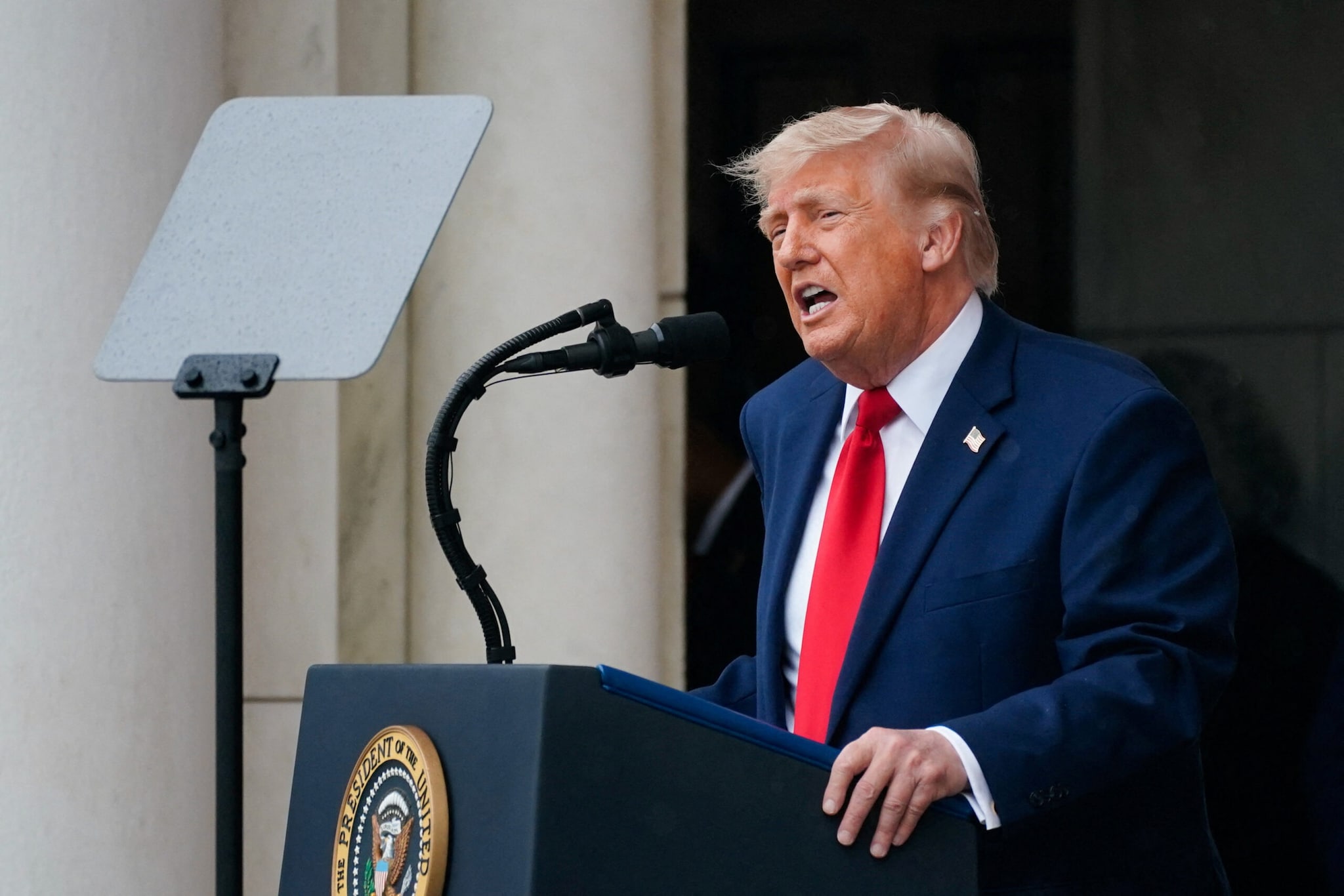
The consolidation of political power within a ruling coalition requires a mathematically viable mechanism for succession. When a structural term limit forces a transition of leadership, an incumbent executive must design a continuity model that simultaneously satisfies the ideological core, expands peripheral voter acquisition, and stabilizes the administrative apparatus. Donald Trump’s public declaration that Vice President JD Vance and Secretary of State Marco Rubio constitute an "unbeatable" team for 2028 is not an idle rhetorical exercise. It is a strategic blueprint designed to solve the structural vulnerabilities that typically trigger the fragmentation of populist movements when the founding executive steps down.
Understanding the viability of a Vance-Rubio ticket requires moving past subjective media narratives regarding personality alignment. Instead, the proposition must be evaluated through the objective lenses of demographic math, institutional balancing, and factional risk mitigation.
Factional Equilibrium: The Populist-Establishment Interface
A primary failure point for populist political movements occurs during the handoff from a charismatic, foundational leader to an institutional successor. The core constituency demands ideological purity, while general election success requires institutional competence and broader market appeal. A Vance-Rubio configuration attempts to build a structural bridge across this divide by optimizing two distinct variables:
- Core Base Retention (The Populist Variable): JD Vance represents the institutionalization of the political core. His value proposition is anchored in economic nationalism, working-class realignment, and structural opposition to the pre-2016 elite consensus. In a prospective primary, Vance holds a definitive advantage, commanding 40% support among potential Republican nominees according to Focaldata polling, compared to Rubio’s 14%. Vance ensures the preservation of the activist base.
- Peripheral Customer Acquisition (The Institutional Variable): Marco Rubio operates as a high-efficiency mechanism for capturing center-right voters, suburban moderates, and traditional institutionalists who are aligned with executive policy but friction-sensitive regarding political style. Rubio’s recent high-profile defenses of executive action on complex foreign policy files demonstrate an ability to translate nationalist priorities into traditional institutional prose.
This combination functions as a political portfolio optimization technique. By pairing a high-beta populist anchor with a low-volatility institutional asset, the ticket lowers the overall risk of factional defection, locking in the core while minimizing the suburban bleeding that has structurally capped the party's growth in recent cycles.
Demographic and Geographic Arbitrage
Winning a national election requires a precise distribution of votes across a highly specific, non-negotiable map. The Vance-Rubio ticket creates a complementary geographic and demographic matrix that neutralizes traditional opposition advantages.
The Rust Belt-Sun Belt Axis
The path to an Electoral College majority requires simultaneous victory in two distinct economic geographies: the deindustrialized Upper Midwest and the rapidly growing Sun Belt.
Vance’s political identity is structurally tied to the Rust Belt, offering a direct mechanism to retain or claw back low-propensity industrial voters in Pennsylvania, Michigan, and Wisconsin. Rubio provides a secure anchor in the Sun Belt, locking down Florida’s substantial electoral prize and offering a cultural and linguistic bridge to the southwest, specifically Arizona and Nevada.
Latino Voter Optimization
The structural shift of Latino working-class voters toward the Republican coalition is one of the most significant realignments in modern political history. A ticket featuring Rubio, a fluent Spanish-speaking Hispanic conservative with deep roots in the crucial South Florida laboratory, changes this shift from a cyclical anomaly into a structural lock.
[Traditional Coalition] ──> Suburban Churn + Base Mobilization = Volatile Path
[Vance-Rubio Axis]       ──> Rust Belt Populism + Sun Belt Hispanic Realignment = Multi-Front Optimization
This dynamic forces the opposition to play defense in traditionally secure jurisdictions, spending finite capital to protect margins that were once guaranteed.
Administrative Complementarity and the Foreign Policy Deficit
A presidential ticket must present a credible model for governance. The combination of Vance and Rubio provides a unique division of labor that balances domestic economic priorities with global strategic positioning.
- The Domestic Economic Axis (Vance): Vance’s focus centers on industrial policy, supply-chain repatriation, and domestic labor protection. His background allows him to direct the regulatory and economic architecture of the state toward working-class preservation.
- The Global Strategic Axis (Rubio): As Secretary of State and a long-time member of the foreign policy establishment, Rubio commands immediate institutional credibility. This distribution of expertise allows the ticket to execute a highly complex, dual-track strategy: pursuing economic nationalism at home while maintaining a sophisticated, assertive posture on the global stage.
This framework directly addresses a common vulnerability of populist tickets: the perception of administrative instability or a lack of international competence. Rubio’s presence serves as an insurance policy for institutional stakeholders, signaling that structural changes to the domestic economy will not result in a chaotic collapse of international alliances or global market predictability.
Structural Bottlenecks and Factional Friction Point Analysis
No political strategy is devoid of structural risk. While a Vance-Rubio ticket presents a powerful theoretical model, its execution faces severe operational bottlenecks that could prevent it from materializing.
The Order-of-Precedence Conflict
The most immediate barrier to entry is the top-of-the-ticket configuration. Axios reporting indicates that the preferred institutional arrangement is Vance at the apex of the ticket, with Rubio occupying the secondary position. While this satisfies the populist core, it introduces substantial friction.
A sitting Vice President rarely yields the top slot without a protracted, capital-intensive primary struggle. If Rubio or his institutional backers attempt to invert the ticket, the resulting internal friction could destroy the very coalition the arrangement is designed to preserve. A primary battle would force both actors to highlight their ideological differences, damaging their ability to later merge into a cohesive general election unit.
The Anchor of Ongoing Operations
Both potential candidates are deeply embedded in the execution of current executive actions, including highly sensitive and polarizing international engagements. Defending an active administration’s foreign policy files carries a high liability cost if those operations face setbacks or prolonged public fatigue before 2028. The strategic utility of Rubio’s smooth institutional defense of current policy is asset-tested daily; any degradation in the public perception of current administrative outcomes directly diminishes the future electoral value of both actors.
The Strategic Path Forward
To translate a theoretical "dream team" into an operational reality, the actors must execute a highly coordinated, multi-stage sequencing strategy over the next 24 months.
First, Vance must continue to deepen his institutional footprint, expanding his policy portfolio beyond domestic populism into international statecraft to prove he can command the entire apparatus. Concurrently, Rubio must maintain his absolute alignment with the populist core, demonstrating to activist stakeholders that his traditional institutional style does not imply a desire to revert to the pre-2016 policy consensus.
The definitive play requires an early, non-aggression pact between the Vance and Rubio factions. Rather than entering a destructive primary cycle that burns capital and alienates core constituencies, the two camps must quietly formalize a division of labor well ahead of the primary season. By presenting an integrated front early, they can freeze out alternative challengers, consolidate donor networks, and present the electorate with an institutional fait accompli. If they successfully manage this internal alignment, they will force their opposition to contend with a structural juggernaut that is optimized to win across every critical geographic and demographic frontier.
The strategic value of this potential ticket is explored in greater detail in this analysis of the 2028 Republican field and the shifting dynamics of the MAGA succession plan, which breaks down recent polling data and structural advantages of the Vance-Rubio pairing.