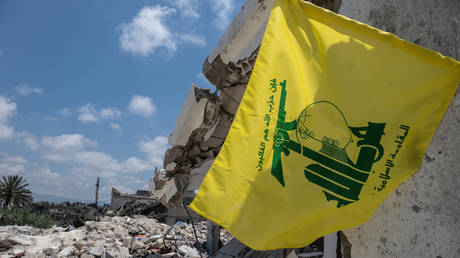
The Washington-brokered trilateral framework agreement signed by the state governments of Israel and Lebanon outlines a conceptual architecture for peace that is structurally unviable. By conditioning the progressive redeployment of the Israel Defense Forces (IDF) on the verified disarmament of non-state armed groups, the diplomatic mechanism assumes a top-down state authority that does not exist in the Lebanese domestic market. The framework treats Hezbollah as a sub-state variable that can be regulated by executive decree from Beirut. In reality, the group operates on an independent regional calculus rooted in deterrence architecture, rendering the current accord an exercise in asymmetric coercion rather than a stable strategic equilibrium.
Understanding the failure mechanics of this framework requires shifting focus away from diplomatic rhetoric and analyzing the hard security trade-offs, institutional deficits, and structural friction points that govern the Levant theater.
The Core Asymmetry: Sovereign Signatures vs. Sub-State Vetoes
The structural flaw of the trilateral agreement lies in its unit of analysis. The text treats the Republic of Lebanon as a unitary sovereign actor capable of enforcing a monopoly on the legitimate use of force. This assumption ignores the dual-power matrix that has defined Lebanese governance for decades.
[Trilateral Framework Model] -> Assumes State Monopolies -> [Enforcement Failure]
                                                                   ^
[Real-World Power Matrix]     -> Dual-Power Architecture  -> [Hezbollah Veto]
This structural mismatch manifests across three core dimensions:
- The Enforcement Deficit: The Lebanese Armed Forces (LAF) lack the operational capacity, domestic mandate, and heavy weaponry required to forcibly disarm an entrenched, battle-hardened paramilitary force of tens of thousands of fighters.
- The Geographic Sequencing Trap: Under the pilot-zone architecture, the IDF proposes withdrawing from specific micro-regions to allow the LAF to execute disarmament trials. This creates a localization vulnerability; non-state actors can simply shift assets horizontally into adjacent zones outside the pilot boundaries, preserving infrastructure while avoiding direct confrontation.
- The Strategic Mismatch: Israel views the agreement through the lens of border defense and citizen repatriation to the northern Galilee. Hezbollah views the agreement through the lens of existential preservation, tying its regional posture directly to broader Iranian-American geopolitical negotiations rather than local border demarcations.
The Strategic Cost Function of Disarmament
To understand why Hezbollah labeled the Washington agreement "null and void," one must calculate the strategic cost function of unilateral disarmament for a non-state deterrent force. A non-state armed group calculates its utility based on its capacity to impose costs on an adversary relative to its domestic political survival.
The current framework demands complete disarmament and infrastructure dismantlement across Lebanon as a prerequisite for full Israeli withdrawal. For Hezbollah, accepting these terms introduces a profound calculation error across three distinct structural pillars:
1. The Total Loss of Deterrence Value
The group’s primary political currency is its rocket and missile inventory, which serves as a counterweight to conventional air superiority. Surrendering this arsenal prior to an absolute, verified Israeli withdrawal from all disputed territories removes the penalty cost for future external interventions.
2. The Domestic Subordination Penalty
Submitting to a framework signed exclusively by the state executive branch strips the group of its historical status as an autonomous national defense shield. In the competitive landscape of Lebanese sectarian politics, capitulating to a US-brokered text would yield significant domestic political capital to rival factions.
3. The Regional Alignment Disconnect
The group operates as the vanguard of the regional Axis of Resistance. Unilateral disarmament decoupled from a broader, comprehensive regional settlement breaks the chain of mutual defense linking Tehran, Baghdad, Damascus, and Sana'a.
Operational Failure Modes of the Pilot Zone Framework
The execution strategy detailed in the framework relies on a phased, sequential transition of territorial control. The plan designates specific sectors in southern Lebanon where the LAF assumes exclusive military, security, and administrative oversight.
Phase 1: Localized IDF Contraction -> Phase 2: LAF Ingress into Pilot Sector -> Phase 3: Attempted Infrastructure Liquidation
This operational sequence contains two distinct structural bottlenecks that ensure failure during deployment:
The Inspection and Verification Bottleneck
To trigger subsequent phases of Israeli military contraction, an independent verification mechanism must certify that a zone is entirely demilitarized. However, underground subterranean complexes, disguised civilian-use logistics hubs, and mobile rocket launching platforms are inherently difficult to verify in real-time. A single unverified cache or localized skirmish halts the entire sequencing timeline, leaving the IDF entrenched in its expanded security zones and invalidating the diplomatic progression.
The LAF Fragility Variable
The Lebanese Armed Forces are a reflection of the country's delicate multi-confessional demographics. Tasking the national army with the aggressive, forced disarmament of a major Shia political and military movement risks fracturing the internal cohesion of the military institution itself. If commanders refuse orders to avoid triggering domestic sectarian conflict, the state's primary enforcement mechanism collapses, rendering the framework functionally obsolete.
The Alternative Equilibrium: The Iranian-American Vector
The insistence by non-state leadership that the early June Iranian-American memorandum of understanding should supersede the Washington agreement highlights the true locus of geopolitical leverage. Localized arrangements between Beirut and Jerusalem are insufficient because they attempt to solve a proxy-war symptom rather than the systemic conflict.
A sustainable border settlement requires balancing a complex matrix of interrelated variables:
| Variable | Israeli Strategic Minimum | Hezbollah Strategic Minimum |
|---|---|---|
| Territorial Presence | Zero cross-border raid capability; verified buffer zone south of the Litani River. | Retention of localized defensive positions; rejection of formal demilitarized status. |
| Sovereignty Posture | Absolute operational freedom to neutralize immediate threats in adjacent territory. | Comprehensive, unconditional withdrawal of foreign troops to international borders. |
| External Mediation | US-led monitoring, verification, and technological enforcement infrastructure. | Multilateral oversight inclusive of regional powers; adherence to broader geopolitical pacts. |
The conflict cannot be resolved through isolated bilateral or trilateral state frameworks that ignore the underlying regional architecture. A stable equilibrium will only emerge when the core security requirements of the primary state and non-state actors are balanced within a wider, comprehensive framework that explicitly accounts for the regional dual-power reality on the ground.
Strategic Forecast: Kinetic Friction and Posture Calibration
Given the structural flaws of the Washington framework and its immediate rejection by non-state combatants, the conflict will not transition into an immediate peace regime. Instead, expect a period of calibrated kinetic friction designed to test the enforcement boundaries of the newly signed agreement.
Israel will likely maintain its expanded security zones and utilize targeted drone strikes and localized operations outside those zones to disrupt supply lines, demonstrating that the signed text will not limit its operational freedom. Concurrently, non-state forces will continue asymmetric operations to impose an ongoing economic and military cost on the IDF presence, aiming to force a renegotiation of the framework's sequencing.
The strategic play for international mediators is to abandon the unviable demand for immediate, top-down state-enforced disarmament. The diplomatic focus must pivot toward establishing verifiable geographic separation and strict limits on heavy weaponry deployment in the immediate border sectors, using international oversight bodies that possess actual enforcement capabilities rather than relying on a fragile Lebanese state structure.