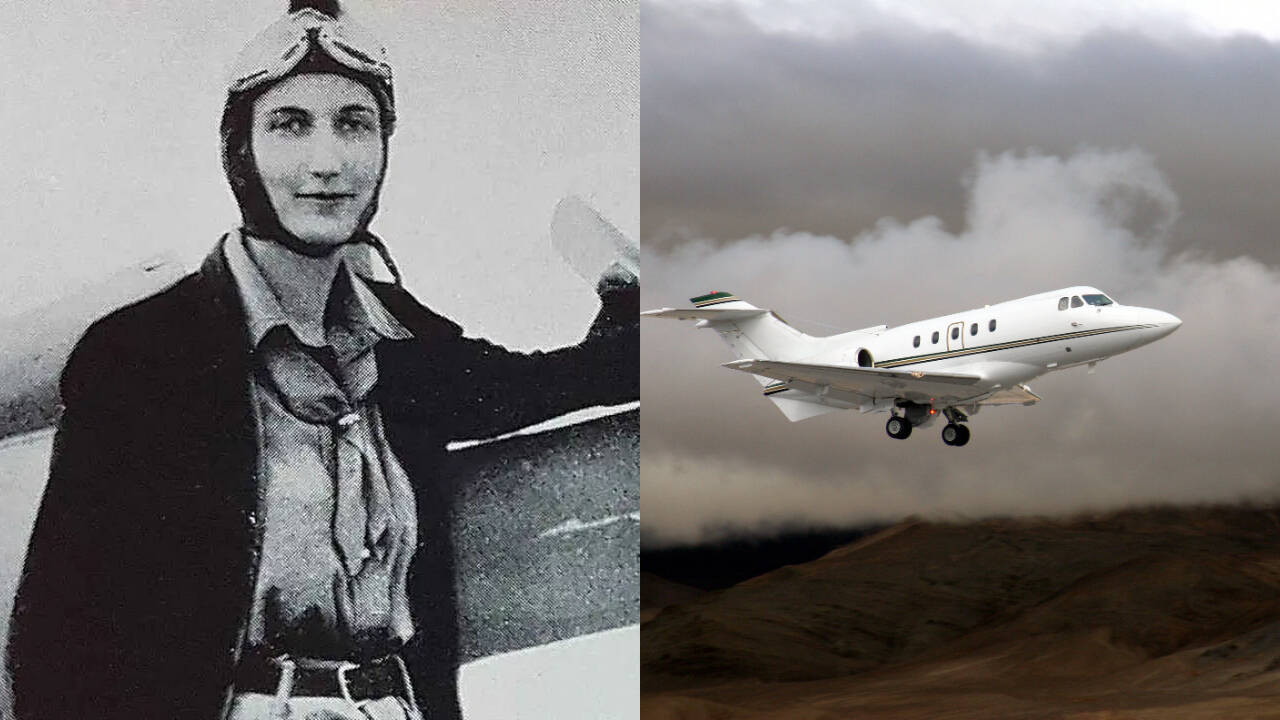
On September 4, 1936, a single-engine Percival Vega Gull designated VP-KCC lifted off from Abingdon Airfield in Oxfordshire, England, heading westward into a meteorological wall. At the controls was Beryl Markham, executing a flight path that defied the fundamental vector mechanics of early aviation. While preceding solo aviators like Charles Lindbergh utilized the geographic tailwinds of westward-to-eastward vectors, Markham elected to attack the Atlantic in reverse: east-to-west, directly against the North Atlantic jet stream and prevailing westerlies. Twenty-one hours later, her engine starved of fuel due to atmospheric icing, she planted the aircraft nose-first into a peat bog at Baleine Cove, Nova Scotia.
Deconstructing this mission requires moving past romanticized accounts of grit. Evaluating her flight through the operational lens of risk management, aerodynamic constraints, and mechanical failure points reveals precisely how near-fatal miscalculations dictate the boundary between historical triumph and catastrophic loss.
The Aerodynamic Cost Function of the Eastward Vector
To understand the severity of Markham's undertaking, one must analyze the mathematical realities of pushing a wooden-framed, fabric-covered monoplane through the North Atlantic atmospheric corridor. Transatlantic aviation in the 1930s was governed by tight margins between fuel consumption rates, payload capacity, and sustained headwinds.
The prevailing westerlies across the Atlantic generate sustained headwinds averaging 30 to 40 miles per hour at typical piston-engine cruising altitudes, occasionally spiking far higher in cyclonic conditions. Flying east-to-west means ground speed is severely penalized relative to true airspeed.
- Fuel Burn Penalty: Every mile gained forward requires an exponentially higher fuel burn per ground distance due to the negative vector offset.
- Structural Weight Constraints: To compensate for the extended flight time, the Percival Vega Gull had to be packed with auxiliary fuel tanks, pushing the aircraft close to or beyond its maximum certified gross weight.
- Power Plant Stress: Operating a de Havilland Gipsy Six inline engine at continuous high throttle settings to combat headwinds increases thermal stress on cylinder heads and exhaust valves.
Markham was not merely navigating geography; she was managing an unforgiving burn rate where any compounding navigational error translated directly into a fuel deficit before landfall.
The Environmental Variables and Atmospheric Failure Points
The operational architecture of the Percival Vega Gull contained a latent design vulnerability that manifested under specific high-altitude, low-temperature conditions. After roughly twenty hours of continuous flight through nocturnal marine layers and sub-zero upper-air currents, moisture accumulated around the aircraft's fuel-tank vents.
When ambient temperatures drop below freezing at high humidity, evaporative cooling or direct moisture deposition creates ice crystal formations. In Markham's case, this ice choked the air intakes and fuel-tank vents.
- Pressure Differential Mechanics: Fuel tanks require vented air to replace consumed liquid volume. When vents freeze shut, a partial vacuum develops inside the fuel bladder.
- Starvation Sequence: The fuel pump or gravity feed can no longer overcome the internal negative pressure, starving the carburetion system regardless of how much fuel remains in the auxiliary cells.
- Transition from Flight to Descent: The engine failure was not caused by empty tanks, but by an inability of the fuel system to interface with atmospheric pressure.
This specific failure mechanism transforms the final phase of the flight from a controlled descent into an emergency forced landing scenario.
The Navigation Protocol of Dead Reckoning Without Avionics
Modern flight relies on redundant radio navigation, GPS coordinates, and automated flight management systems. In 1936, a solo pilot flying over open ocean operated in an analog information vacuum. Markham possessed a magnetic compass, an airspeed indicator, an altimeter, and a timepiece.
Dead reckoning over a 3,600-mile marine route requires continuous manual calculation of wind drift angles. A heading error of just two degrees over the first thousand miles off the coast of Ireland compounds into a massive lateral displacement by the time the aircraft reaches the North American coastline.
- Drift Vector Blindness: Without radio beacons or celestial position fixes taken through a bubble sextant—which was exceptionally difficult to manage single-handedly in a cramped, vibrating cockpit—drift caused by unforecasted upper-level wind shifts goes undetected.
- Cognitive Fatigue Degradation: After fifteen hours of oxygen-thin, high-altitude isolation and physical vibration, human error rates in mental arithmetic scale upward exponentially.
- Target Acquisition Risk: New York's Floyd Bennett Field was an exceptionally small target at the end of a long, fatigue-inducing vector. Missing it meant exhausting the final safety margins of fuel reserves.
Strategic Operational Takeaways
The legacy of the 1936 crossing is frequently framed as an exercise in sheer willpower. From a strategic vantage point, it serves as a masterclass in contingency management under extreme resource scarcity.
When analyzing high-risk ventures where infrastructure is absent—whether pioneering an aviation route or scaling an unproven operational model—system designers must account for three non-negotiable parameters. First, environmental resistance must be calculated as a dynamic multiplier, not a static baseline. Second, auxiliary systems must feature redundant pressure and venting fail-safes to prevent environmental blockages from causing total systemic collapse. Third, human operational endurance caps the maximum viable duration of any unassisted mission profile.
Assess your primary operational vectors for hidden single points of failure before scaling into high-resistance environments. Evaluate whether your system can absorb a twenty percent degradation in efficiency and still clear the margin safely.