The calendar on the kitchen wall is two months out of date. Margaret stopped turning the pages last autumn because looking ahead felt too much like an exercise in fiction.
On that paper grid, circled in red ink that has faded to a dusty pink, is a date for a hip replacement consultation that has already come and gone. It was rescheduled. Then postponed. Then pushed into an amorphous fog that the hospital receptionists refer to, with practiced, hollow cheer, as "the queue."
Margaret does not live in a abstract spreadsheet. She lives in a terraced house in Leeds with sticky floorboards, a staircase she now negotiates like a tightrope walker, and a knee-to-hip ache that dictates the exact cadence of her breathing. When the morning light hits the linoleum at six, her day does not begin with coffee. It begins with negotiation. How much weight can she bear on the left side before the lightning strike shoots down her thigh?
She is one of millions.
We talk about health care as a system, which is our first mistake. Systems are made of plumbing, wires, and silicon. They can be fixed with a wrench or a software patch. But what is happening across Britain’s National Health Service right now is not a plumbing failure. It is an accumulation of human time, quietly stolen, day by day, in waiting rooms that smell of floor polish and stale tea.
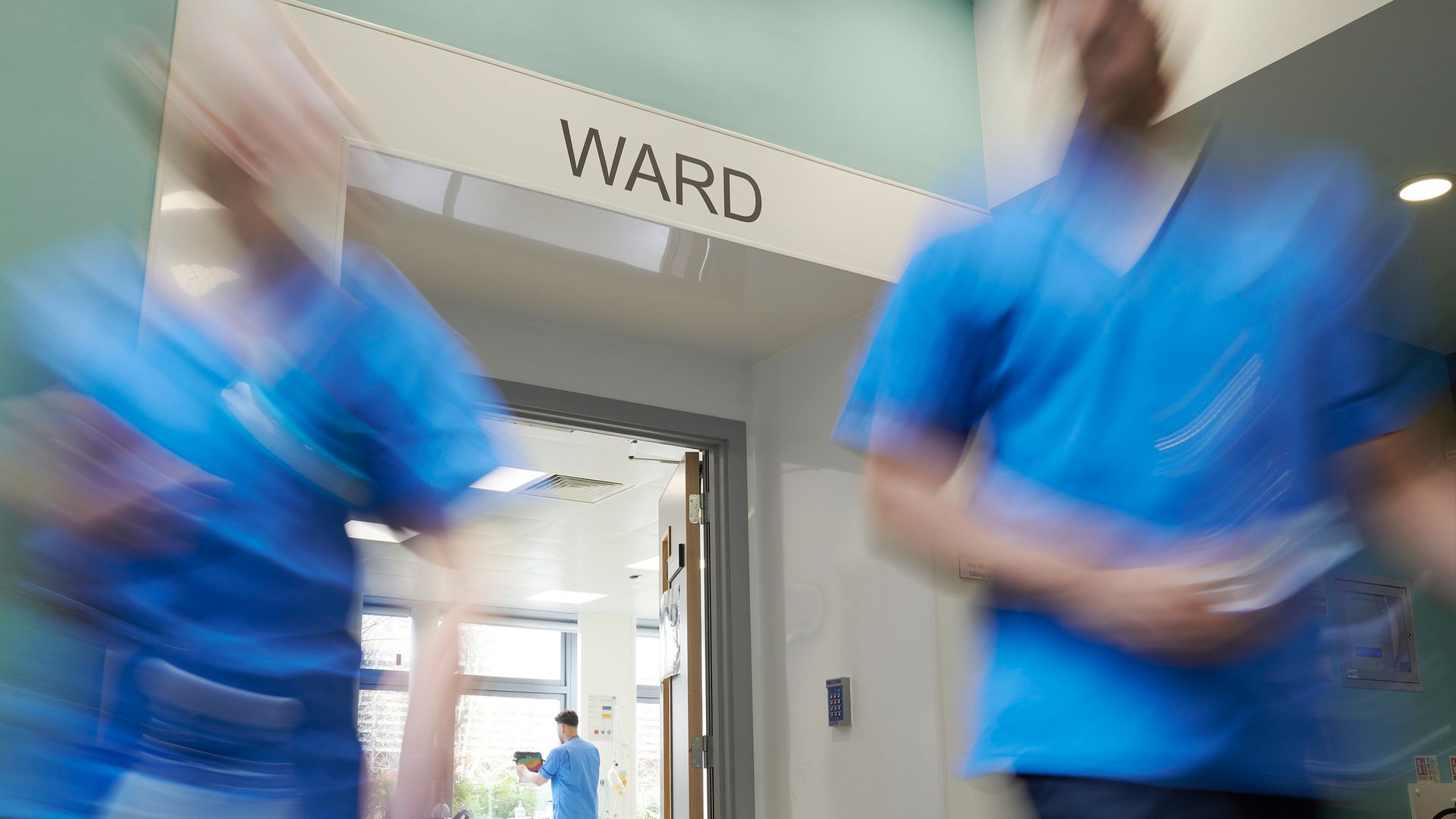
The latest figures reveal a stark reality. The NHS waiting list has climbed to its worst level since 2025. Millions of people are hanging suspended in medical limbo, waiting for routine operations, diagnostics, and specialist care. Behind every statistic is a person like Margaret, whose world has shrunk to the radius of a walking frame.
To understand what these numbers actually mean, we have to strip away the political posturing and look at the physics of delay.
Time is not neutral in medicine. A delay is rarely just a pause. More often, it is a multiplier.
Consider a hypothetical scenario, which I will call the trajectory of erosion. When a patient is told they need a routine knee arthroscopy or a cataract removal, their condition is manageable. They are functional, if uncomfortable. But as the months stretch into a year, and a year into eighteen months, compensation sets in. The body, trying to protect a failing joint, overworks other muscles. Gait alters. Balance deteriorates. By the time the appointment finally arrives, the original simple procedure may require a far more invasive intervention, or the patient has developed secondary ailments—cardiovascular decline from immobility, or the crushing psychological weight of chronic pain.
We are not saving money by making people wait. We are compounding interest on human suffering.
Why did we get here? The answers are complex, tangled in decades of underfunding, workforce shortages, demographic shifts, and the long, agonizing tail of pandemic disruption. But spreadsheets do not capture the exhaustion of the nurses who face double shifts, or the quiet despair of general practitioners who know that referring a patient to a specialist is often just sending them into a black hole.
I remember sitting in a consultation room years ago with a surgeon who looked at his computer screen with the haunted expression of a man trying to bail out the Titanic with a teaspoon. He didn't look at my chart; he looked at the date of my referral. He sighed—a long, ragged sound that came from the soles of his shoes.
"The care is here," he whispered, gesturing vaguely toward the operating theatres down the corridor. "The skill is here. The will is here. But the runway is gone."
That is the true anatomy of the wait. It is a collision between an infinite demand for health and a finite allocation of human hands and operating hours.
We have normalized this. That is the most dangerous part. We check the news, see another milestone broken, another record high on the waiting list, and we nod. We treat it like weather reports or inflation figures. Ah, the NHS lists are up again.
Stop.
Re-read that sentence, but replace the abstract numbers with your own mother, your own partner, your own child. Imagine waking up every single morning with a foghorn of pain in your joints, knowing that the only institution designed to help you is standing behind a velvet rope, checking its watch, and telling you to be patient.
Patience is a virtue. But patience enforced by institutional gridlock is just endurance without a finish line.
There are no silver bullets here. You cannot wave a wand, inject billions of pounds into a void, and expect waiting lists to evaporate overnight. Operating theatres require anesthetists. Wards require nurses. Burned-out staff cannot simply work harder; they are already running on reserves that were depleted years ago.
Yet, acknowledging the difficulty of a problem is not an excuse for surrender.
Change begins when we stop speaking of the NHS as a political football and start seeing it as a collective mirror. The health of our public services reflects our priorities as a society. Do we value the quiet dignity of a retiree walking pain-free to the shops, or do we accept a baseline of normalized misery as the cost of doing business in a fractured economy?
Margaret's kitchen calendar remains untouched. The red ink has faded, but the pain has not. Outside her window, the postman walks by, the buses rumble down the street, and the great machinery of the country keeps turning—powered by millions of people who are quietly, stoically, and exhaustively holding their breath, waiting for their turn to live.