The enterprise software market is undergoing an infrastructure shift. Enterprise artificial intelligence adoption has evolved from superficial large language model chat interfaces to autonomous digital agents capable of executing multi-step workflows. While Western enterprise strategies focus on isolated software-as-a-service (SaaS) environments, Chinese technology conglomerates—specifically Ant Group, Tencent, Alibaba, and Baidu—are using centralized ecosystem architecture to capture the enterprise market.
The battle for enterprise clients is no longer about raw model capabilities; it is defined by the integration layer. The organization that controls the orchestration, payment verification, and deployment environment for AI agents establishes the default operating system for business operations.
The Three Pillars of Agentic Enterprise Architecture
To evaluate how these corporations secure and retain enterprise clients, their offerings must be deconstructed into a three-part structural framework.
       [ Distribution Layer ] -> (WeChat, Alipay Super Apps)
                 |
                 v
      [ Orchestration Layer ] -> (Agentar 2.0, OpenClaw Framework)
                 |
                 v
       [ Settlement Layer ]  -> (Alipay AI Pay, WeChat Ecosystem)
1. The Distribution Layer
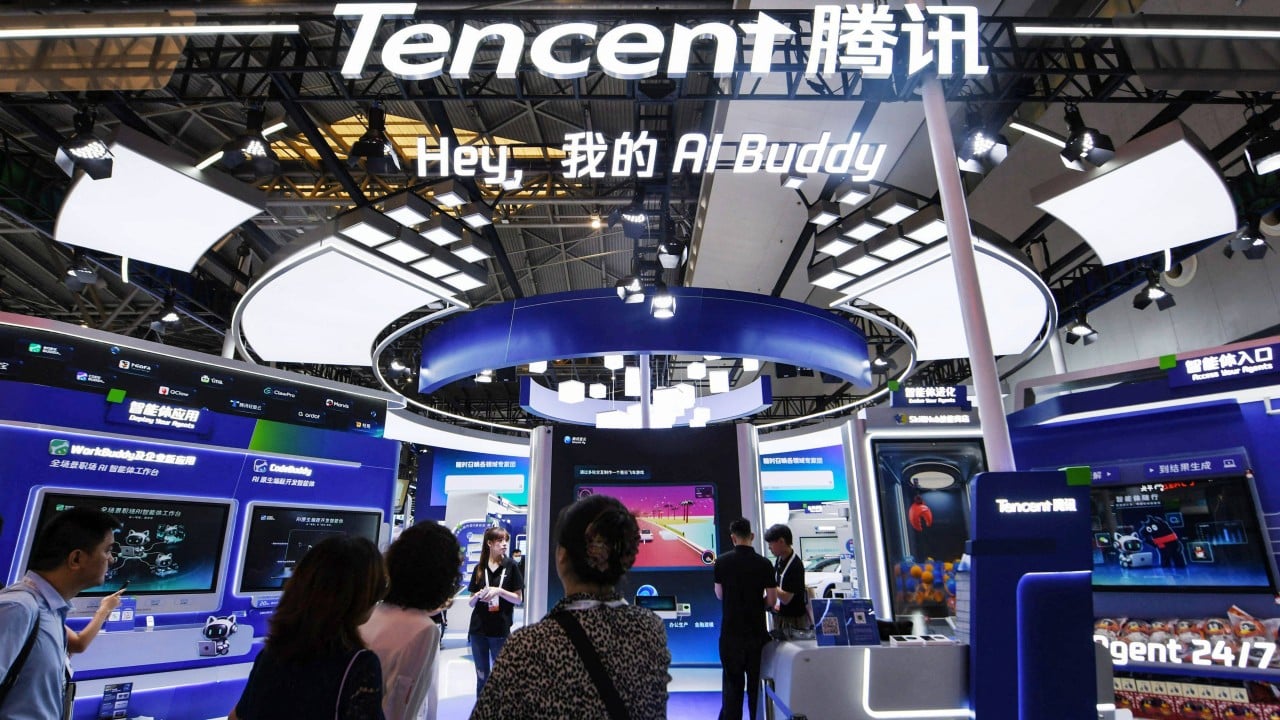
Unlike Western markets where enterprise software is fragmented across distinct desktop applications, Chinese business communication and customer acquisition occur within consolidated applications. Tencent utilizes WeChat, which maintains over 1.3 billion monthly active users, as a direct vehicle for enterprise agent distribution. By integrating the open-source OpenClaw framework via features like ClawBot directly into the chat interface, Tencent circumvents user acquisition friction. Enterprise clients can deploy automated customer service or internal operational tools directly inside a communication environment that their employees and customers already use.
2. The Orchestration Layer
Automating basic tasks provides marginal value; the primary enterprise demand is the synchronization of multiple specialized agents. Ant Digital Technologies addresses this through its Agentar 2.0 platform, acting as a commercial AI agent factory. The platform provides:
- Unified Agent Frameworks: Standardizing memory storage, multi-model routing, and context persistence.
- Pre-configured Digital Expert Templates: Two hundred out-of-the-box vertical-specific profiles to eliminate cold-start engineering development.
- Intelligent Process Orchestration: Visual engines that manage branching logic, parallel execution, and human-in-the-loop checkpoints.
3. The Settlement Layer
The structural barrier for Western AI implementations remains the execution gap: an agent can recommend a product or identify an operational bottleneck, but it cannot independently authorize capital or execute financial transactions across disparate systems.
The Chinese ecosystem solves this via native financial integration. Ant Group’s Alipay AI Pay processed over 120 million transactions in a single week during February 2026. Because Alipay natively handles authentication, identity verification through its ZOLOZ eKYC platform, and capital movement, enterprise agents can execute the entire transaction loop—from intent detection to financial settlement—without redirecting the user to external software.
The Economics of Agentic Efficiency
The shift toward autonomous agents alters the corporate cost structure. Traditional enterprise optimization focuses on increasing the output per human hour. The agentic framework focuses on task offloading, transferring the operational burden from variable human labor to fixed, highly scalable computational infrastructure.
The Conversion Rate Vector
On the merchant side, platforms like Alibaba’s Tmall have updated enterprise tools with agentic systems that run continuously. These fleets handle store analytics, programmatic advertising placement, visual asset generation, and post-sale logistics synchronously. Data from early implementations, such as the Dianxiaomi customer service pilot spanning 200,000 merchants, indicates an average conversion rate inflation of 30%. This is achieved not through superior persuasion, but through the elimination of latency. An autonomous agent analyzes inventory, cross-references user purchase histories via internal databases, and generates personalized bundle offers instantly.
The Cost Function Shift
Integrating autonomous workers creates a unique expenditure dynamic for enterprise software vendors:
$$C_{\text{total}} = C_{\text{fixed_infra}} + V \cdot (C_{\text{compute}} + C_{\text{token_overhead}})$$
Where $V$ represents transaction volume. While upfront capital requirements for fine-tuning models and building orchestration pipelines are high, the marginal cost of executing an additional business process drops asymptotically toward the cost of electricity and token compute.
However, this architecture introduces computational bottlenecks. Heavy reliance on large language models increases operational costs due to the vast amounts of processing power required to maintain context across prolonged multi-agent conversations. To defend profit margins, tech giants are forcing a shift from generic model requests to lean, edge-computed, task-specific models.
Comparative Defensibility: Ecosystem vs. Isolated SaaS
The divergent evolution between Western and Eastern AI agent deployment highlights a clear distinction in structural defensibility.
| Architectural Dimension | Western Strategy (e.g., Salesforce, Microsoft) | Chinese Strategy (e.g., Ant, Tencent, Alibaba) |
|---|---|---|
| Primary Interface | Standalone web portals, dedicated desktop tools | Unified consumer and enterprise super apps |
| Transaction Execution | Relies on external APIs, third-party gateways, manual handoffs | Native settlement systems built into the core platform |
| Integration Velocity | High friction; requires custom enterprise resource planning connections | Low friction; uses integrated merchant mini-programs |
| Primary Monetization | Software-as-a-service subscription licenses, annual recurring revenue | Transaction fees, cloud consumption, ecosystem lock-in |
The Western approach, exemplified by systems like Salesforce Agentforce or Microsoft Copilot Studio, prioritizes enterprise-grade compliance, precise data governance, and customer relationship management deep integration. This succeeds in high-regulation corporate environments.
The Chinese methodology emphasizes ecosystem integration. When an agent operating within Alibaba’s Qwen assistant handles an enterprise request, it scans a multi-billion-item live product catalogue, executes a virtual try-on, references a 30-day dynamic price ledger, and completes the purchase via a voice command. The transaction never leaves the corporate perimeter. The fragmentation of Western retail and banking infrastructure means that while an agent can easily suggest solutions, it cannot close the transaction loop independently.
Structural Governance Limits and System Vulneracies
An objective evaluation requires addressing the operational risks native to autonomous enterprise integration. Enterprises adopting these systems face clear structural liabilities.
The Problem of Cascade Failure
Multi-agent systems operate via sequential dependency. If an orchestrator agent misinterprets user intent, the downstream execution agents process false premises. In automated financial environments, a single parsing error in a corporate procurement agent could trigger unintended bulk inventory purchases or misallocate capital across corporate funds.
Security Vector Vulnerabilities
Deploying autonomous workers introduces unique security risks. Hackers can manipulate agent behaviors through prompt injection attacks concealed within inbound customer invoices or user queries. To mitigate these risks, specialized protective infrastructure is necessary. Ant Digital Technologies uses tools like Ant Security Guard to inspect incoming data streams and outgoing model responses, serving as an active firewall to ensure compliance and predictability.
Strategic Recommendation for Enterprise Leaders
To exploit the structural advantages offered by this technology shift, corporate decision-makers must stop viewing AI as an efficiency tool for individual workers and instead treat it as a foundational layer for corporate reorganization.
The correct operational move is to establish internal agent factories using modular orchestration frameworks. Enterprises must audit their existing workflows to isolate data silos, replacing legacy manual intermediate steps with task-specific digital agents.
Priority must be placed on deploying agents at the intersection of customer communication and financial settlement. By building tools that leverage unified ecosystems, firms can eliminate transaction friction, reduce customer drop-off rates, and scale their operational throughput without a linear expansion of overhead costs. The long-term winners will be organizations that successfully migrate their core workflows into automated, self-executing digital systems.