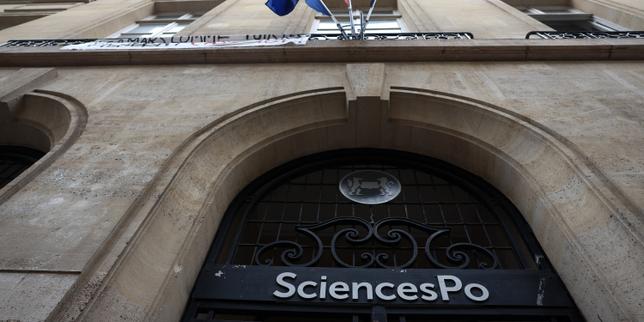
The heavy oak doors of 27 Rue Saint-Guillaume do not merely close. They seal. For generations, Sciences Po has existed as the intellectual engine room of the French Republic, a sprawling, noisy, occasionally chaotic laboratory where prime ministers are forged and revolutions are debated over lukewarm espresso. To walk through its historic entrance was to enter a republic of letters. It was a place where decisions crawled through committees, where faculty rubbed shoulders with directors, and where the centuries-old tradition of university collegiality meant everyone had a voice. Even if they used it mostly to disagree.
Then came Luis Vassy.
Today, the hallways feel different. The air is thick with a new, quiet tension. The institutional machinery of France’s most prestigious institute of political studies is undergoing a profound, radical mutation. It is a shift from the messy, democratic friction of academia to something far colder, far more precise, and deeply unfamiliar to the people who actually live and work here.
The old guard calls it a coup of style. The new administration calls it modernization. But beneath the bureaucratic jargon lies a much larger story about the death of institutional consensus and the rise of an uncompromising, vertical exercise of power.
The Ghost in the Lecture Hall
To understand what is happening under the presidency of Luis Vassy, you have to understand how a traditional university breathes. Picture a veteran professor. Let us call her Elena, a composite of several faculty members watching the current transformation with growing unease. For twenty years, Elena’s professional life was dictated by a simple, unwritten pact. If the administration wanted to change the curriculum, they sat down with the faculty. They argued. They adjusted. They voted.
This is the principle of collegiality. It is not efficient. It is often agonizingly slow. But it ensures that the people who teach the classes have ownership over the institution.
Now, consider a different scene. Elena arrives at her office to find a directive already signed, sealed, and implemented. No debate. No consultation. The decision has descended from the top floor like a bolt of lightning from an absolute monarch.
This is the verticality of power that now defines the Vassy era.
When Vassy took the helm of Sciences Po, he did not just take a job; he inherited a crisis. The school had been rocked by successive scandals, financial pressures, and intense ideological warfare among the student body. The ship was rocking. The public was watching. The political class demanded order. Vassy, a brilliant diplomat and alumnus of the elite École Nationale d'Administration (ENA), arrived with a briefcase full of corporate efficiency and a mandate to stabilize the institution.
But stability has a price. When you run an elite university like a corporate multinational or a ministry of defense, you lose the very thing that makes it a university.
The Diplomat's Blueprint
Luis Vassy is a man built for crises. His career in the upper echelons of French diplomacy taught him that consensus is a luxury you can rarely afford when the house is on fire. In the corridors of the Ministry of Foreign Affairs, power moves downward. Orders are given; objectives are met.
When he stepped into the director’s office at Sciences Po, he brought this diplomatic architecture with him. He replaced the sprawling, consultative committees with tight, insular circles of trusted advisors. Decisions that used to take months of faculty debate now happen over a weekend behind closed doors.
From a management perspective, it looks like a triumph. The school is quieter. The public controversies have been dampened. The spreadsheets look clean.
But look closer at the faces of the researchers walking through the courtyard. Talk to the department heads off the record. The silence Vassy has achieved is not the peace of a resolved conflict; it is the silence of exclusion. By treating the university as a corporate hierarchy rather than a collaborative community, the new administration has alienated the very people who give the school its soul.
The core friction here is a clash of civilizations. On one side is the managerial state, which values predictability, metrics, and absolute control. On the other side is the academic tradition, which believes that truth and excellence emerge only from collective friction and intellectual autonomy.
The Invisible Toll of Efficiency
What happens when a symbol of free thought is managed like a logistics company?
The changes are subtle at first. A budget allocation shifts without explanation. A long-standing committee is quietly starved of relevance, its meetings deferred or reduced to mere rubber-stamping exercises. Faculty members find themselves answering to administrators who speak a dialect of optimization and key performance indicators rather than pedagogy.
The real danger of this vertical model is that it creates an echo chamber. When power only flows downward, information rarely travels upward. A leader surrounded only by those he appoints will eventually see only the reality he wishes to see.
Elena and her colleagues are not resisting change because they are nostalgic for inefficiency. They are resisting because they know that when you destroy the mechanisms of collective decision-making, you destroy the institution's immune system. If a university cannot debate its own future internally, it cannot teach its students how to debate the future of the world outside.
The strategy of the Vassy administration appears to be rooted in a gamble. The gamble is that prestige can survive without democracy. If the rankings remain high, if the donor money keeps flowing, and if the politicians are satisfied, then the internal discontent of the faculty is merely acceptable collateral damage.
It is a technocratic worldview that misinterprets what Sciences Po actually is. It is not a factory that turns out bureaucrats; it is an ecosystem. And ecosystems are fragile things.
The Long Shadow of the Corporate University
This transformation is not happening in a vacuum. It is part of a broader, global shift that has been creeping across higher education for decades, though France had long resisted its coldest excesses. For centuries, European universities were viewed as republics of knowledge, self-governing bodies of scholars protected from the whims of both the state and the market.
What we are witnessing at Sciences Po today is the final surrender of that ideal to the forces of managerialism.
Consider the difference between a citizen of a university and an employee of a university. Under the old system of collegiality, faculty members were citizens. They had a stake in the governance. They bore responsibility for the collective choices of the institution. Under the vertical model, they are transformed into employees. They are given targets to hit, syllabi to deliver, and a chain of command to obey.
The students, too, are subtly reclassified. They are no longer junior members of a scholarly community; they become clients purchasing a high-value credential. And clients do not need to understand the complex internal politics of the institution, they just need the product delivered smoothly, without disruptions or strikes.
This model works wonderfully for making cars or processing tax returns. It is disastrous for cultivating independent, critical thinkers. When you eliminate the messy, democratic structures of a university, you teach the next generation of leaders that power is something to be wielded from above, never negotiated from below.
The Courtroom of the Mind
The tragedy of the current administration’s approach is that it mistakes compliance for loyalty. Walk into any cafe around the Boulevard Saint-Germain where the faculty gather after hours. The conversation is no longer about research breakthroughs or global politics. It is an anxious post-mortem of the latest administrative decree.
There is a profound weariness in these rooms.
The people who have dedicated their lives to this institution feel like strangers in their own house. They watch as the symbols of their collective authority are systematically dismantled, replaced by a streamlined governance structure that prioritizes speed over substance. They know that once the habit of collaboration is broken, it is almost impossible to rebuild.
Luis Vassy may well succeed in his immediate goals. He may deliver a stable, quiet, highly efficient Sciences Po that looks magnificent on a corporate slide deck. He may shield the school from the immediate political storms that threaten its funding and its reputation.
But as night falls over the Latin Quarter, and the last lights flicker out in the offices of 27 Rue Saint-Guillaume, one cannot help but wonder what will be left of the intellectual fire that once defined this place. A university stripped of its collegial heart is no longer a university at all. It is merely a finishing school with a famous name, operating under an immaculate, freezing law of gravity where everything falls from the top, and nothing ever rises from the ground.