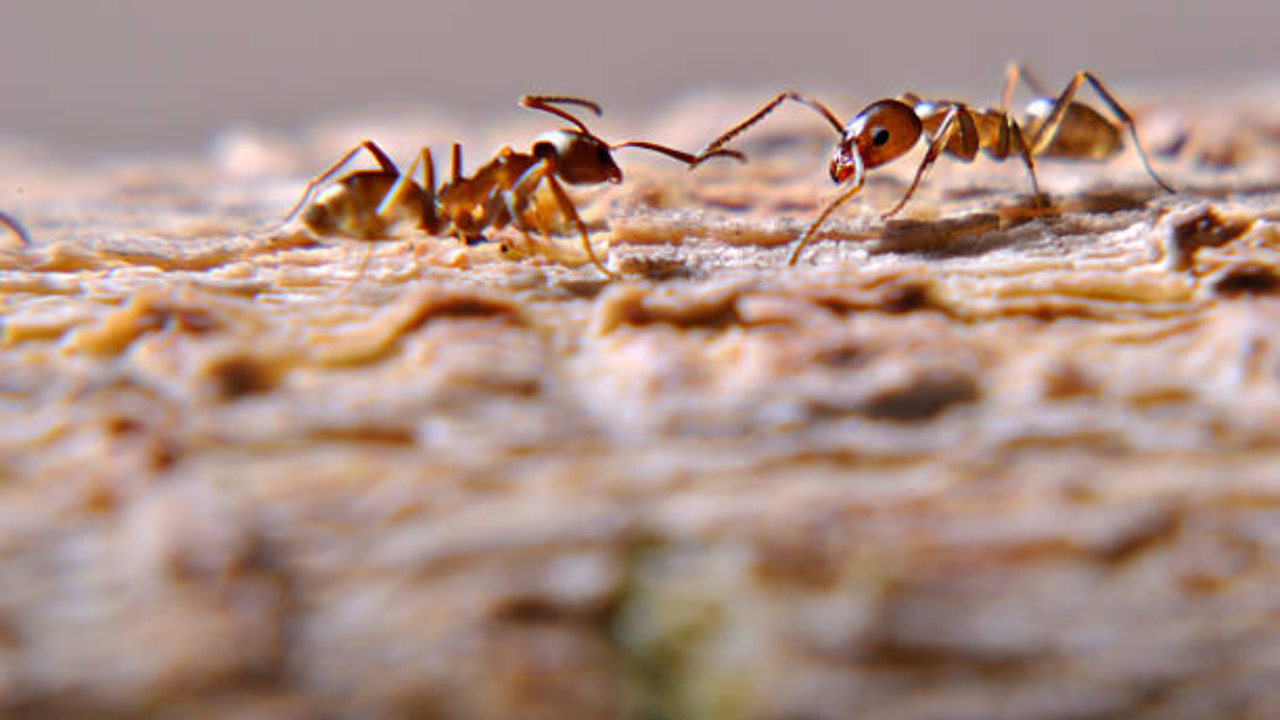
Fifteen million dead ants in a single six-month stretch along one border zone. That isn't a Hollywood script or a weird math error. Researchers tracking Argentine ants (Linepithema humile) in Southern California estimated at least 15 million worker deaths around a single smaller supercolony near Lake Hodges north of San Diego during a six-month study.
Step outside in San Diego, Los Angeles, or Santa Barbara, and you're probably looking at a civil war you can barely see. Millions of tiny brown workers lock jaws, tear limbs, and die on soil that barely shifts an inch from one week to the next. For another perspective, read: this related article.
Most people picture ants as little soldiers defending a single nest. Argentine ants flipped that script when they hitched rides across oceans and formed sprawling supercolonies. Instead of fighting every neighboring nest, millions of nests cooperate. Until two different supercolonies run into each other. Then all hell breaks loose.
How Argentine Ant Wars Work
Ants don't carry passports or wear uniforms. They check ID with scent—specifically cuticular hydrocarbons, waxy chemicals coating their exoskeletons. If an ant's chemical profile matches the local baseline, it gets a pass. If it smells foreign, workers attack. Further analysis on this matter has been provided by TIME.
When a small founding group of Argentine ants arrived in California—researchers point to a genetic bottleneck from a limited introduction—they lost much of the genetic diversity that normally drives sharp nestmate discrimination. Because so many ants smelled "close enough" to family, they merged into massive alliances. One giant supercolony stretches roughly 900 kilometers along the California coast.
Yet California isn't a single peaceful hive. Scientists including Neil Tsutsui, David Holway, Melissa Thomas, and colleagues identified at least four smaller supercolonies living alongside the main California supercolony. Where their territories collide, chemical profiles clash. Fighting erupts along miles of invisible front lines.
A Stalemate Built on Attrition
You might expect one massive army to steamroll a smaller rival in a week. Instead, border zones near Lake Hodges looked like a slow-motion grinder. Over six months of weekly monitoring across border areas, researchers saw relentless skirmishes and massive body counts, yet the boundaries barely budged.
Why does it drag on? Both sides have huge worker reserves and multiple queens per nest. Losing millions of workers hurts, sure, especially for a smaller supercolony, but both sides keep throwing bodies at the line.
In their native South America, floodplains periodically rise and break up territorial battles, resetting the board. Transplanted to Southern California's drier, more stable neighborhoods, parks, and canyons, those natural resets disappear. The fighting just keeps grinding on.
What Most Articles Miss About Supercolonies
Pop-science headlines love calling this a "world war," and it makes a great hook. Honestly, though, calling it a war makes the ants sound like strategists with maps and generals.
They aren't. No worker ant knows it belongs to a 900-kilometer empire or a global network spanning continents. Every single ant is just reacting to chemical cues and immediate threat. Big patterns emerge out of simple, repetitive instincts.
There's also a catch with the numbers. When you read about 15 million deaths in six months around Lake Hodges, remember that's an estimate scaled from field sampling and observation over time, not a literal headcount of every fallen insect. Counting dead ants in leaf litter and dirt is messy work. Still, even conservative estimates show staggering turnover.
Why Native Wildlife Pays the Real Price
While rival supercolonies beat each other up on the border, native species take collateral damage everywhere else.
Argentine ants don't play fair with local ecosystems. They swarm in huge numbers, out-foraging native ants and pushing them out of habitats. Worse, they farm sap-sucking insects like aphids and scale insects for sweet honeydew, protecting those pests from natural predators and boosting crop and garden damage.
Research from University of California scientists has also linked Argentine ant invasions to trouble for native reptiles, such as coast horned lizards, which rely heavily on native ants for food. In regions like South Africa's fynbos shrublands, displacing seed-dispersing native ants disrupts plant regeneration too. A tiny brown ant can quietly remodel an entire food web.
Common Myths About Argentine Ants
People hear "supercolony" and assume every ant in California is on the same team. Not true. Five distinct supercolonies in Southern California means five potential flashpoints where rivals meet.
Another myth is that spraying the front line ends the problem. Kill a few million workers in your yard, and nearby nests—often with multiple queens—can bounce back fast if moisture and food stay abundant. I've seen homeowners dump bottle after bottle of generic spray along a patio wall only to watch trails return days later because they ignored moisture, food sources, and baiting strategy.
- Myth: All Argentine ants in California belong to one peaceful mega-family. Reality: Multiple supercolonies exist, and their borders are active combat zones.
- Myth: Ant wars end with a decisive victory. Reality: Border zones often lock into long stalemates with high losses on both sides.
- Myth: Spot-spraying visible trails wipes out the colony. Reality: Surface sprays kill foragers on contact without reliably knocking down multi-queen nests hidden in soil, mulch, or walls.
Practical Next Steps If You're Dealing With Them
If you live in Southern California or another invaded region, you don't need to declare war on every ant outside your house. Focus on what actually works around your home and yard.
Start by cutting off what attracts them. Argentine ants love water and sweet or protein-rich food. Fix leaky outdoor faucets, keep pet bowls off bare ground or inside a water moat, and trim branches touching your roof or walls.
If they're marching inside or swarming garden beds, use slow-acting baits rather than harsh contact sprays right away. Slow baits let workers carry poison back to the nest and share it before dying, which hits the colony much harder than spraying a single trail. Check guidance from the UC Statewide Integrated Pest Management Program for species-specific baiting tips and timing.
Finally, keep expectations realistic. You can protect your kitchen, patio, and prized plants, even when millions of ants are locked in a turf war half a mile down the road.
San Diego's Secret Ant War shows how researchers track these border skirmishes and helps you visualize the scale of the conflict in Southern California.


