The math of survival used to fit neatly on the back of an envelope. Rent, utilities, groceries, a small buffer for the unpredictable car repair or the sudden fever that keeps a child home from school. Today, that envelope is burning in our hands.
Listen closely to the quiet hum of a neighborhood grocery store at dusk. A man stands in the aisle beneath the harsh fluorescent glare, holding a single carton of eggs. He checks the price. He checks his phone calculator. Slowly, deliberately, he sets the carton back down, replacing it with a store-brand loaf of bread, and walks away with empty hands.
This is not a dramatic collapse. It is a slow erosion.
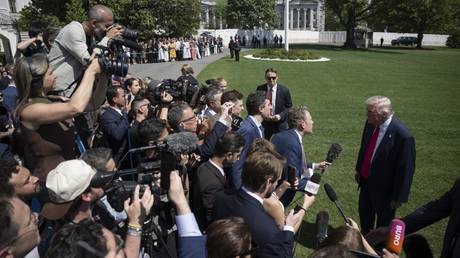
When the Prime Minister stood before cameras recently to make a rare concession—admitting aloud that the current cost of living assistance simply is not enough—it felt less like a political breakthrough and more like an echo of what millions already knew in their bones. The relief packages, rolled out in spreadsheet logic and committee rooms months ago, have dissolved under the weight of stubborn inflation. Utility bills spike. Mortgages ratchet upward. The cost of basic nutrition climbs faster than wages can follow.
And so, the administration has begun whispering of further support. More aid. More intervention.
Yet behind those guarded political hints lies a deeper, more unsettling question. Can policy ever catch up to a crisis that moves faster than legislation?
Consider Sarah, a hypothetical nurse living in a mid-sized industrial town, whose daily reality reflects the statistics we read about in morning briefings. She works forty-eight hours a week. She saves where she can. Ten years ago, her salary commanded a comfortable middle-class stability. Today, despite a modest raise last year, her purchasing power has shrunk by nearly fifteen percent due to cumulative inflation.
When politicians talk about fiscal cushions and targeted relief, Sarah feels a sharp disconnect between the sterile vocabulary of governance and the warm, heavy panic of opening an electricity bill that is double what it was two winters ago.
"We are running just to stay in the same place," she told a neighbor recently, over a fence that needs painting. "Except the ground keeps moving."
Her exhaustion is shared by millions. It is an invisible weight carried on crowded morning trains, in quiet break rooms, and across kitchen tables where bills are sorted by priority like triage victims on a battlefield.
To understand why current government measures are falling short, we have to look past the macroeconomics and examine the velocity of the problem. When inflation bites, it does not attack evenly. It targets the essentials. You can delay buying a new car. You can patch your shoes. You cannot choose not to heat your home during a freezing snap, nor can you tell your children that dinner will be postponed until the consumer price index stabilizes.
Because price surges concentrate heavily on food, energy, and housing—the non-negotiables of human survival—any generalized financial assistance gets swallowed instantly by baseline costs. A one-off payment is a drop of water on a hot stone. It sizzles, produces a brief cloud of steam, and vanishes, leaving the stone as dry as before.
Economists call this the sticky-price problem. Ordinary people call it drowning.
The Prime Minister's acknowledgment that more must be done is a necessary first step, but it reveals a profound structural vulnerability in how modern economies handle sudden shocks. For decades, governance operated on the assumption that markets would eventually self-correct, that bumps in the economic road would smooth out through natural cycles of growth and cooling.
That model is breaking down. We are entering an era of permanent volatility. Climate disruptions threaten global agriculture harvests. Geopolitical fractures choke energy corridors. Supply chains remain brittle. In this new climate, treating cost-of-living pressures as temporary aberrations is a dangerous mistake.
What the government hints at now—further support—cannot simply be another round of temporary cash injections that treat symptoms while ignoring the structural disease.
Real intervention requires imagination. It demands looking at housing markets where supply has been choked for a generation. It means examining utility monopolies that post record profits while households turn off their radiators. It requires a fundamental rethinking of how wage growth is tethered to productivity and real-world costs rather than outdated formulas.
Until those deeper gears are unlocked, any political promise of rescue will feel provisional. Fragile.
Back in the grocery store, the man who put the eggs back walks out into the cold evening air. He climbs into a car that is due for an oil change he cannot afford. He drives home to a house where the thermostat is set lower than it should be.
He is not looking for charity. He is not looking for a political headline or a temporary voucher that covers tomorrow and forgets the day after. He is looking for an economy that remembers what it is supposed to serve.
The admissions have been made. The limits of current relief have been confessed from podiums of power. But the distance between a politician's hint of future action and the quiet reality of an empty kitchen remains vast, cold, and terribly real.
The night settles over the street, dark and heavy with unanswered questions.