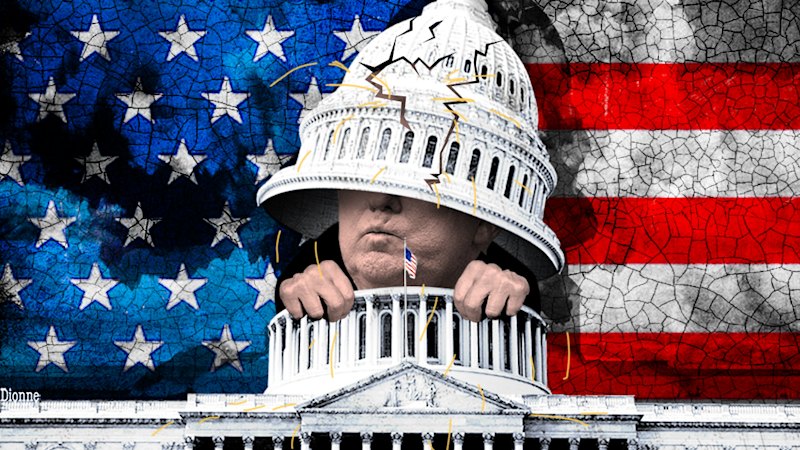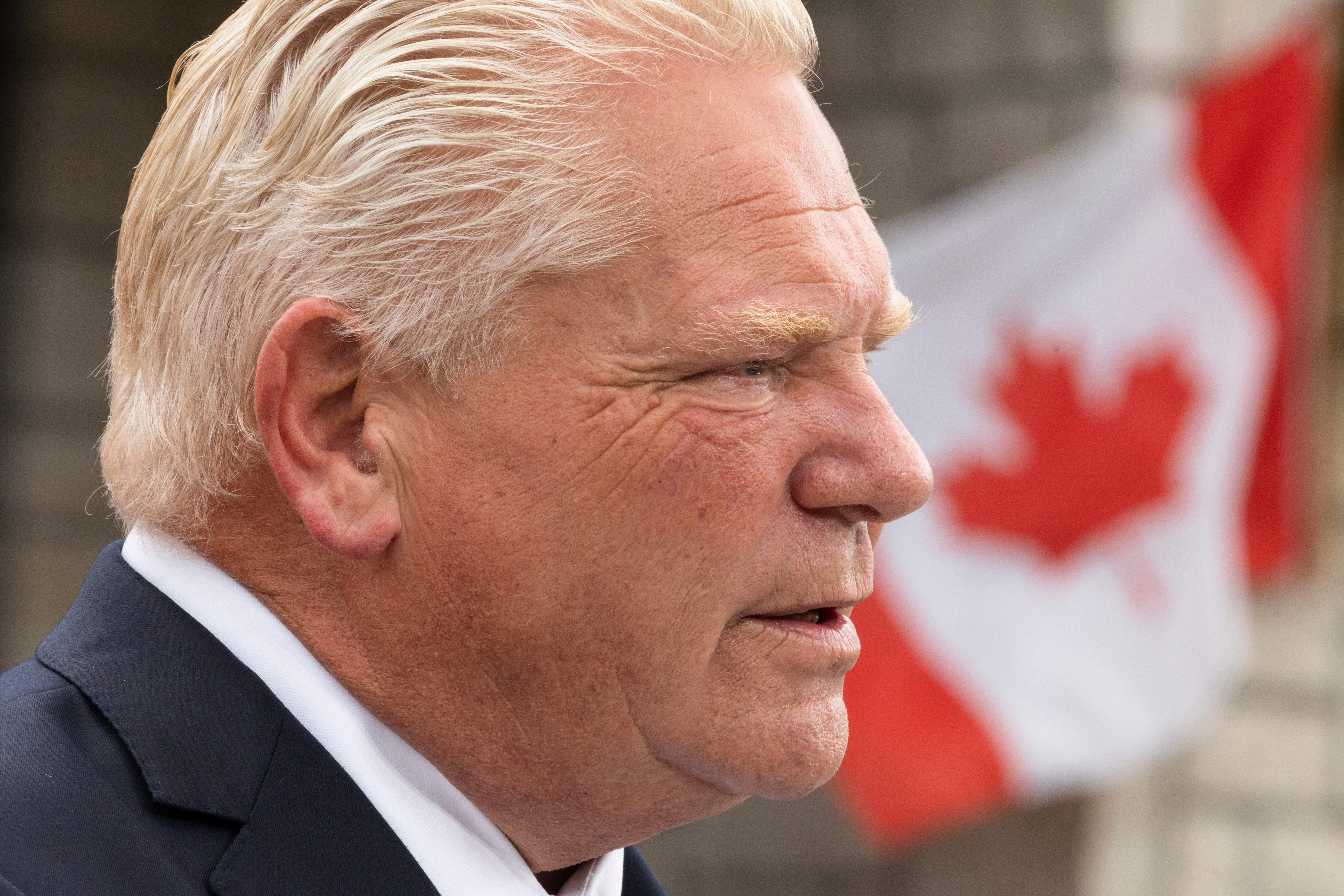
A cold wind sweeps down from the north, carrying the unmistakable scent of friction. Politics is rarely polite when geography forces two distinct worlds to share a fence. Picture a crowded provincial legislature room, the air thick with the quiet hum of anxiety, cameras flashing like distant lightning. Into this space steps Doug Ford. Sleeves rolled up, shoulders broad, a man who looks less like a traditional career bureaucrat and more like a retired contractor who just found a load-bearing wall ready to crack.
He didn't whisper. He never whispers.
When the conversation turns southward—toward the looming, unpredictable shadow of Donald Trump and the perpetual dance of cross-border trade—most politicians reach for the diplomatic phrasebook. They lean on cautious descriptors. They talk about bilateral frameworks and mutual cooperation. Ford tore up the playbook.
"Bring it on buddy."
Four words. Delivered with the casual swagger of a guy leaning over a back fence to challenge a neighbor on who has the better lawnmower. It was brash. It was reckless. It was entirely authentic to a man who has built an entire political brand on the currency of ordinary street-level defiance.
Consider what happens next in the theater of modern leadership. Trade deals are delicate things. They are fine glass sculptures held together by decades of shared history, treaties, and mutual economic survival. When a regional leader trades diplomatic niceties for playground taunts, the diplomatic corps usually breaks out in cold sweats. Economists forecast doom. Pundits adjust their glasses and write long, breathless columns about the collapse of international decorum.
Yet, something fascinating happens on the ground. People listen.
In towns where manufacturing plants rely on the seamless flow of steel and auto parts across an invisible line in the dirt, the reaction isn't panic. It's a grim, knowing smirk. Workers standing on factory floors, nursing lukewarm coffee from styrofoam cups, look at the screen and nod. They are tired of being treated like collateral damage in high-level geopolitical chess matches. They want someone who sounds like they are willing to punch a wall for them, even if punching walls rarely fixes supply chains.
The stakes are impossibly high. Ontario's economy is deeply entwined with the American engine. Millions of jobs depend on the simple reality that an engine block cast in Windsor can cross the border three times before a car rolls off a showroom floor in Michigan. Tariffs aren't abstract policy points here; they are mortgage payments. They are grocery bills. They are the difference between a thriving community and a rust-belt ghost town.
Ford knows this math. But he also knows a deeper psychological truth about the electorate. In moments of uncertainty, people do not rally around a spreadsheet. They rally around a persona.
When Trump looms large over the political horizon, casting a massive shadow across Canadian sovereignty and economic stability, the instinct of the Canadian political class has historically been quiet appeasement. Smile, nod, sign the paperwork, and hope the giant doesn't notice you. Ford's posture rejects that entire premise. He treats the relationship not as a master-servant dynamic, but as a rough-and-tumble negotiation between two heavyweights who respect strength above all else.
Critics call it populist theater. They argue that bravado is a poor substitute for a nuanced trade strategy. And they aren't entirely wrong. Slogans don't clear customs. Tough talk doesn't stop a 25 percent tariff from biting into the heart of Canadian manufacturing.
Yet, dismissing it as mere noise misses the human element entirely. Politics at this level is an emotional outlet for a populace feeling squeezed by inflation, housing crises, and external pressures they cannot control. When a premier looks south and flashes a defiant grin, he is absorbing the collective anxiety of millions and spitting it back out as confidence.
We have seen this movie before. Leaders who mistake volume for victory often find themselves cornered by the very forces they tried to bluff. But we have also seen the opposite: moments where sheer, unvarnished stubbornness forces a recalcitrant counterpart to the negotiating table.
The border remains long, undefended, and fraught with tension. The rhetoric will shift as the news cycle churns and new crises demand attention. But the baseline has permanently altered. The polite, deferential Canadian politician of the twentieth century is a ghost. In their place stands a new archetype—one willing to roll up his sleeves, throw a punch, and dare the world to hit back.
The coffee is cold on the factory floor, the shift is ending, and the trucks are still rolling south through the night.