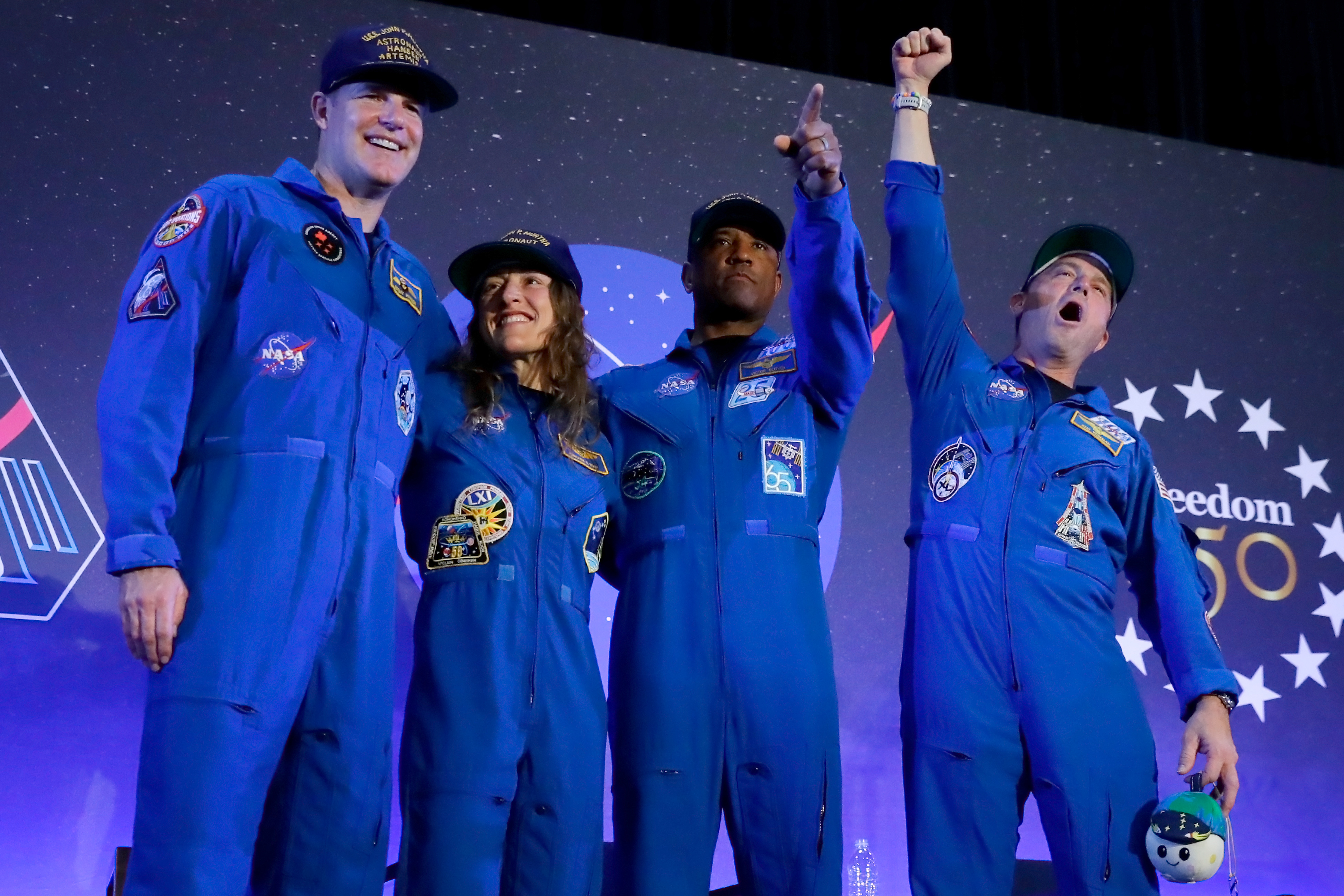
Jeremy Hansen just spent ten days in a tiny capsule hurtling through the vacuum of space, and honestly, the world hasn't looked the same since. After splashing down in the Pacific on April 10, 2026, the Artemis II crew is finally out of quarantine and ready to talk. On April 16, NASA and the Canadian Space Agency (CSA) are hosting a post-flight press conference at the Johnson Space Center in Houston. You can bet every Canadian space nerd will be glued to the livestream.
This isn't just another government update. It's the first time we'll hear from the four humans who just broke the record for the farthest distance traveled from Earth. While NASA's Reid Wiseman, Victor Glover, and Christina Koch are used to the spotlight, Jeremy Hansen is the one rewriting the Canadian history books. He’s the first non-American to leave low Earth orbit. That’s a massive deal for a country that usually provides the robotic arms, not the boots on the ground—or in this case, the seats in the cockpit.
The News Conference Details You Actually Need
The event kicks off at 2:30 pm ET. If you're in Canada, the CSA is opening its doors at the John H. Chapman Space Centre in Longueuil, Quebec, so local media can watch the feed and grill experts on the ground. For the rest of us, it’s going to be on YouTube.
Why does this matter? Because the "reconditioning" phase is over. When astronauts come back from deep space, they aren't just tired; their bodies have been through a blender. They've spent days in microgravity, and coming back to 1g is a brutal adjustment. This conference is our first chance to see them standing up, speaking clearly, and—most importantly—sharing the raw, unedited version of what it’s like to see the far side of the Moon with your own eyes.
What Jeremy Hansen Brought to the Table
Hansen wasn't just a passenger. As Mission Specialist 2, he was responsible for the initial checkout of the Orion spacecraft’s life support systems. If the water systems or the emergency equipment had failed on day one, it was his job to fix it. Think about that for a second. You're 200,000 miles from home, and you're the guy who has to make sure the air stays breathable.
He also had a specific role during the return trajectory. While Orion was screams through the atmosphere at 25,000 mph, Hansen was monitoring the guidance and navigation systems. It's a high-pressure gig that requires the kind of cool head you only get from years of flying CF-18 fighter jets in the Canadian North.
The Lunar Flyby Experience
On April 6, the crew reached their closest approach to the Moon. They didn't land—that's for Artemis III—but they did something almost as cool. They conducted "lunar observations" using training they’d done in places like Labrador and Iceland. They were literally scouting the terrain for the next generation of moonwalkers.
Hansen and Koch were tasked with stowing equipment and securing the cabin for re-entry, but before that, they were the eyes of humanity. They saw surface textures and colors that no human had seen in over 50 years. I want to hear Hansen describe the "Teachings of the Seven Grandfathers" mission patch he wore and what it felt like to carry that heritage to the lunar far side.
Beyond the Photo Ops
People often ask why we're spending billions on these trips. The answer isn't just "because it's there." Artemis II was a stress test. Everything from the potable water system to the new toilet (which Christina Koch was in charge of testing, by the way) had to work perfectly. If these systems didn't hold up for 10 days, there's no way we're sending people to the lunar surface for weeks at a time.
This mission also proved that the international partnership works. Canada’s seat on this flight wasn't a gift; it was earned through decades of contribution to the International Space Station and the Gateway program. By putting Hansen on this flight, NASA signaled that the future of space exploration isn't just an American flag—it’s a global one.
What to Watch for in the Briefing
When the cameras start rolling in Houston, don't just listen to the canned answers about "great teamwork." Watch for the details. I'm looking for:
- The "Far Side" Description: Photos never do it justice. I want to hear the crew describe the lighting and the shadows on the lunar back-side.
- The Physical Toll: How do they feel? Deep space radiation and zero-G take a toll. Their "postflight reconditioning" will be a big topic.
- The "Scary" Moments: Spaceflight is never perfect. Did any alarms go off? Was the splashdown as rough as expected?
- The Next Steps for Canada: With Hansen back, what happens to the rest of the Canadian astronaut corps?
If you want to catch it live, head over to NASA's YouTube channel or the CSA's social feeds at 2:30 pm ET. Don't expect a short event—these guys have a lot of stories to tell, and the world has been waiting since 1972 to hear them from a crew that’s actually been there.
The next move is simple: set a reminder on your phone. We won't get another moment like this until Artemis III puts boots on the ground, and that's still a way off. This is the peak of the lunar hype for 2026.