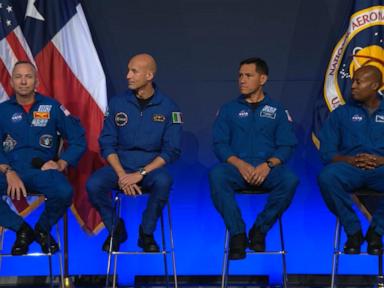
NASA just flipped the script on how we are getting back to the moon.
If you expected the newly named Artemis III crew to pack their bags for a historic walk on the lunar South Pole, you are in for a surprise. They aren't landing. Instead, NASA Administrator Jared Isaacman announced a major program overhaul that shifts the goalposts.
The agency named four veteran astronauts to crew Artemis III for a 2027 mission. Randy Bresnik will command the flight. Italian astronaut Luca Parmitano of the European Space Agency takes the pilot seat. High-profile NASA astronauts Frank Rubio and Andre Douglas round out the team as mission specialists, with Bob Hines serving as the backup.
It is an powerhouse crew. But their arena is low Earth orbit, not the moon.
The Artemis III Orbital Shift Explained Simply
The original plan called for Artemis III to place boots on lunar dust. That historic milestone has been pushed to Artemis IV in 2028. This temporary pivot addresses a brutal reality. Building human-rated lunar landers is taking longer than expected.
Instead of waiting around and letting hardware gather dust, NASA is fast-tracking a highly complex dress rehearsal right above our heads. It mirrors the aggressive, stepping-stone approach used during the Apollo era. Think of this as the Apollo 9 of the 21st century.
The two-week mission in 2027 will push the Orion capsule to its absolute limits. The team will blast off on the Space Launch System rocket from Kennedy Space Center. Once in orbit, the real choreography begins. The crew must pull off a high-stakes orbital dance with uncrewed test landers built by SpaceX and Blue Origin.
Two Spacecraft Giants One Major Training Ground
NASA is not betting on a single horse. Elon Musk’s SpaceX and Jeff Bezos’ Blue Origin are running a fierce tech sprint to deliver functional landers. Artemis III will put both companies to the test simultaneously.
The mission timeline requires incredible precision.
- The Blue Origin Phase: Jeff Bezos' company will launch a pathfinder version of its Blue Moon lander first. It needs to autonomously wait in orbit for the astronauts to arrive. Orion will dock with it for two full days of system checkouts, software integration, and crew ingress testing.
- The SpaceX Phase: After undocking from Blue Origin, the crew will immediately pivot to SpaceX. The Starship pathfinder will launch to meet Orion, linking up for a grueling 24-hour battery of hardware and communication tests.
This approach lets NASA stress-test the life support, propulsion, and communication interfaces of both commercial systems before sending anyone 240,000 miles away into the deep vacuum of space. It is a smart, risk-mitigation strategy born from recent development hurdles. Just a short while ago, Blue Origin suffered a massive pad explosion during an engine-firing test in Florida. While NASA officials publicly shrugged it off as a valuable learning opportunity, behind closed doors, it highlighted the sheer volatility of building the most powerful rocket systems in human history.
Why Frank Rubio and This Crew Matter Right Now
Look closely at who NASA picked for this mission. They did not choose rookies.
Frank Rubio holds the American record for the longest single-duration spaceflight, racking up 371 consecutive days in orbit after a leaky Russian Soyuz spacecraft extended his stay in 2023. If anyone knows how to handle unexpected hardware anomalies in space, it is Rubio.
Commander Randy Bresnik is a seasoned space shuttle and space station veteran. Pilot Luca Parmitano has logged hundreds of days in space and led complex spacewalks. Andre Douglas brings fresh engineering expertise to the table.
NASA is building what Isaacman called "Earth's first starfleet." The complexity of managing multiple commercial spaceships, alongside ongoing operations with the International Space Station, Chinese Shenzhou flights, and Russian Soyuz capsules, means low Earth orbit is about to get incredibly crowded.
Getting Ready for the 2027 Launch
The crew is transitioning to active training immediately. Engineers at Kennedy Space Center are already assembling the Orion crew and service modules, prepping the critical docking system for its first-ever flight. Rocket booster segments for the SLS are on-site, and technicians are preparing to mount the four RS-25 engines to the core stage.
If you want to track the progress of this mission, keep a close eye on the upcoming commercial pathfinder launches. Watch how SpaceX manages Starship orbital refuel tests over the next twelve months, and monitor Blue Origin's recovery from its recent engine test failure. The success of the 2028 lunar landing depends entirely on whether this crew can seamlessly bridge the gap between commercial tech and NASA's deep-space architecture during their two weeks in orbit.