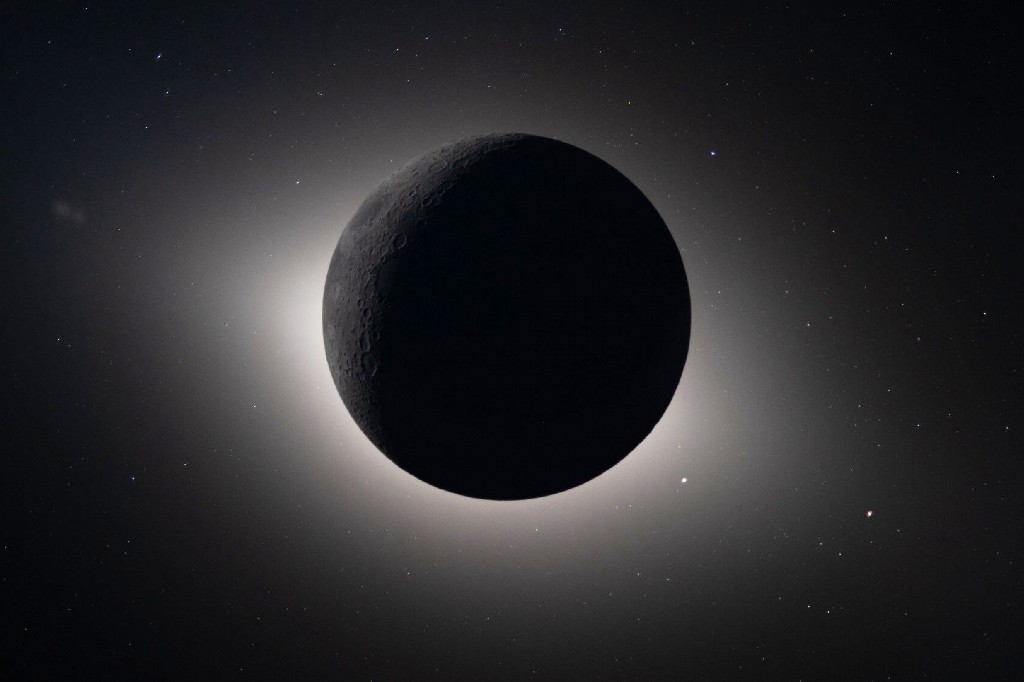
NASA is quietly shifting its timeline for a permanent moon base because the current aerospace supply chain cannot support human life on another world. While public briefings highlight architectural renderings and international partnerships, the technical reality involves severe supply bottlenecks, radiation shielding failures, and a dependence on unproven technology. Building a lasting presence on the lunar surface requires more than launching massive rockets. It demands an entirely new industrial framework that does not yet exist.
The immediate hurdle is not the will to go, but the physics of staying.
The Logistics Blueprint That Breaks Down at the Launchpad
Publicly, the framework for a permanent lunar presence relies on a steady cadence of heavy-lift launches. The Space Launch System and commercial transport vehicles are slated to ferry habitats, life support machinery, and crews to the south polar region. The official narrative suggests that iterative missions will gradually scale a modest outpost into a thriving research station.
The math tells a different story.
To keep four astronauts alive for a year without planetary resupply requires metric tons of consumables, spare parts, and redundant backup systems. Air scrubbers fail. Water recycling loops degrade. A single microscopic tear in a seals assembly can compromise an entire module.
Under current operating models, every kilogram of payload delivered to the lunar surface requires an exponential expenditure of propellant. We are trapped by the rocket equation. For every pound of equipment meant to sit permanently on the lunar regolith, dozens of pounds of fuel must be burned just to leave Earth's gravity well and slow down at the destination.
Relying on a pipeline stretching a quarter-million miles across deep space creates an fragile operational model. If a single resupply mission suffers a valve failure or a telemetry glitch on the pad, the crew on the surface faces immediate, life-threatening shortages. True permanence cannot be achieved by packing a bigger suitcase. It requires manufacturing the suitcase, the contents, and the fuel on the moon itself.
The Myth of Immediate Local Resource Utilization
Proponents of the current strategy point to lunar ice as the ultimate solution. The plan seems simple on paper: mine the shadowed craters of the lunar south pole, extract the water ice, split it into hydrogen and oxygen, and use it for breathing air and rocket propellant.
This plan glosses over unprecedented engineering complications.
Lunar regolith is not topsoil; it is a abrasive, jagged powder made of shattered volcanic rock and glass beads created by billions of years of meteorite impacts. It lacks the smoothing effects of wind and water erosion. This dust destroys moving parts. It tears through seals, clogs mechanical joints, and scores the polished metal shafts of heavy machinery.
Testing mining equipment in simulated vacuum chambers on Earth cannot replicate the long-term wear caused by these razor-sharp particles under one-sixth gravity. The automated excavators designed to harvest this ice will likely grind themselves to a halt within weeks of continuous operation.
Furthermore, the ice in permanently shadowed regions is frozen at temperatures hovering near absolute zero. At these extremes, ice does not behave like a soft glaciated block. It behaves like solid granite. Striking it with a mechanical shovel requires immense force and generates heat that can cause the volatile gasses to sublimate instantly into the vacuum, vaporizing the very resource the machinery is trying to collect before it can be captured.
The Radiation Barrier Nobody Has Solved
Earth protects its inhabitants with a thick atmosphere and a powerful magnetosphere. The moon has neither. For a crew living inside a lightweight, aluminum-skinned habitat on the surface, every day is an exercise in radiation lottery.
Galactic cosmic rays present a slow, cumulative threat. These high-energy atomic nuclei originate outside our solar system and travel at relativistic speeds. They slice through standard spacecraft walls, tearing through human DNA and significantly elevating lifetime cancer risks.
Solar particle events present a more immediate danger. A major coronal mass ejection from the sun can bathe the lunar surface in lethal doses of radiation within hours.
Required Shielding Depth for Safe Lunar Habitation:
--------------------------------------------------
Regolith Blanket:   3 to 5 meters minimum
Water Barrier:      1 to 2 meters surrounding internal walls
Lead/Polyethylene:  High-density composite layers in storm shelters
Current architectural proposals rely heavily on inflatable modules or thin-walled metal structures for the initial phases of habitation. These designs offer minimal shielding. To survive for years, rather than weeks, structures must be buried under meters of lunar soil or housed inside deep, natural lava tubes.
Moving millions of tons of earth with remote-controlled machinery is a civil engineering project that has never been attempted in a vacuum. The power requirements alone for such an operation would overwhelm the modest solar arrays currently slated for early missions.
The Power Grid Crisis in the Permanent Night
Solar power is the default energy source for orbital hardware, but it fails as a primary solution for a continuous lunar base. The lunar night lasts for roughly fourteen Earth days. Even at the elevated peaks of eternal light at the south pole, topography creates long shadows that block solar collectors for extended periods.
Batteries capable of sustaining a life-support grid for two weeks straight would be too heavy to launch from Earth. Fuel cells offer an alternative, but they require a constant supply of reactants that must be transported or manufactured locally.
Nuclear power is the only viable alternative.
Small, automated fission reactors are currently under development, but integrating these systems into a civilian space program involves navigating a minefield of regulatory delays, geopolitical concerns, and launch-safety protocols. A single failure during the launch phase could scatter enriched material across the upper atmosphere, a risk that makes policymakers extremely hesitant. Without these reactors, any talk of a permanent base is a fantasy. The lights will go out during the first prolonged dark period.
The Economic Reality of a Closed Supply Loop
The financial structure supporting current exploration initiatives is built on a shifting foundation of political cycles and short-term appropriations. A permanent base cannot survive on annual budget whims. It requires an economic ecosystem where the value generated on the moon eventually offsets the cost of maintaining the outpost.
Right now, there is no commercial market for lunar materials.
Shipping raw lunar regolith or even refined water ice back to Earth is economically unfeasible due to transportation costs. The primary customer for lunar products is the base itself, creating a circular economy that relies entirely on government funding to inject capital into the loop.
The Cost Asymmetry of Space Logistics:
* Earth-to-Orbit Launch Cost: ~$1,500 - $5,000 per kg
* Trans-Lunar Injection Cost: ~$10,000 - $30,000 per kg
* Surface Landing Surcharge: Multiplies base cost by a factor of 4x
Private entities involved in the current program are operating as defense-style contractors, working for fixed fees or milestone payments funded by taxpayers. This is not a self-sustaining commercial industry. It is a subsidized market. If a future administration decides to pivot priorities toward deep-space probes or atmospheric research, the financial pipeline will vanish, leaving multi-billion-dollar hardware to gather dust in the vacuum.
The Human Toll of Low Gravity
We understand the effects of microgravity on the human body thanks to decades of data from the International Space Station. We know that bones lose density, muscles atrophy, and fluid shifts upward, altering vision and cardiovascular function.
We know almost nothing about the long-term effects of partial gravity.
Is one-sixth gravity enough to prevent the degradation of human optical nerves over a three-year deployment? Will the immune system continue to function normally when subjected to prolonged lunar gravity combined with elevated radiation exposure?
Medical facilities on an early-stage base will be rudimentary. A crew member suffering from an acute appendicitis attack or a compound fracture cannot be easily evacuated. The transit window back to an Earth hospital spans days, assuming a vehicle is fueled, prepped, and waiting on a nearby landing pad.
The psychological strain of living in a cramped, pressurized can where a single mechanical failure means death cannot be overstated. The view of Earth as a tiny blue marble in a black sky induces a sense of isolation that standard isolation studies on Earth fail to replicate. Crews will break under these conditions unless habitat architecture evolves beyond utilitarian metal cylinders.
The Complications of International Space Law
The Artemis Accords seek to establish safety zones and operational guidelines for lunar exploration, but they lack universal consensus. Major spacefaring nations have refused to sign, viewing the framework as an attempt to establish de facto property rights over prime lunar real estate, such as the water-rich crater rims.
The Outer Space Treaty of 1967 explicitly prohibits national appropriation of celestial bodies by claim of sovereignty, use, or occupation. By establishing exclusive safety zones around mining operations, nations risk violating the spirit, if not the letter, of international law.
This geopolitical friction introduces operational hazards. If multiple entities deploy heavy machinery to the same narrow crater rim, the risk of physical interference, communications jamming, and dust plume contamination increases exponentially. A landing rocket kicks up high-velocity particles that can act like sandblasts on neighboring structures miles away. Without a unified, globally accepted traffic control and resource allocation system, physical conflicts over sites remain a distinct possibility.
The path forward requires abandoning the illusion that deep-space habitation is an extension of low-Earth orbit operations. The current framework relies on hardware concepts designed for short orbital stays, scaled up and forced onto a surface environment that actively destroys machinery. True permanence on the moon will not be achieved by flag-waving milestones or iterative budget extensions. It will be won by the nation or consortium that solves the boring, unglamorous problems of automated heavy excavation, nuclear thermal engineering, and closed-loop chemical manufacturing under the most hostile conditions known to science.