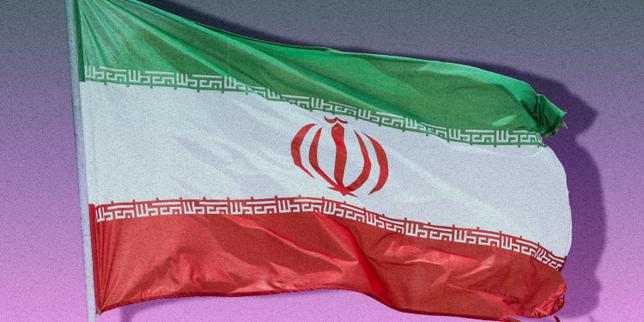
Israel just claimed its biggest win since the first night of the war. On Tuesday, Defense Minister Israel Katz confirmed that a targeted strike in Tehran killed Ali Larijani, the man effectively running Iran’s day-to-day operations after the Supreme Leader was taken out on February 28.
If you've been following the chaos of "Operation Epic Fury," you know the regime's leadership has been a black box for two weeks. With Ayatollah Khamenei dead and his son Mojtaba missing in action, Larijani was the steady hand trying to keep the wheels from falling off. He wasn't just another bureaucrat. He was a conservative heavyweight, a former parliament speaker, and the guy who knew where all the bodies were buried—both figuratively and literally. Expanding on this idea, you can also read: Why the Green Party Victory in Manchester is a Disaster for Keir Starmer.
The end of the Larijani era
Larijani’s death is a massive psychological blow, but don't expect it to trigger a white flag in Tehran. The IDF also confirmed the killing of Gholamreza Soleimani, the head of the Basij militia. For the average Iranian, Soleimani was a much more hated figure. He led the brutal crackdowns on domestic protests for years. Israel is banking on the idea that by decapitating the security apparatus, they’re giving the Iranian people a "chance" to rise up.
It’s a gamble. History shows that when you blow up a country’s command structure, you don't always get a democratic revolution. Sometimes you just get a more desperate, decentralized enemy. Observers at NBC News have also weighed in on this matter.
I’ve seen this script before. We saw it with the initial strikes that supposedly "neutralized" the regime's capability. Yet, hours after Larijani was reportedly killed, Iranian missiles were still screaming toward Tel Aviv and the Sea of Galilee. The infrastructure of the IRGC is designed to survive these losses. It’s built on a "next man up" philosophy that makes targeted assassinations feel like a deadly game of Whac-A-Mole.
Why the Basij leader matters more for internal control
The Basij isn't just a military unit. It's a neighborhood-level surveillance and repression machine. By taking out Gholamreza Soleimani, Israel has damaged the specific mechanism that keeps the Iranian public in check.
- Command vacuum: The Basij headquarters were struck while commanders were reportedly meeting in "combat tents" because their permanent bases had already been leveled.
- Operational paralysis: Without a central commander, the local units might hesitate to use force if mass protests break out.
- Moral injury: Losing the "enforcer" of the regime while the country is under bombardment creates a unique kind of vulnerability.
The Strait of Hormuz is still a choke point
While Israel and the US celebrate these hits, the global economy is still bleeding. The Strait of Hormuz remains a graveyard for tankers. Despite Donald Trump’s demands, European allies like the UK and Germany aren't jumping at the chance to send their navies into a meat grinder.
Honestly, it’s hard to blame them. Iran has proven that even with its top leaders underground or in the ground, it can still harass global shipping. Energy prices are spiking because the "sides trading strikes" isn't just a local spat—it’s a global supply chain nightmare.
You’re seeing 20% of the world's oil and LNG stuck behind a wall of Iranian anti-ship missiles. Killing a security chief doesn't magically clear those waters. It might actually make the remaining IRGC commanders more likely to do something reckless, like sinking a massive tanker just to prove they’re still in the fight.
The Biden-Trump transition of war
This conflict is being fought with a "2026 mindset." It’s aggressive, preemptive, and largely ignores the old diplomatic playbooks. Trump’s "Epic Fury" strategy is built on the belief that total decapitation of the regime is the only way to stop a nuclear Iran. But when you kill the negotiators—like Larijani, who was the bridge for nuclear talks—you kill the possibility of an exit ramp.
What happens next on the ground
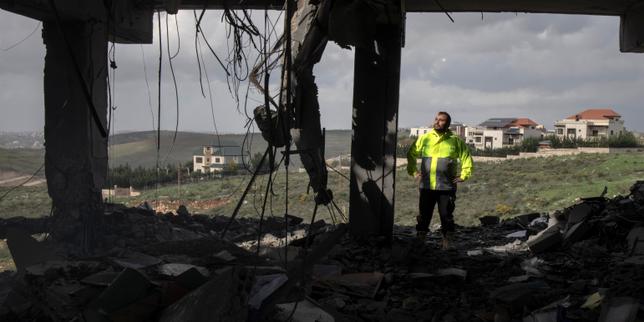
Watch Lebanon. The IDF is already pushing into the south, and with Hezbollah taking its own heavy losses, the risk of a full-scale ground invasion is at an all-time high. More than 700,000 people have been displaced. The "targeted" nature of the war is rapidly vanishing, replaced by a regional firestorm that shows no signs of cooling down.
The next 48 hours are critical. If Iran doesn't confirm Larijani’s death, it’s a sign they’re trying to prevent a total collapse of domestic morale. If they do confirm it, expect a retaliatory strike that makes the previous waves look like a warm-up.
Check your local energy prices and travel advisories for the Middle East immediately. If you have assets or interests in the Gulf, now's the time to hedge. This isn't a conflict that ends with one or two successful hits; it’s a fundamental restructuring of the Middle East, and the cost of admission is only going up.