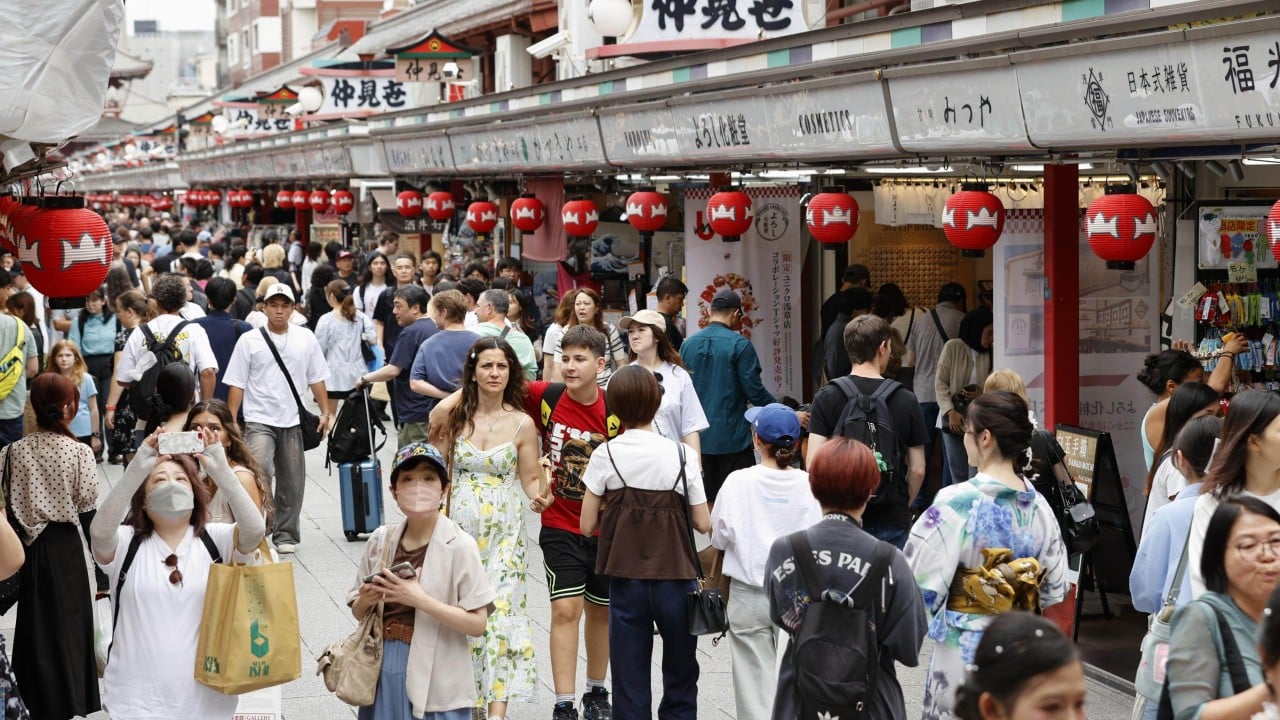
Japan reached a record 42.7 million foreign visitors in 2025, driven by market diversification away from historical concentrations and the persistent depreciation of the yen. The central government targets 60 million annual inbound tourists by 2030. This exponential growth exposes an analytical friction point: the country’s highly sophisticated domestic civil defense systems operate on foundational assumptions that do not hold when applied to transient, non-Japanese-speaking populations.
The structural mismatch between domestic civil protection mechanisms and the behavioral realities of millions of international travelers creates a compounding systemic risk. Resolving this discrepancy requires breaking down the crisis-management infrastructure into its component operational realities.
The Asymmetric Vulnerability Framework
The divergence in disaster survival outcomes between local residents and international tourists can be quantified through three structural variables: informational asymmetry, systemic friction, and infrastructural concentration.
1. Informational Asymmetry
The Japanese state relies on high levels of baseline civic education regarding seismic and meteorological hazards. The domestic populace possesses internal models for interpreting early warning signals, executing autonomous triage, and navigating local geography under duress.
International tourists exhibit the opposite profile. They lack contextual knowledge regarding the distinction between seismic intensity (shindo) and magnitude, do not speak the language used in emergency broadcasts, and possess no prior experience with real-world earthquake or tsunami protocols.
2. Systemic Friction
Civil defense systems in Japan rely heavily on decentralized municipal execution. Municipal disaster plans assume that individuals can navigate to designated evacuation zones (hinanjo) using local landmarks or community networks.
When a transient population enters these zones, language barriers and lack of cellular connectivity convert a clear routing process into an operational bottleneck. The absence of multilingual, offline-capable distribution systems guarantees an immediate communication failure during the critical initial window of an event.
3. Infrastructural Concentration
The economic model of inbound tourism dictates high spatial density. Massive volumes of international visitors remain concentrated along the primary rail corridors connecting Tokyo, Kyoto, and Osaka, or within specific high-density pockets like Kyoto’s historic districts or Mount Fuji.
This geographic compression scales up the volume of people caught in localized crises, overwhelming the localized physical capacities of nearby shelters and emergency services.
+-------------------------------------------------------------+
|               STRUCTURAL MISMATCH IN CIVIL DEFENSE           |
+-------------------------------------------------------------+
| ASSUMED DOMESTIC BASELINE       | TRANSIENT TOURIST PROFILE |
+---------------------------------+---------------------------+
| • High systemic literacy        | • Zero disaster literacy  |
| • Local geographic fluency      | • Total spatial dependency|
| • Native language comprehension | • Complete language barrier|
| • Autonomous triage capability  | • High dependency on help |
+-------------------------------------------------------------+
The Cost Function of Scale and Overtourism
The rapid scaling of tourism volumes compounds the strain on regional infrastructure during an emergency. The structural strain can be evaluated across distinct operational layers.
Spatial Bottlenecks and Route Capacity
Overtourism creates physical constraints inside high-density municipal zones. Narrow historical corridors—such as those in Kyoto’s Gion or Sannenzaka districts—were built for low-volume traditional transit. During peak periods, these pathways operate at or near maximum physical capacity.
If an immediate evacuation order occurs due to an earthquake or a secondary fire hazard, these bottlenecks restrict flow. The result is structural crowd compression, preventing safe movement toward open-air muster points.
Resource Allocation and Stockpile Thresholds
Municipal emergency stockpiles are calculated using fixed mathematical formulas based on registered resident populations. Municipalities evaluate historical local census data to determine required volumes of emergency rations, medical supplies, potable water, and space within designated shelters.
The presence of uncounted transient populations introduces an unaccounted variable into this equation. A major disaster occurring during peak travel seasons would cause an immediate supply deficit, as thousands of unregistered individuals enter local shelters and strain finite municipal resources.
       [Fixed Local Municipal Rations]
                      │
                      ▼
 ┌─────────────────────────────────────────┐
 │   Calculated for Resident Population    │
 └────────────────────┬────────────────────┘
                      │  + 42M+ Annual Inbound
                      ▼
 ┌─────────────────────────────────────────┐
 │  Supply Deficit & Resource Depletion    │
 └─────────────────────────────────────────┘
The Breakdown of Transit Chains
The Japanese transit network relies on tight scheduling and high automation. During a major seismic disruption, automated safety protocols trigger an immediate, widespread shutdown of rail networks, including high-speed shinkansen lines and urban subway systems.
For residents, this triggers a known protocol for walking home or sheltering in place at their offices. For international travelers, a transit freeze results in immediate systemic stranding. Tens of thousands of tourists become trapped inside major transit hubs like Tokyo or Shinjuku stations. These individuals lack the language skills needed to read real-time service updates, do not know alternative walking routes, and have no local residential base to retreat to.
Operational Limitations of Current Technical Solutions
The state and private sectors have deployed targeted investments to bridge these gaps, notably through the allocation of 15.82 billion yen in supplementary budgeting for overtourism mitigation and visitor infrastructure. The core digital strategies exhibit distinct operational constraints.
- Algorithmic Fragmentation: The proliferation of localized, regional tourism and optimization applications creates a fractured user experience. Travelers rarely download niche, prefecture-specific apps before an emergency occurs.
- Cellular Network Dependency: Real-time translation tools, dynamic QR-code signage, and location-based push notifications depend entirely on functional cellular networks and server uptime. A major seismic event typically triggers network congestion, localized power grid failures, and base station drops, rendering cloud-dependent applications useless at the exact moment of crisis.
- The Inherent Failure of Digital Signage: Fixed digital signage at main transit centers provides excellent real-time updates during minor disruptions. During a total power failure, these displays go dark unless backed up by dedicated local generators, forcing emergency workers to revert to manual, analog communication methods.
Systemic Integration and Risk Management
To transform this vulnerable system into a resilient one, Japan's new centralized Disaster Management Agency must pivot from reactive emergency management to proactive structural integration. The stabilization of tourist-heavy zones requires shifting the operational burden from the state to the commercial entities that profit directly from inbound travel volumes.
┌───────────────────────────────────────────────────────────┐
│               THE RESILIENCE ARCHITECTURE                 │
├───────────────────────────────────────────────────────────┤
│  1. MANDATORY COMMERCIAL INTEGRATION                      │
│     • Require hotel staff to train as certified marshals. │
│     • Automate offline multi-language push notifications.│
├───────────────────────────────────────────────────────────┤
│  2. INFRASTRUCTURAL DECOUPLING                            │
│     • Build independent, off-grid mesh networks.         │
│     • Pre-position physical, multilingual signage kits.  │
├───────────────────────────────────────────────────────────┤
│  3. ASSET REDISTRIBUTION                                  │
│     • Dynamic municipal stockpile formulas.              │
│     • Mandate commercial accommodation stockpiling.       │
└───────────────────────────────────────────────────────────┘
The first requirement is the formal integration of the hospitality sector into the local civil defense hierarchy. Hotels, ryokans, and short-term rental operators must be treated as frontline emergency nodes rather than passive commercial properties.
Regulatory updates should mandate that hotel personnel maintain active certifications as disaster response marshals, trained specifically to manage and guide non-Japanese populations. Accommodation facilities must be legally required to maintain localized emergency stockpiles scaled to their maximum guest capacity, decoupling their initial survival window from strained municipal resources.
The second requirement demands the deployment of offline, localized communication infrastructure. Municipalities cannot rely on global cellular connectivity. Tourism corridors require the installation of hardwired, solar-powered mesh networks capable of broadcasting localized routing instructions directly to smartphones without an active cellular carrier connection.
Physical, multi-language, high-visibility signage must be pre-positioned in dense urban zones, designed for manual deployment by local ward wardens when digital displays fail.
The final requirement is a mathematical recalculation of regional resource formulas. The Japan Tourism Agency and local authorities must replace rigid, census-based resident calculations with dynamic risk formulas that track real-time mobile location metadata. Municipal resource buffers must scale dynamically based on peak seasonal tourism density, ensuring that the safety of local residents is never compromised by the structural needs of transient populations.
Ultimately, the long-term survival of Japan's inbound tourism model depends on treating disaster readiness as a core operational component of infrastructure, rather than a secondary marketing point. Systemic vulnerability can only be mitigated by building an emergency architecture that assumes the user knows nothing, understands nothing, and cannot communicate.