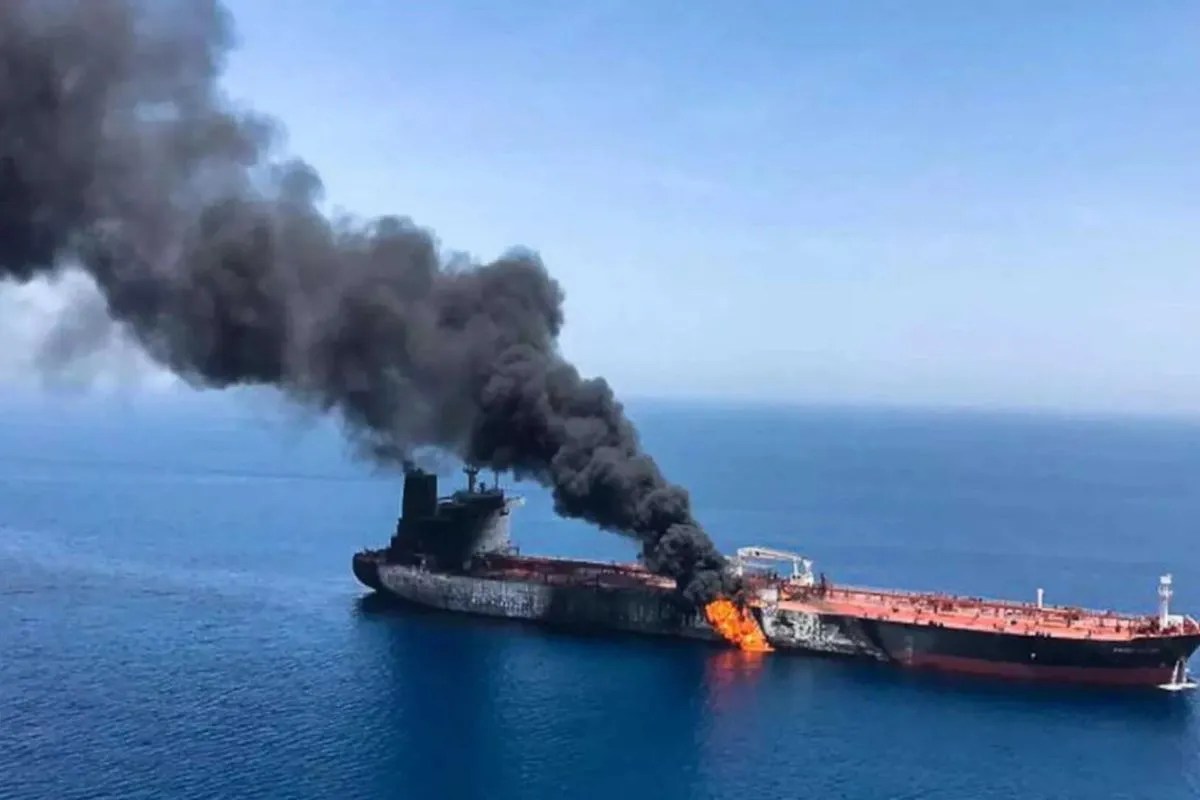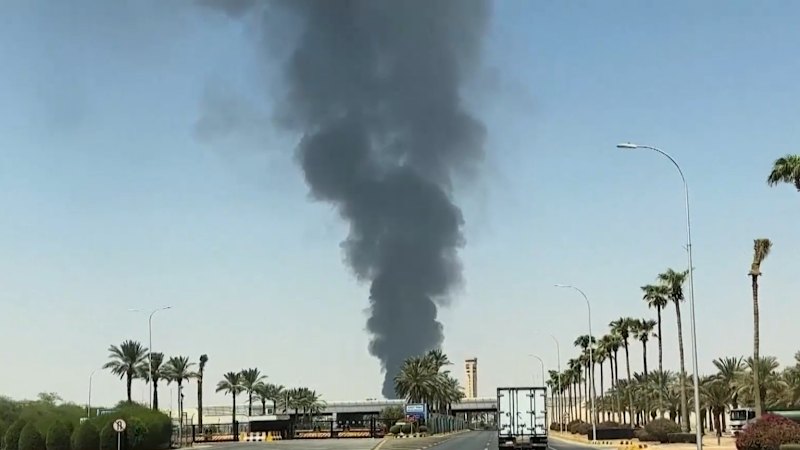
Geopolitical conflicts involving long-range projectile campaigns are rarely tests of absolute military annihilation; instead, they function as exercises in economic exhaustion. When non-state actors project force across hundreds of kilometers against heavily fortified urban and industrial nodes like Riyadh's King Khalid International Airport, the evaluation cannot rely on nominal casualty reports or tactical claims issued by opposing belligerents. The strategic reality is governed by the structural disparity between the marginal cost of offensive delivery systems and the replacement cost of defensive interceptor batteries. Deconstructing this dynamic reveals why repeated claims of aerial strikes—regardless of immediate interception rates—impose systemic friction on regional aviation, logistics, and capital allocation.
The Cost Function of Asymmetric Interception
The primary driver of modern air defense economics is the high asymmetry between the capital required to build or acquire low-cost loitering munitions or basic ballistic systems and the multi-million-dollar interceptor missiles utilized by sophisticated defense architectures.
- Offensive Marginal Cost: Commercial off-the-shelf components, guidance systems built on civilian electronics, and simplified propulsion enable the manufacture of long-range drones and crude cruise missiles at a fraction of a percent of a defense battery's unit cost.
- Defensive Marginal Cost: Advanced surface-to-air missile systems deploy interceptors whose unit economics dictate strict rationing. Every inbound signature—whether verified as a high-value threat or identified as a low-fidelity decoy—forces the expenditure of scarce defensive inventory.
This asymmetry generates a structural pressure point. Even when defensive layers achieve a high kinetic success rate by destroying incoming projectiles before impact, the defender absorbs a continuous fiscal drain. Over extended operational timelines, this dynamic shifts the burden from the physical site of impact to the supply chain of the defending nation.
Operational Friction and Commercial Logistics
Targeting civilian aviation infrastructure, such as major international hubs, is designed less to secure territorial conquest than to introduce severe operational friction. Modern aviation networks depend upon predictable predictability, tight turnaround windows, and uninterrupted passenger and cargo throughput.
When repeated cross-border vectors target or approach a capital city's primary transit node, second-order economic consequences propagate rapidly:
- Insurance and Risk Premiums: Underwriters reassess hull and liability risk for carriers operating into designated zones, driving up operational costs or forcing carriers to suspend routes independently of official regulatory mandates.
- Turnaround and Scheduling Degradation: Temporary airspace closures, holding patterns, and post-interception safety protocols fragment flight schedules, resulting in localized capacity crunches and reduced passenger confidence.
- Personnel Risk Mitigation: International carriers and foreign logistics operators balance crew safety against commercial yield, often preemptively canceling rotations when security alerts are issued by diplomatic missions.
This environment isolates the target city economically, transforming a tactical military action into a macro-logistical hurdle for trade, tourism, and executive mobility.
Signaling and the Information Domain
In protracted conflicts involving asymmetrical actors and state coalitions, the release of operational claims serves a distinct political and psychological utility. The publication of strike claims—often unaccompanied by verifiable visual evidence or independently audited impact assessments—operates within an information feedback loop.
- Internal Mobilization: Claims of deep-strike capability project domestic momentum and validate ongoing asymmetric campaigns to internal audiences, maintaining organizational cohesion despite asymmetric battlefield losses.
- Deterrence Signalling: Repeated strikes or claimed attacks serve to contest air supremacy claims made by opposing state coalitions, signaling that geographic distance and sophisticated counter-measures do not grant absolute immunity to critical infrastructure.
- Diplomatic Leverage: Escalations targeting high-visibility economic and logistical assets are frequently timed to influence multilateral negotiations, regional diplomacy, or international pressure campaigns directed at halting opposing air campaigns.
Strategic Forecast and Systemic Adaptation
The recurrence of long-range projectile claims against high-value capital assets highlights the limits of point defense alone. Because the marginal utility favors the expansion of low-cost offensive fleets, defense strategies must evolve beyond high-end interceptor reliance toward multi-layered, cost-effective counter-UAS (Unmanned Aerial Systems) solutions, including directed-energy applications and electronic warfare suppression. Without a shift toward lower-cost per engagement ratios, infrastructure protection will remain economically unsustainable over multi-year horizons, ensuring that low-cost vectors remain a preferred instrument for imposing disproportionate friction on regional powers.