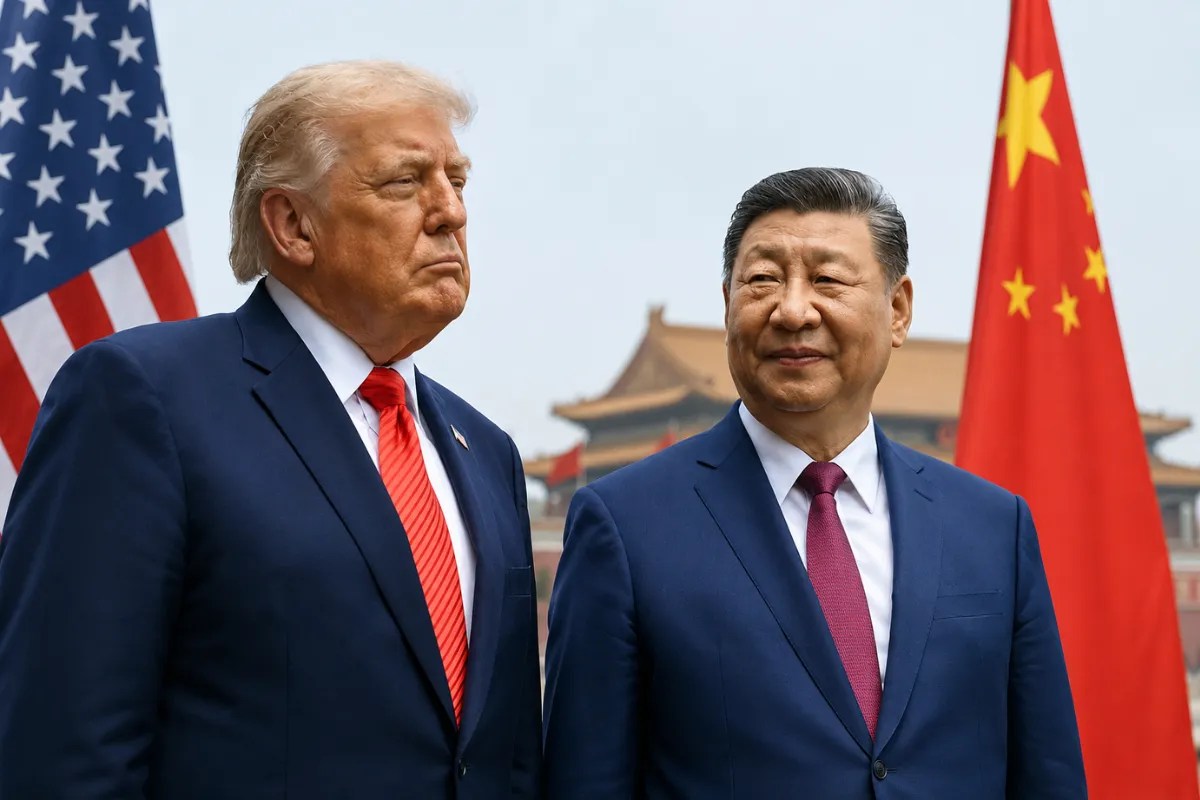
The trajectory of artificial intelligence development operates on a non-linear compounding curve, meaning that a marginal delay in infrastructure deployment or policy formulation results in an exponential divergence in competitive capability. For India, the window to secure a dominant position in the global sovereign intelligence architecture is tightly constrained by hardware access, capital concentration, and bilateral regulatory alignment. The assertion by the US-India Business Council regarding the urgency of a bilateral trade agreement highlights a deeper structural reality: architectural advantages in machine learning models belong to nations that command the physical and legal conduits of data and silicon. Waiting to develop domestic alternatives from scratch creates a compounding lag that cannot be easily closed.
To evaluate India's strategic positioning, the challenge must be viewed through three distinct operational variables: the hardware procurement velocity, the regulatory friction of cross-border data transfer, and the net flows of engineering talent. Resolving these variables requires moving past generic policy goals and establishing hard legal mechanisms, specifically a formalized trade framework with the United States.
The Cost Function of Microchip Procurement and the Silicon Bottleneck
The primary limiting factor in training large-scale foundation models is the availability of specialized semiconductor hardware, specifically advanced graphics processing units (GPUs) and application-specific integrated circuits (ASICs). The supply chain for these components is highly centralized, controlled by a small number of design entities in the United States and manufacturing foundries in Taiwan.
[Global Semiconductor Supply Chain]
       │ (US IP & Architecture)
       ▼
[Advanced Foundry Production]
       │ (High Tariffs & Trade Friction)
       ▼
[Indian Compute Infrastructure Bottleneck]
Nations lacking preferential trade status or explicit bilateral supply guarantees face artificial constraints that extend far beyond market pricing. Without a structured trade agreement, India's acquisition of compute infrastructure is subject to three specific layers of friction:
- Export Control Volatility: United States export control regimes regularly adjust the thresholds for computational performance and interconnect bandwidth on hardware shipped internationally. Lacking a formalized treaty, Indian enterprises risk sudden exclusions from next-generation architectures if compliance definitions shift.
- Tariff and Non-Tariff Import Disincentives: High import duties on advanced electronics components, designed to protect legacy domestic manufacturing, inadvertently raise the capital expenditures required to build hyperscale data centers inside India. This capital inefficiency reduces the total volume of compute a domestic firm can purchase per unit of venture funding.
- Allocation Queues: Chip designers prioritize shipments based on market scale, strategic partnerships, and national security directives. A formalized trade pact elevates regional priority, moving domestic infrastructure projects ahead in the global queue for production allocations.
The financial penalty of these frictions can be quantified as an operational tax on training compute. If an Indian enterprise faces a 20% higher cost per petaflop of compute relative to a Silicon Valley counterpart due to logistics, tariffs, and middleman margins, its models will inherently be undertrained or economically unviable at global scale.
Cross-Border Data Flows and the Sovereign Regulation Tradeoff
The second variable governing the acceleration of intelligence systems is the volume and velocity of high-quality training data. The development of specialized enterprise and consumer models relies on access to multimodal datasets that span international borders. India possesses a vast domestic data generation footprint due to its massive connected population, but this raw asset undergoes severe depreciation without international interoperability.
The regulatory environment presents a direct trade-off between absolute data sovereignty and the economic utility of data. The implementation of stringent data localization mandates requires all computational processing and storage to remain within physical national borders. While this addresses specific national security vulnerabilities, it introduces structural inefficiencies for distributed training architectures.
Distributed training across geographically separated data centers requires low-latency, high-bandwidth pipelines. If regulatory frameworks treat every cross-border data packet as a potential compliance violation, international technology firms will isolate Indian data pools rather than integrating them into global training sets. The consequence is a data silo effect, where domestic models are trained exclusively on localized data, leaving them blind to global market nuances, while international models miss out on Indian demographic contexts.
A structured US-India trade agreement serves as the mechanism to build a high-trust data corridor. By establishing mutual recognition of data protection standards, both regions can implement a framework where data can be processed seamlessly across jurisdictions without sacrificing consumer privacy protections. This allows Indian developers to access international cloud environments for intensive training runs while safeguarding domestic consumer rights through legal reciprocity.
The Talent Drainage Vector and Intellectual Property Reciprocity
The global machine learning ecosystem suffers from an acute deficit of top-tier research talent—specifically engineers capable of optimizing distributed training architectures, designing novel neural network variations, and managing hardware-software co-design. India produces a large volume of engineering graduates, but the structural incentives tilt heavily toward emigration to regions with denser capital concentrations and advanced physical infrastructure.
+-------------------------------------------------------------+
|                TALENT RETENTION RISK MATRIX                 |
+-------------------------------------------------------------+
| HIGH | Capital Flight Vector       | Infrastructure Deficit |
|      | (Emigration to US/EU)       | (Loss of Core Talent)  |
|------|-----------------------------|------------------------|
| LOW  | Localized Services          | Redundant Engineering  |
|      | (Low-value Outsourcing)     | (Maintenance Only)     |
+------------------------------------+------------------------|
|      |            LOW              |          HIGH          |
|      +------------------------------------------------------+
|                     Systemic Attrition Risk                 |
+-------------------------------------------------------------+
This talent drainage is driven by a lack of local, world-class compute infrastructure. A research engineer focused on frontier models will naturally migrate to where the largest clusters of chips reside. To reverse this vector, India must offer equivalent computational environments locally.
A trade agreement with the United States addresses this talent equation through two distinct economic levers:
- Intellectual Property Stabilization: American technology firms are hesitant to deploy their most advanced proprietary models, weights, and architectural designs into jurisdictions where intellectual property enforcement is perceived as slow or unpredictable. A trade agreement that synchronizes patent protections and trade secret liabilities provides the security necessary for multinational firms to establish deep research and development laboratories on Indian soil.
- Collaborative Corporate Joint Ventures: When legal frameworks align, global technology conglomerates shift from treating international offices as low-cost engineering centers to treating them as core architectural nodes. This creates high-value domestic roles that retain senior technical talent within the regional ecosystem.
Without these protections, the domestic market remains limited to application-layer development—building thin software wrappers around foundational models hosted elsewhere. This leaves the core economic value and architectural control in foreign hands.
Direct Capital Allocation Efficiency
The capital expenditure required to compete in frontier AI development is scaling at roughly 3x per year. Developing a competitive model from scratch requires hundreds of millions of dollars in silicon investment alone, independent of operational costs. For the Indian venture ecosystem, matching the raw capital deployment of North American or East Asian sovereign entities is a severe mathematical challenge.
Therefore, the strategic play is not the replication of commoditized foundational models, but the optimization of specialized models tuned for distinct enterprise vertical markets and regional languages. However, even this specialized strategy requires access to affordable base architectures and international cloud compute platforms.
Delaying a bilateral trade agreement forces domestic firms to build out redundant underlying tech stacks. This misallocates scarce capital away from high-value domain adaptation and into low-value baseline compute replication. A trade deal allows Indian enterprises to acquire base model weights and raw compute capacity at global market rates, freeing up local venture capital to fund specialized fine-tuning, domain-specific data curation, and deployment integration.
Immediate Strategic Directives
To prevent a permanent computational divergence, the national policy approach must pivot away from open-ended protectionism and toward a highly structured integration strategy. The immediate next moves require an explicit tri-part policy execution:
First, codify a specialized digital trade chapter within the bilateral framework that explicitly exempts machine learning research compute clusters from standard electronics import tariffs. This lowering of barriers should be tied directly to reciprocal agreements that guarantee minimum hardware allocations from US chip designers to certified Indian data centers.
Second, re-engineer the data governance model from a strict localization posture to an authorized-node framework. This configuration allows data to flow across borders to international processing hubs, provided those hubs reside within jurisdictions that maintain verified legal data-protection treaties with India.
Third, establish an institutional joint venture architecture where US intellectual property can be imported under protected licensing agreements to run on sovereign domestic clouds. This creates an environment where top-tier engineering talent can build models locally without requiring the transfer of physical assets out of the country.
The competitive landscape of artificial intelligence does not pause for bureaucratic alignment. Every month spent without standardized terms of trade increases the structural lag in model training efficiency, capital deployment, and infrastructure density. Securing a clear trade pact with the United States is not a concession of sovereign autonomy; it is the necessary entry requirement for long-term computational competitiveness.