The Strategic Pivot from Scarcity to Mass
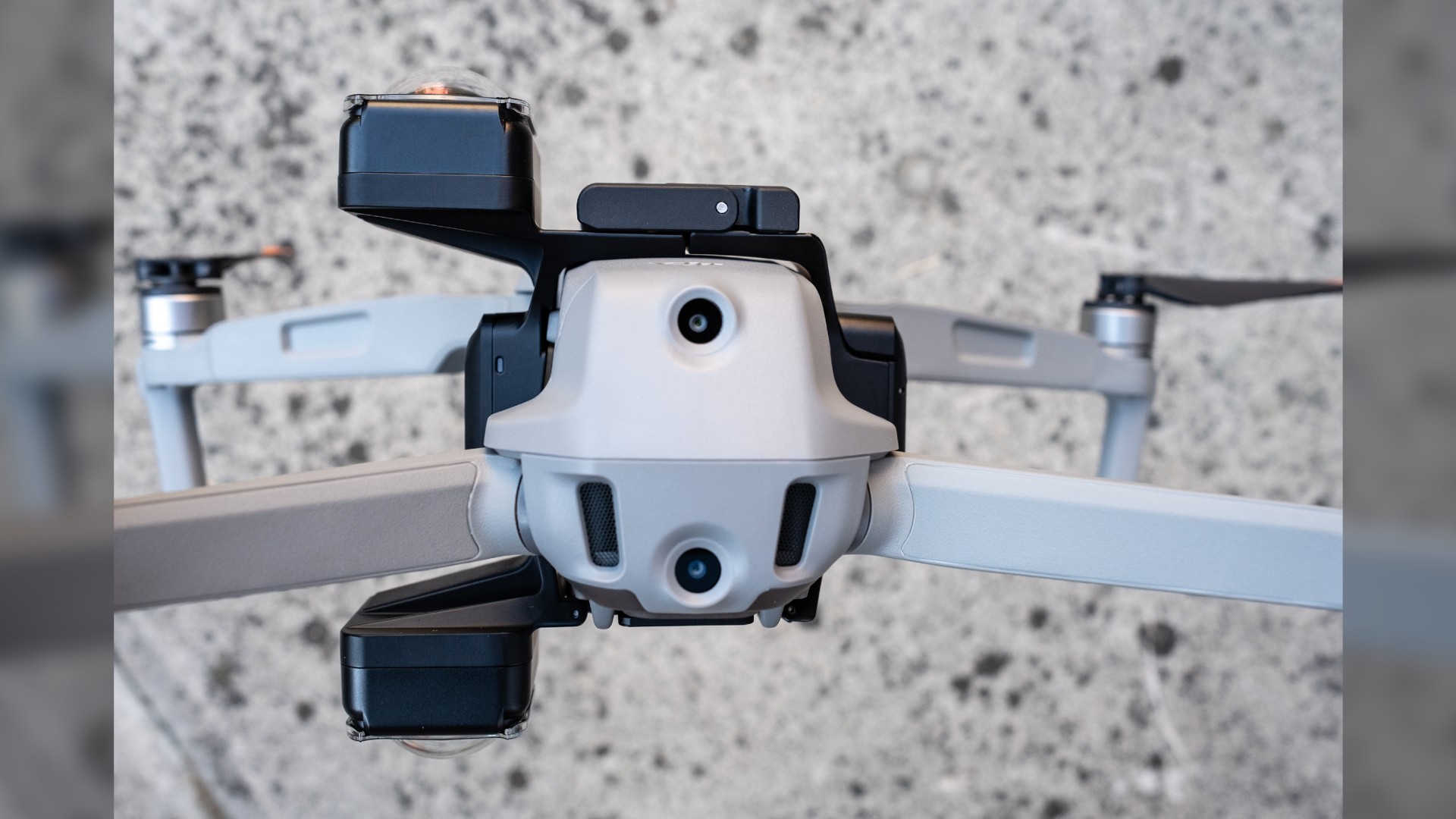
The reported UK deployment of the "Octopus" interceptor drone system to the Middle East signals a fundamental shift in the economics of aerial denial. Current defense paradigms rely on high-cost, low-volume kinetic interceptors—such as the Aster or Patriot families—to neutralize low-cost, high-volume threats like the Shahed-series one-way attack (OWA) munitions. This creates a catastrophic "cost-exchange ratio" where a $2 million missile is expended to destroy a $20,000 drone. The Octopus program attempts to invert this ratio by fielding a distributed network of autonomous or semi-autonomous interceptors designed for "attrition-tolerant" warfare.
This deployment is not merely a tactical adjustment; it is a structural response to the democratization of precision strike capabilities. By deploying thousands of units, the UK aims to move from a "point defense" model (protecting specific high-value assets) to an "area denial" model that treats the airspace as a contested medium where the cost of entry for an adversary becomes prohibitively high. Read more on a related issue: this related article.
The Triad of Autonomous Interception
The Octopus system functions through three distinct operational layers that the original reports often conflate. Understanding these layers is essential for evaluating the system's probability of success.
1. The Sensor-to-Shooter Mesh
Unlike traditional batteries that rely on a centralized radar, the Octopus concept utilizes a distributed sensor mesh. Each drone, or groups of drones, act as nodes. This reduces the "single point of failure" risk. If one node is blinded by electronic warfare (EW), the remaining nodes maintain the track through passive infrared or acoustic signatures. Further reporting by Ars Technica delves into similar perspectives on the subject.
2. The Kinetic Exchange Mechanism
The Octopus is categorized as a "hard-kill" interceptor. It likely utilizes a "ramming" or "proximity-burst" logic. By removing the need for a complex multi-stage rocket motor and a sophisticated seeker head found in traditional missiles, the per-unit cost drops significantly. The primary engineering challenge here is the "terminal guidance" phase—the final seconds where the drone must match the vector of a fast-moving or maneuvering target.
3. Swarm Logic and Resource Allocation
Deploying thousands of drones requires an algorithmic backbone to prevent "over-kill." If 50 interceptors all target the same incoming threat, the system exhausts its magazine prematurely. The Octopus software must execute real-time task allocation, ensuring that only the statistically necessary number of interceptors are committed to a single contact while the rest remain in a loitering or "picket" state.
Evaluating the Cost-Exchange Function
The viability of the Octopus deployment is governed by the Cost-Exchange Function ($C_{ef}$), which determines if a defense strategy is economically sustainable over a prolonged conflict.
$$C_{ef} = \frac{(C_d \times N_d) + O_c}{C_a \times N_a}$$
Where:
- $C_d$ = Cost of a single interceptor drone
- $N_d$ = Number of interceptors required per kill (the "Leaking Rate" buffer)
- $O_c$ = Operational overhead (logistics, personnel, command and control)
- $C_a$ = Cost of the adversary's attack munition
- $N_a$ = Number of attack munitions
Traditional systems currently operate at a $C_{ef}$ often exceeding 50:1. For the Octopus system to be strategically transformative, it must drive the $C_{ef}$ toward 1:1 or lower. If the UK can produce Octopus units at $25,000 and achieve a kill with a 1.5x redundancy, the cost to negate a $30,000 Iranian drone becomes roughly $37,500. While still an premium, it is a sustainable premium that avoids the rapid depletion of national treasuries.
Logistical Bottlenecks and Deployment Realities
While the headlines focus on the "thousands" of drones, the true constraint is the "Launch and Recovery" cycle. A thousand drones cannot simply be "in the air" indefinitely due to battery density and propulsion limits.
Power Density Constraints
Most interceptor drones in this class rely on electric propulsion for agility and low thermal signatures. However, lithium-ion energy density limits loitering time. This necessitates a "staggered launch" architecture or "ground-start" sensors that trigger launches only when a threat is detected. The logistics of maintaining, charging, and rapidly deploying thousands of units across a desert or maritime environment introduces a massive maintenance tail.
Frequency Congestion
Operating thousands of autonomous units in the same theater creates an "Electronic Fratricide" risk. The drones must communicate to deconflict their flight paths, but these same frequencies are targets for Iranian jamming units. The UK’s success depends on the Octopus using "LPI/LPD" (Low Probability of Intercept/Low Probability of Detection) datalinks. If the drones lose connectivity, they must revert to onboard autonomous logic, which increases the risk of "Blue-on-Blue" incidents (attacking friendly aircraft).
Strategic Implications for the Persian Gulf and Red Sea
The deployment of Octopus to the Middle East serves as a live-fire laboratory for the future of NATO's integrated air and missile defense. The specific geography of the region—narrow maritime corridors like the Strait of Hormuz—favors the Octopus's distributed nature.
Traditional destroyers are vulnerable to "saturation attacks," where an adversary fires more missiles than the ship has interceptors (the "magazine depth" problem). A carrier strike group protected by a "screen" of 500 Octopus drones suddenly gains a significantly deeper magazine. This forces the adversary to either increase their strike volume (increasing their own costs) or develop more expensive, stealthier munitions that can bypass the drone mesh.
Limitations of the Interceptor Drone Model
The Octopus is not a panacea. It faces three primary functional limitations:
- Velocity Mismatch: These drones are effective against slow-moving OWA drones and cruise missiles. They are virtually useless against ballistic missiles or hypersonic threats, which move at speeds far exceeding the physical capabilities of a propeller-driven or small-jet drone.
- Weather Sensitivity: Small sUAS (Small Unmanned Aircraft Systems) are highly susceptible to high winds, sandstorms, and extreme heat, all of which are prevalent in the Middle East. A sandstorm could effectively "ground" the Octopus fleet, creating a window of vulnerability.
- The "Swarm vs. Swarm" Escalation: If both sides utilize mass-produced autonomous systems, the conflict enters a phase of "algorithmic attrition" where the winner is the side with the superior manufacturing base and software optimization, rather than the side with the best pilots or most sophisticated single platforms.
The Manufacturing Imperative
For the UK to deploy "thousands" of these units, it must transition from "boutique" defense manufacturing to "commodity" manufacturing. This requires a shift in procurement logic. Instead of a ten-year development cycle, the Ministry of Defence (MoD) must adopt an iterative "Block" approach.
- Block I: Basic kinetic intercept with manual override.
- Block II: Full autonomous mesh networking and passive IR tracking.
- Block III: Multi-modal kill capabilities (EW spoofing + kinetic strike).
This iterative approach ensures that the "iron on the ground" is always relevant to the evolving threat signatures of Iranian-made hardware.
Strategic Forecast: The End of Hegemony via Precision
The deployment of the Octopus system marks the beginning of the "Post-Precision" era. When both the state and the non-state actor have access to precision-guided munitions, the advantage reverts to the side that can manage "mass" most effectively. The UK’s move is a gamble that software-defined defense can compensate for a lack of traditional military scale.
To maximize the efficacy of the Octopus deployment, the UK must integrate these units into the existing "Skynet" satellite communications architecture to ensure over-the-horizon control. Furthermore, the MoD should prioritize the "containerization" of the launch systems—allowing them to be deployed from standard ISO containers on merchant vessels or civilian trucks. This "hidden in plain sight" capability complicates an adversary's pre-launch targeting logic and ensures the interceptor mesh can be activated from anywhere in the theater of operations.