The clatter of porcelain against wood is the baseline soundtrack of Hong Kong. Walk down any narrow street in Sheung Wan or Sai Ying Pun on a Saturday morning, and you are hit by a wall of sensory information: the sharp hiss of steaming milk, the aroma of roasting coffee beans, and the low, constant hum of human chatter. But look closer at the legs of those cafe tables. For years, a silent tension has been brewing right under the seats.
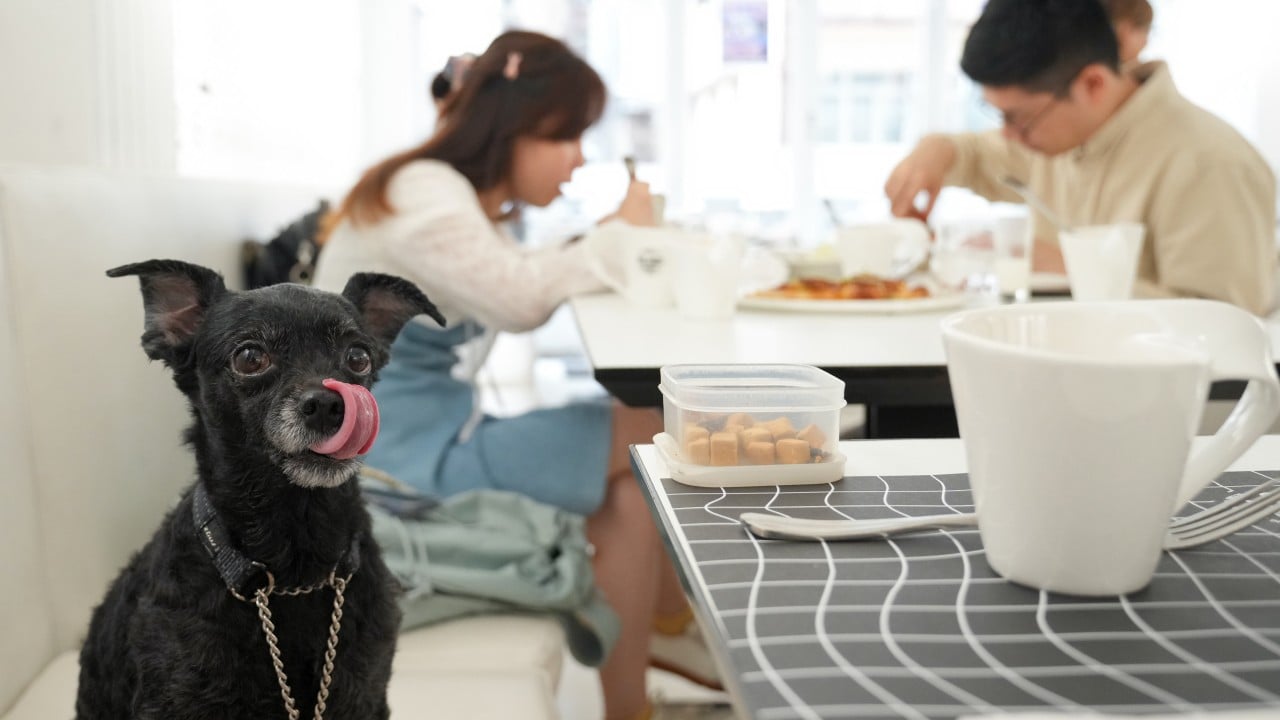
On one side of the glass pane sits a young professional, sipping an espresso, looking longingly at the sidewalk. On the other side of the glass, tied to a parking meter or a fire hydrant, sits a golden retriever. The dog is waiting. The owner is rushing. It is a daily, fragmented ritual dictated by a rigid, decades-old legal framework that treats a family pet with the same regulatory nuance as a biohazard.
Now, Hong Kong is trying to change that. The government is pushing forward with plans to relax restrictions on dogs in restaurants, despite a fierce, public tug-of-war that has seen high-profile pullouts from pilot programs and sharp pushback from traditionalists. This is not a trivial debate about where a puppy can sit. It is a proxy war over the soul of a city trying to redefine what it means to be modern, inclusive, and deeply human.
The Ghost at the Feast
To understand why this policy shift feels like pulling teeth, you have to understand the sheer weight of Hong Kong’s vertical anxiety. Space here is not just premium; it is sacred. When you pack over seven million people into a hyper-dense urban archipelago, boundaries become survival mechanisms.
For generations, the Public Health and Municipal Services Ordinance maintained a hard line. No dogs in food premises. Period. The rule was born out of an era when public hygiene was a matter of basic disease control, a time when the city was clawing its way into hyper-development.
But cities change faster than laws. Walk into a typical apartment in Tseung Kwan O today. You are likely to find a household where a four-legged companion has replaced the traditional concept of a large family. For thousands of residents, these animals are not hobbies. They are emotional anchors in a high-stress, high-rent pressure cooker.
Consider a hypothetical, yet entirely representative, resident named Michelle. She works twelve-hour days in corporate finance. Her tiny studio apartment feels less like a home and more like a holding cell without her four-year-old shiba inu, Mochi. When weekend comes, Michelle does not want to leave Mochi trapped in another six hours of isolation just so she can grab brunch. She wants to integrate her life.
When the government announced a review to allow dogs into designated dining areas, it felt like a validation of Michelle’s reality. But for every Michelle, there is an uncle or a grandmother who views the policy with absolute horror. They see a vision of stray hairs floating into bowls of wonton noodles, of unpredictable barking shattering a rare moment of peace, and of hygiene standards slipping in a city that still remembers the trauma of past health crises.
The Fractured Pilot and the Price of Fear
The path of reform is never a straight line. When authorities initiated discussions and soft trials to test the waters of pet-friendly dining, the reaction was immediate and polarized. Several prominent restaurants that initially expressed interest or participated in early-stage talks quietly backed away.
The reasons for these pullouts tell the real story. It was not a lack of affection for animals. It was the crushing logistical reality of Hong Kong retail.
Imagine managing a bistro where space is so tight that waiters must turn sideways to pass between tables. Now, introduce a nervous labrador under table three and a territorial French bulldog under table five. The potential for chaos is a liability many business owners decided they simply could not afford. The threat of online boycotts from anti-pet diners, coupled with the anxiety of strict liability if a customer were to be bitten, caused a chill effect.
Yet, the government’s resolve to press ahead signals something deeper than mere stubbornness. Policymakers are looking at global competitors. London, New York, and Tokyo have long figured out how to let dogs snooze under tables without triggering a public health collapse. If Hong Kong wants to retain its status as a world-class talent hub, it has to accommodate the lifestyle expectations of the global citizens it desires to attract and keep.
The debate has exposed a profound cultural disconnect. Opponents argue that dogs belong in parks, not places of consumption. Proponents counter that the modern city has evolved past rigid segregation.
The Logistics of Compassion
The real friction lies in the execution. How do you rewrite a law to satisfy both the hyper-hygienic traditionalist and the modern pet parent?
The proposed framework is not a free-for-all. It relies on a system of clear demarcation, strict licensing conditions, and operational autonomy. Restaurants will not be forced to accept dogs; they will be given the legal right to choose to do so, provided they meet specific criteria regarding ventilation, seating arrangements, and waste management.
It is a compromise that satisfies no one entirely, which usually means it is the only viable way forward.
The transition will be awkward. There will be public incidents. There will be angry letters to editors and viral videos of arguments over a poodle blocking a narrow aisle. But the alternative is to keep living in a city of artificial divides, where a major segment of the population is forced to choose between social connection and the well-being of the creatures they love.
Change arrives slowly, then all at once. The next time you walk past a cafe in Central, look at the glass doors. The stickers are already changing. The invisible lines that have partitioned Hong Kong’s public spaces for decades are blurring.
A man in a sharp suit sits by the window, cutting into a piece of toast. Beneath the table, hidden by the tablecloth, a small terrier rests its chin on his shoe, breathing softly in sync with the rhythm of the city outside.