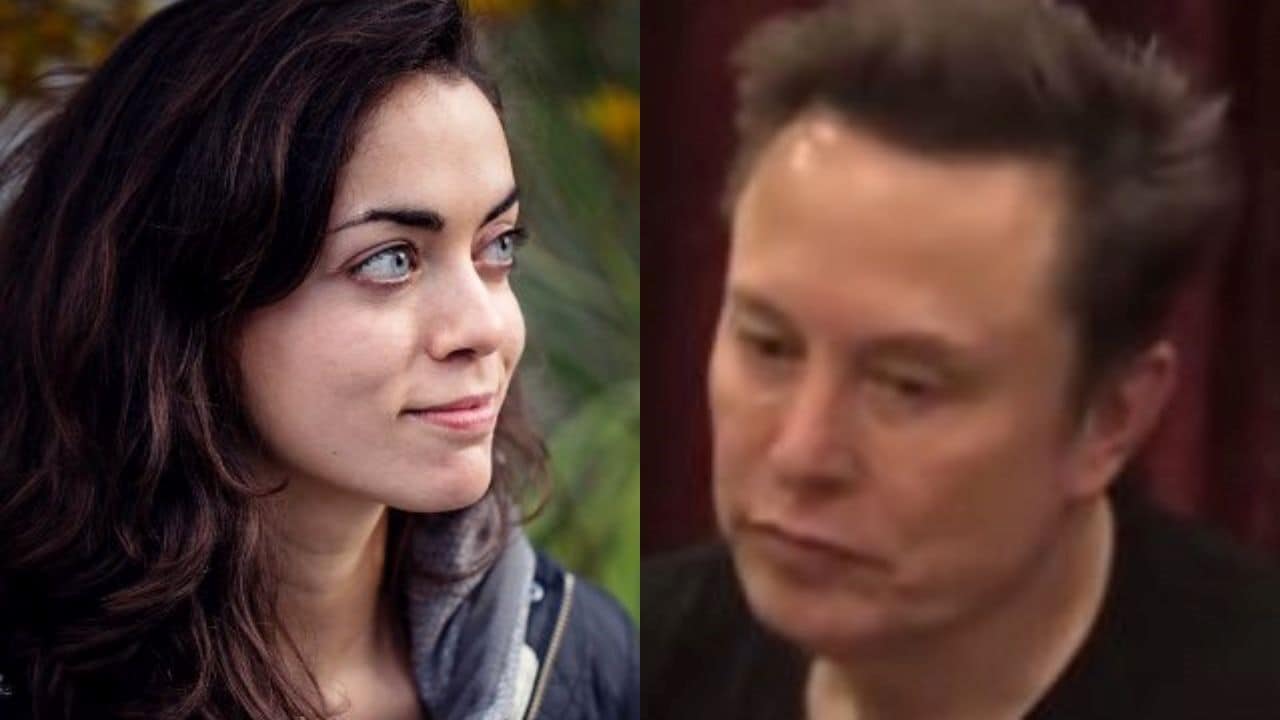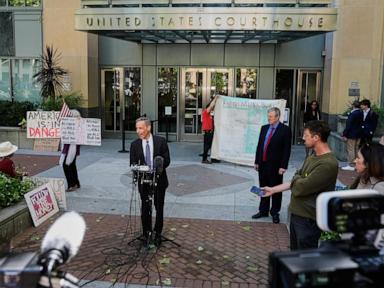
Elon Musk and Sam Altman once shared a dining table and a terrifying vision of a world dominated by a malevolent digital superintelligence. Today, they share a courtroom docket. The legal war between Musk and OpenAI is frequently framed as a simple breach of contract case, but that is a superficial reading of a much deeper tectonic shift. This litigation is the first real-world trial of "existential risk" as a legal defense. Musk asserts that OpenAI abandoned its founding mission to benefit humanity in favor of maximizing profits for Microsoft. OpenAI counters that Musk is simply a jilted suitor suffering from "founder's FOMO." Beneath the mud-slinging lies a fundamental disagreement about whether the most powerful technology in history can be safely developed within a for-profit structure.
The stakes go beyond legal fees or intellectual property. If Musk wins, he could potentially force OpenAI to open-source its most advanced models, effectively handing the crown jewels of the AI world to the public—and to every global adversary. If OpenAI wins, it solidifies a new corporate blueprint where "capped profits" and complex nonprofit-for-profit hybrids become the standard for gatekeeping the future. Don't miss our earlier coverage on this related article.
The Broken Promise of the Non Profit Shield
In 2015, the pitch for OpenAI was simple. It would be the "anti-Google." At the time, DeepMind had been acquired by Google, and the fear was that a single search giant would monopolize Artificial General Intelligence (AGI). Musk, Altman, and Ilya Sutskever positioned OpenAI as a neutral laboratory. The foundational agreement—or at least the one Musk claims existed—was that the technology would not be kept secret for financial gain.
That vision died a slow death between 2018 and 2020. The sheer computational cost of training Large Language Models (LLMs) made the nonprofit model a fantasy. You cannot build a god-like machine on donations from billionaires alone; you need the infinite scale of cloud computing and billions of dollars in hardware. This reality birthed the "capped-profit" entity, a move Musk argues was a bait-and-switch. He claims he was the primary bankroller in the early days, providing the credibility and the cash that lured top-tier talent away from academic tenures and secure Google salaries. To read more about the context of this, The Next Web offers an in-depth summary.
The investigative reality is that OpenAI’s transition wasn’t just a tactical pivot; it was a total cultural overhaul. The "safety" researchers who once drove the conversation were gradually sidelined by product managers focused on API stability and enterprise integrations. Musk’s lawsuit points to GPT-4 as the smoking gun. He argues that GPT-4 is not just a better chatbot, but an early manifestation of AGI, which, according to the original charter, should be exempt from OpenAI’s commercial license with Microsoft.
Microsoft and the Proxy War for Control
Microsoft is the silent giant in the room. By injecting $13 billion into OpenAI, Satya Nadella effectively bought a front-row seat to the future without the regulatory headache of owning the company outright. This partnership created a perverse incentive structure. While the nonprofit board technically retains control, the operational reality is that OpenAI is now a vital organ of Microsoft’s enterprise suite.
Musk’s legal team is digging into the specifics of this "incestuous" relationship. They want to know where the line is drawn. If GPT-4 is "de facto" AGI, then Microsoft’s right to use it should technically terminate. But who defines AGI? Currently, the OpenAI board does. This creates a circular logic where the entity receiving the funding gets to decide if it has reached the milestone that would force it to stop making money for its benefactor.
It is a conflict of interest that would never pass muster in any other industry. Imagine a pharmaceutical company being allowed to decide, internally and without oversight, when a drug is "too effective" to be sold for profit. The lack of an objective, third-party metric for AGI is the loophole that allowed OpenAI to transform into a closed-source commercial juggernaut.
The Safety Narrative as a Marketing Tool
The term "AI Safety" has undergone a radical transformation. In the early days of OpenAI, safety meant preventing a "Paperclip Maximizer" scenario—a hypothetical where an AI destroys the world to fulfill a mundane goal. Now, safety is often used as a convenient excuse for secrecy.
By claiming that a model is "too dangerous" to be open-sourced, a company can effectively protect its competitive advantage under the guise of moral superiority. This is the crux of the "open vs. closed" debate that Musk has championed. He argues that secrecy doesn't lead to safety; it leads to a concentration of power that is inherently unsafe. If only one or two companies have the "God model," they control the narrative, the economy, and the flow of information.
Critics of Musk point out his own ventures, like xAI and Grok, suggest his motives are less than altruistic. He is building his own massive compute clusters while simultaneously suing his former partners for doing the same. However, his legal argument holds water in one specific area: the transparency of the board. The chaotic firing and rehiring of Sam Altman in late 2023 revealed a governance structure that was brittle and opaque. When the board tried to exercise its "safety" mandate to remove Altman, they were crushed by investor pressure and employee threats. The nonprofit "mission" proved to be a paper tiger when faced with a $80 billion valuation.
The Computational Arms Race
To understand why the trial matters, one must look at the physical infrastructure of AI.
- Hardware Monopoly: NVIDIA’s H100 and Blackwell chips are the new oil.
- Data Exhaustion: LLMs are running out of high-quality human text to train on.
- Energy Consumption: AGI will require the power output of mid-sized nations.
These three factors mean that the "open" dream is becoming economically impossible for everyone except the ultra-wealthy. Even if the code is open-source, the cost to run the model is a barrier to entry that ensures the "democratization" of AI is a myth. Musk knows this. His lawsuit isn't just about a contract; it is a desperate attempt to reset the rules of the game before the window of competition closes forever.
The Boardroom Coup That Failed
The November 2023 meltdown at OpenAI was not a random event. It was the climax of the tension between the "Effective Altruists" on the board and the "Accelerationists" led by Altman. The board felt Altman was not being "candid" about safety protocols and the pace of development.
The fact that Altman returned within days, backed by Microsoft and a new, more corporate-friendly board, signaled the end of the nonprofit experiment. The current board includes figures like Larry Summers, the former Treasury Secretary, and Bret Taylor, the former co-CEO of Salesforce. These are not "safety researchers" worried about the end of humanity; these are operators who understand market dominance and institutional power. Musk’s lawsuit is effectively a post-mortem on the original OpenAI, seeking to prove that the entity he helped found no longer exists.
Legal Precedent and the Definition of AGI
The outcome of this case hinges on a definition that does not yet exist in law. How does a judge determine if a piece of software has reached "Artificial General Intelligence"?
If the court relies on OpenAI’s internal definition, Musk loses. If the court looks at the capabilities of GPT-4—its ability to reason, code, and solve complex problems—it might find that the company has already crossed the Rubicon. A ruling in Musk’s favor would be a cataclysmic event for the tech industry. It would invalidate multi-billion dollar contracts and potentially force the "de-acceleration" of AI development across the board.
The defense will likely lean on the "business judgment rule," arguing that the board acted in what they believed was the best interest of the mission, even if it meant taking Microsoft's billions. They will argue that a broke, nonprofit OpenAI would have been a failure, unable to recruit the talent necessary to ensure AI is built safely. This is the "greater good" defense: we had to sell the soul of the company to save the world.
The Overlooked Risk of Regulatory Capture
While the trial focuses on the feud between two men, the real victim is the regulatory environment. While Musk and Altman fight in court, they are both simultaneously lobbying Washington. There is a growing concern that the "existential risk" narrative is being used to pull up the ladder behind them.
By convincing lawmakers that AI is a "nuclear-level" threat, they invite heavy regulation that only the largest companies can afford to comply with. This creates a moat. If you need a $100 million compliance budget just to release a model, no startup will ever challenge the incumbents. Musk’s lawsuit, perhaps unintentionally, exposes this hypocrisy. He is demanding openness while building his own closed systems, highlighting a world where "safety" is the ultimate weapon for market control.
The Shift Toward Sovereign AI
Beyond the courtroom, we are seeing the rise of "Sovereign AI." Nations like France and the UAE are pouring billions into their own national models (like Mistral and Falcon) because they realize they cannot rely on a handful of California-based companies for their digital future.
The Musk-OpenAI trial is the starting gun for this global splintering. If the US legal system cannot provide a stable framework for AI governance, other nations will create their own. The "humanity" that OpenAI promised to benefit is increasingly looking like a very specific subset of Western venture capitalists and their shareholders.
The Fallacy of the Capped Profit Model
The "capped profit" structure was supposed to be a middle ground. Investors would get a return (up to 100x), and anything beyond that would go to the nonprofit. On paper, it sounds fair. In practice, a 100x return on a multi-billion dollar investment is indistinguishable from infinite profit.
It was a clever accounting trick designed to soothe the conscience of the original founders while giving Wall Street exactly what it wanted. Musk’s legal team is expected to argue that this cap was set so high as to be meaningless, thereby violating the "nonprofit" status of the parent organization. If the IRS or the California Attorney General gets involved, OpenAI could lose its tax-exempt status, a move that would trigger a massive financial restructuring and potentially bankrupt the nonprofit arm.
Why the Discovery Phase is the Real Danger
The most terrifying part for OpenAI isn't the verdict; it’s the discovery phase. Musk’s lawyers will gain access to internal emails, Slack messages, and board minutes from the last nine years.
This will likely reveal the true thoughts of Sam Altman and Greg Brockman during the Microsoft negotiations. It will show whether they truly feared for humanity or if they were simply eyeing the largest exit in tech history. For a company built on the premise of "radical transparency," OpenAI has become remarkably opaque. This trial will force the curtains open.
The Ghost of Ilya Sutskever
Ilya Sutskever, the chief scientist who originally voted to oust Altman and then recanted, remains a pivotal, shadowy figure in this drama. His long absence from the company's public life following the coup attempt suggests a deep internal rift regarding the "risks" Musk is citing. If Sutskever is called to testify, his words could be the "smoking gun" Musk needs. As the man who likely understands the technical capabilities of OpenAI's models better than anyone else, his assessment of whether GPT-4 constitutes AGI will carry immense weight.
The reality of the situation is that neither side is a pure actor. Musk is a competitor with a history of volatile leadership. OpenAI is a corporate titan wearing the skin of a nonprofit. The trial is not a battle between good and evil, but a collision between two different visions of power. One believes power should be decentralized and open, even if it’s dangerous. The other believes power should be concentrated and "policed" by those who built it, even if it’s profitable.
The court's decision will determine who gets to hold the leash of the most transformative technology in human history. It will decide if AGI is a public good, like the internet or the GPS system, or a private asset, like a proprietary drug or a secret algorithm. There is no middle ground left. The "tapestry" of Silicon Valley cooperation has been shredded, and what remains is a raw, high-stakes fight for the future of the species.
Stop looking for a "win-win" scenario. In this trial, there is only the winner who gets to define reality and the loser who gets relegated to a footnote in the history of the intelligence explosion. The deposition transcripts will be the new scriptures of the digital age. They will record the moment we decided that "benefiting humanity" was either a binding legal obligation or just another line of marketing copy.
The trial begins. The machines are watching. The lawyers are billing. The rest of us are simply waiting to see if we still own our future.