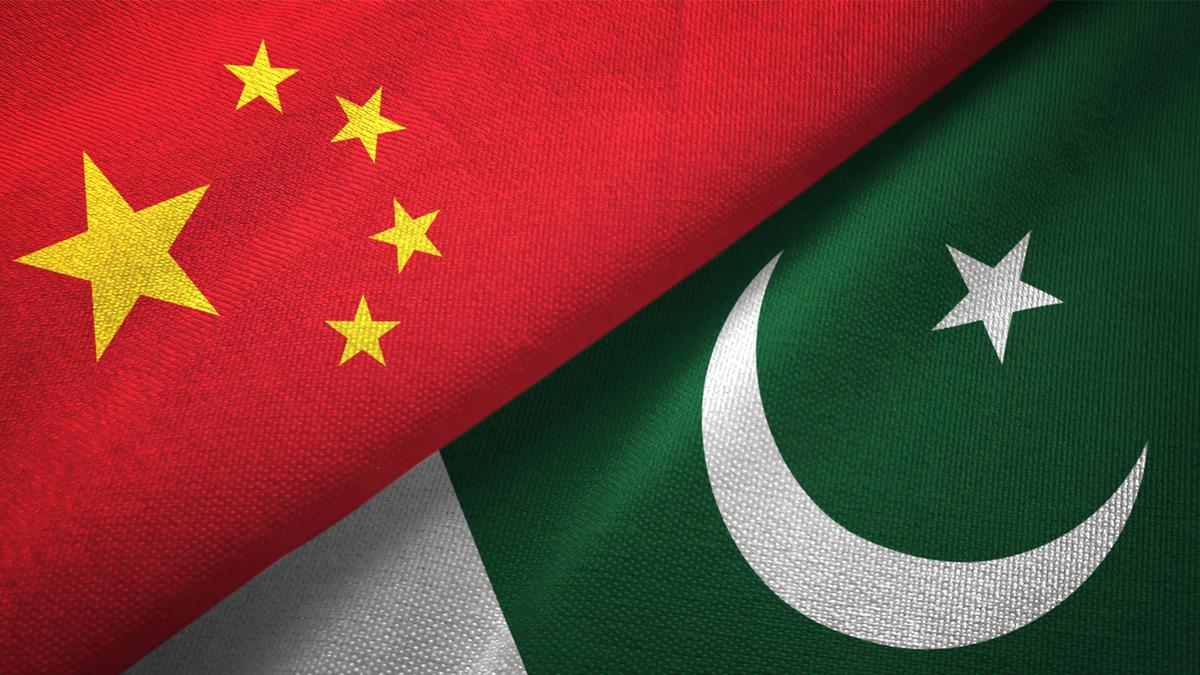
Beijing has officially signaled its unwavering commitment to Pakistan’s defense, a move that fundamentally rewrites the security script for South Asia. This isn't just about diplomatic boilerplate or the usual exchange of pleasantries between "iron brothers." We are seeing the crystallization of a coordinated military strategy designed to pin India between two fronts, forcing New Delhi to split its resources, its attention, and its technological development. While recent border tensions between India and Pakistan have often been viewed through the lens of local skirmishes, China’s confirmed backing transforms these friction points into a theater for a much larger geopolitical chess match.
The confirmation of support during the most recent period of heightened kinetic activity serves as a stark reminder that the Line of Control is no longer a vacuum. China provides the backbone of Pakistan’s modern arsenal, from VT-4 main battle tanks to 054A/P frigates, but the real weight lies in the intelligence and electronic warfare integration. When Beijing backs Islamabad, it isn't just sending hardware; it is providing a digital umbrella and a satellite-guided edge that Pakistan could not achieve on its own. Meanwhile, you can find other developments here: Geopolitical Friction and the Inertia of Indian Diplomatic Engagement in Nepal.
The Strategy of Permanent Distraction
For decades, Indian defense planners operated on the "two-front war" theory as a worst-case scenario. Today, that scenario is the baseline reality. By guaranteeing support to Pakistan, China ensures that India can never fully pivot its military strength toward the Line of Actual Control in the north. Every mountain division India moves toward Ladakh is a division that isn't guarding the plains of Punjab or the ridges of Kashmir.
This is strategic economy of force at its most cynical. China doesn't need to fire a single shot to drain the Indian treasury. It simply needs to keep Pakistan viable, armed, and aggressive. The financial burden of maintaining a massive standing army on two hostile borders is a weight that slows India’s broader economic ambitions. Beijing knows that for every rupee New Delhi spends on an extra Rafale jet or a homemade aircraft carrier, a rupee is taken away from the infrastructure and education projects that would allow India to compete with China on the global stage. To understand the full picture, check out the detailed analysis by The New York Times.
The Electronic Intelligence Pipeline
The most critical aspect of this confirmed support is the hidden flow of data. Sources within the regional intelligence community suggest that the integration of the BeiDou satellite navigation system into Pakistani strike platforms has been a silent priority. Unlike the civilian-grade GPS that can be throttled or jammed by Western powers during a crisis, BeiDou offers a dedicated military channel that remains under the total control of Beijing.
This creates a scenario where Pakistani missile batteries can operate with a level of precision previously reserved for global superpowers. During last year's escalations, the invisible hand of Chinese signal intelligence provided a clearer picture of Indian troop movements than Pakistan's own aging surveillance fleet could have managed. This isn't a partnership of equals; it is a landlord-tenant relationship where the tenant gets world-class security in exchange for keeping the neighbor busy.
Hardware is Only Half the Story
While much is made of the JF-17 Thunder fighter program, the real shift is happening in the world of unmanned aerial vehicles (UAVs). China has effectively turned Pakistan into a testing ground for its drone swarm theories. The proliferation of Wing Loong II drones gives Pakistan a persistent "eye in the sky" that complicates Indian border management.
India has responded with high-altitude surveillance tech and redirected its own drone acquisitions, but the cost-to-kill ratio favors the Chinese-backed side. It is significantly cheaper to mass-produce medium-altitude long-endurance drones in Chengdu than it is to build sophisticated anti-air batteries in Bengaluru. This asymmetrical pressure is the core of the China-Pakistan alliance. They are forcing India to play an expensive game of catch-up while they set the rules of the engagement.
The CPEC Security Imperative
We cannot talk about military support without looking at the China-Pakistan Economic Corridor (CPEC). Beijing views Pakistan as its primary gateway to the Arabian Sea, a way to bypass the "Malacca Trap" where the US Navy could theoretically choke off Chinese energy imports. This makes the stability of the Pakistani state a matter of Chinese national security.
When China confirms its support, it is protecting its investment. The thousands of Chinese engineers and laborers working on Pakistani soil require a stable environment, or at least a military capable of deterring external interference. This has led to the creation of a dedicated division within the Pakistani Army specifically tasked with protecting CPEC assets. In effect, a portion of Pakistan's military has become a privatized security force for Chinese capital, further blurring the lines between the two nations' sovereign interests.
The Nuclear Shadow and Conventional Creep
The most dangerous element of this deepening bond is the potential for "cascading escalation." If a localized conflict between India and Pakistan begins to tilt heavily in India’s favor, the Chinese safety net creates a moral hazard. Islamabad might be tempted to take greater risks, believing that Beijing will bail them out if things turn sour.
Conversely, India must now calculate whether a strike against a Pakistani terror camp will trigger a Chinese "technical glitch" along the northern border or a sudden buildup of PLA forces in the Chumbi Valley. This "conventional creep" means that every small military decision in South Asia now carries the weight of a potential three-way nuclear standoff. The ambiguity is the point. By not specifying exactly how they will support Pakistan, China keeps Indian planners in a state of perpetual over-analysis.
Shift in Regional Alliances
The confirmation of this axis has sent ripples through the Middle East and Central Asia. Countries that previously maintained a balance between New Delhi and Islamabad are being forced to choose sides as the lines harden. Washington, too, finds itself in a bind. While the US wants India as a counterweight to China, it cannot completely abandon its vestigial relationship with Pakistan without pushing Islamabad even deeper into Beijing’s orbit.
The reality on the ground is that the "all-weather friendship" has graduated from a slogan to a functional military command structure. We see this in the joint exercises that have moved from basic maneuvers to complex sea-air integrated drills. These aren't just for show; they are rehearsals for a coordinated naval presence in the Indian Ocean, a move that would have been unthinkable a decade ago.
The Logistics of a Long War
If a sustained conflict were to break out, the supply lines from China to Pakistan through the Karakoram Highway would become the most contested asphalt on earth. India has invested heavily in mountain warfare capabilities, but the sheer geography favors the defender. China’s support ensures that even under a total naval blockade, Pakistan has a land-based lung through which it can breathe in fuel, spare parts, and ammunition.
This logistical reality changes the math of any potential Indian "Cold Start" doctrine. The idea of a lightning strike to seize territory before the international community can intervene becomes nearly impossible if the opponent has a direct, overland pipeline to the world’s second-largest economy.
Modernizing the Infantry
Beyond the jets and the tanks, Chinese support is filtering down to the individual soldier. Night vision gear, encrypted tactical radios, and advanced body armor—previously luxuries for the Pakistani elite units—are becoming standard issue. This narrows the qualitative gap that India has traditionally relied upon. When both sides have the same level of situational awareness at the squad level, the advantage shifts to whoever has the larger reserve of replaceable equipment. China, as the world’s factory, wins that game every time.
The psychological impact on the Indian defense establishment is profound. There is a growing realization that the era of dealing with Pakistan as a standalone entity is over. Every engagement is now a proxy battle with a superpower. This necessitates a total overhaul of Indian military procurement, moving away from slow, bureaucratic processes toward a more agile, tech-first approach.
The Infrastructure of Encirclement
Look at the map and the pattern is clear. From the port of Gwadar in the west to the silent support in the north, China is building a functional enclosure. They aren't looking for a total conquest; they are looking for containment. A contained India is an India that cannot challenge Chinese hegemony in Asia.
Pakistan, in this arrangement, is the perfect foil. It is a nation with a professional military and a deep-seated grievance, making it a willing participant in Beijing’s long-term strategy. The "support" confirmed by Beijing is the cement that holds this enclosure together. It provides Pakistan with the confidence to remain defiant and China with the proxy it needs to keep its largest regional rival off balance.
India’s path forward requires more than just buying more weapons. It requires a fundamental shift in how it views its own borders. The distinction between the western and northern threats has evaporated. The challenge is now a singular, integrated front that demands a unified command and a technological leap that bypasses the traditional arms race.
The age of local wars in the subcontinent is dead. Every future flare-up will have the shadow of the dragon looming over the mountains, ensuring that the stakes are never just about a few miles of disputed territory, but about the very balance of power in the 21st century. New Delhi must stop planning for the last war and start preparing for the one that is already being fought in the airwaves, the silicon, and the high-altitude passes where the "iron brotherhood" has set its roots.
India must accelerate its domestic drone programs and cyber-defense capabilities immediately to counter the integrated Chinese-Pakistani electronic net. Relying on foreign imports with long lead times is no longer a viable strategy when the threat is evolving in real-time on your doorstep.