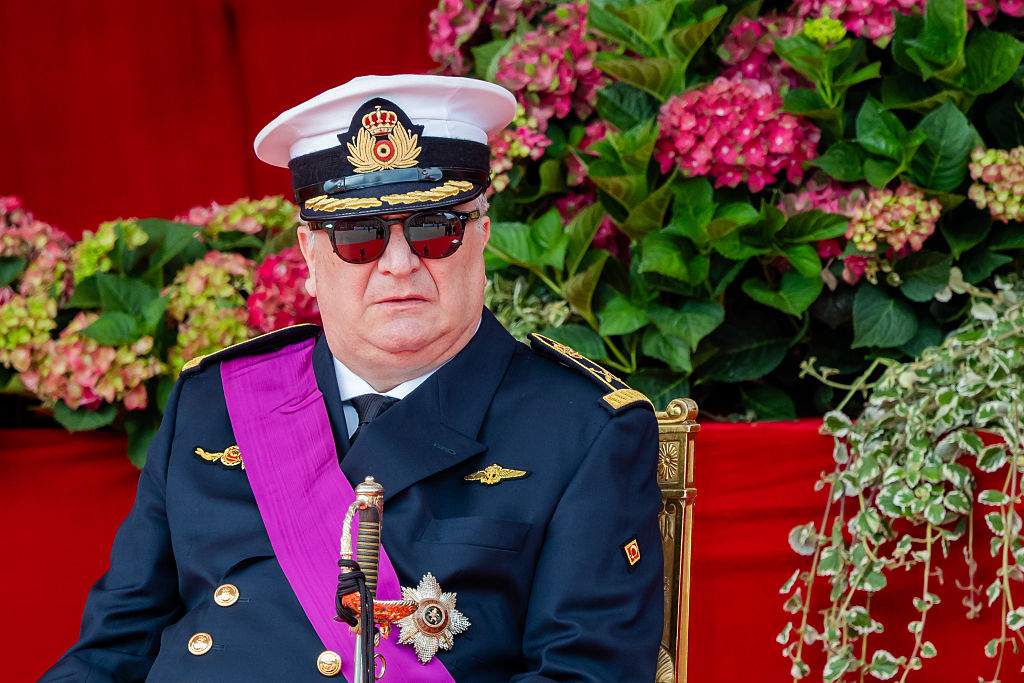
The recent legal recognition of twenty-six-year-old Clément Vandenkerckhove as the biological son of Prince Laurent of Belgium exposes the widening fissure between dynastic tradition and contemporary reality. While the headlines emphasize the Cinderella-esque transition from car salesman to prince, the actual mechanics of this event suggest a move toward private reconciliation rather than public expansion of the monarchy. By formalizing his paternity through a civil registrar in February 2026, Prince Laurent has effectively neutralized a lingering personal secret, yet he has done so without granting his son the traditional institutional weight of royal life.
This development is neither an accident nor a sudden eruption of royal altruism. It is the culmination of a decade-long process that began when Vandenkerckhove was sixteen, the age at which his mother, the singer Wendy Van Wanten, disclosed the identity of his father. What followed was a deliberate, measured approach by the younger man to reach out to a parent who remained distant for years. After their initial contact and subsequent DNA confirmation—a ninety-nine point five percent match—the two parties managed their relationship largely outside the glare of the Brussels court.
The structural significance of this recognition remains limited by the austerity measures implemented in the Belgian monarchy over the last decade. Unlike his half-siblings, Princess Louise, Prince Aymeric, and Prince Nicolas, Vandenkerckhove does not enter the line of succession. There is no state allowance waiting for him, nor is there a mandate for him to perform official royal duties. In the eyes of the Belgian state, he is a prince by title but a private citizen by function. This distinction is critical for understanding the modern European monarchy, which increasingly operates as a bifurcated institution. One side of the family carries the heavy, taxpayer-funded burden of constitutional service, while the other side occupies a shadowy space of hereditary privilege without the corresponding public responsibilities.
This outcome feels familiar to those who track the internal mechanics of the House of Saxe-Coburg. The precedent set by the former King Albert II is impossible to ignore. In 2020, after years of exhaustive legal combat, Albert was forced to acknowledge Delphine Boël as his biological daughter. That event, marked by acrimony and judicial coercion, served as a painful catalyst for the family’s public image. Prince Laurent appears to have learned the lesson of his father’s ordeal. By choosing a path of voluntary recognition rather than court-ordered discovery, he has kept the matter within the realm of family business, avoiding the corrosive effect of a long-term public scandal.
Yet, this voluntary status creates a bizarre social friction. Vandenkerckhove has expressed deep personal conflict regarding his identity, specifically his reluctance to adopt the Saxe-Coburg name. For him, the surname Vandenkerckhove is not merely a label but a reflection of his mother’s endurance throughout his upbringing. To surrender it for a title that carries no functional power seems, in his estimation, a betrayal of his history. This tension highlights a shift in how heirs of unconventional origins view their place in the world. Being part of a royal family no longer holds the singular, absolute appeal it once possessed in the early twentieth century. When the prestige of the title fails to provide the economic security or the political agency of a working royal, the individual is left to navigate a strange, solitary existence.
The financial reality of the Belgian royal family has been heavily constrained since the 2013 legislative reforms. Public money is now strictly ring-fenced for a few key figures, including King Philippe and his immediate circle. By excluding Vandenkerckhove from this fiscal structure, the monarchy avoids the inevitable public outcry regarding the proliferation of royal expenses. It is an arrangement of convenience that serves the needs of the institution while acknowledging the biological reality of the bloodline. However, this creates a situation where royal status becomes ornamental. A prince who works a regular job and holds no sovereign rank is an oddity in an age that is increasingly skeptical of hereditary hierarchies.
Observers should look at the broader pattern of European aristocracies. Many royal houses are currently navigating these exact pressures: how to manage the existence of children born outside of legal wedlock while maintaining an image of stability and moral consistency. The strategy has shifted from silence to quiet integration. Integration allows the family to manage the narrative, ensuring that the new addition does not disrupt the delicate balance of the public mandate. For the House of Saxe-Coburg, Clément Vandenkerckhove is a footnote that they have decided to write themselves, rather than allowing the media to draft it for them.
This does not mean the story ends here. As the younger generation of European royals matures, we will likely see more of these cases. DNA testing has turned what was once a vague whisper of paternity into an absolute, undeniable reality. The ability to hide such connections has vanished entirely. Institutions must now decide whether to fold these individuals into the family structure, as Laurent has done, or to face the constant threat of public exposure through unauthorized testing.
The transformation of a car salesman into a prince is a curious artifact of the present. It represents a surrender of the old royal mythos, trading the absolute control of the past for a more fluid, albeit disconnected, reality. Clément Vandenkerckhove remains a symbol of this change, a man holding a title that signifies everything and nothing at the same time. He is a prince who carries no crown, an heir to a legacy he is still learning how to define, and a stark reminder that the bloodline is no longer enough to command the world.