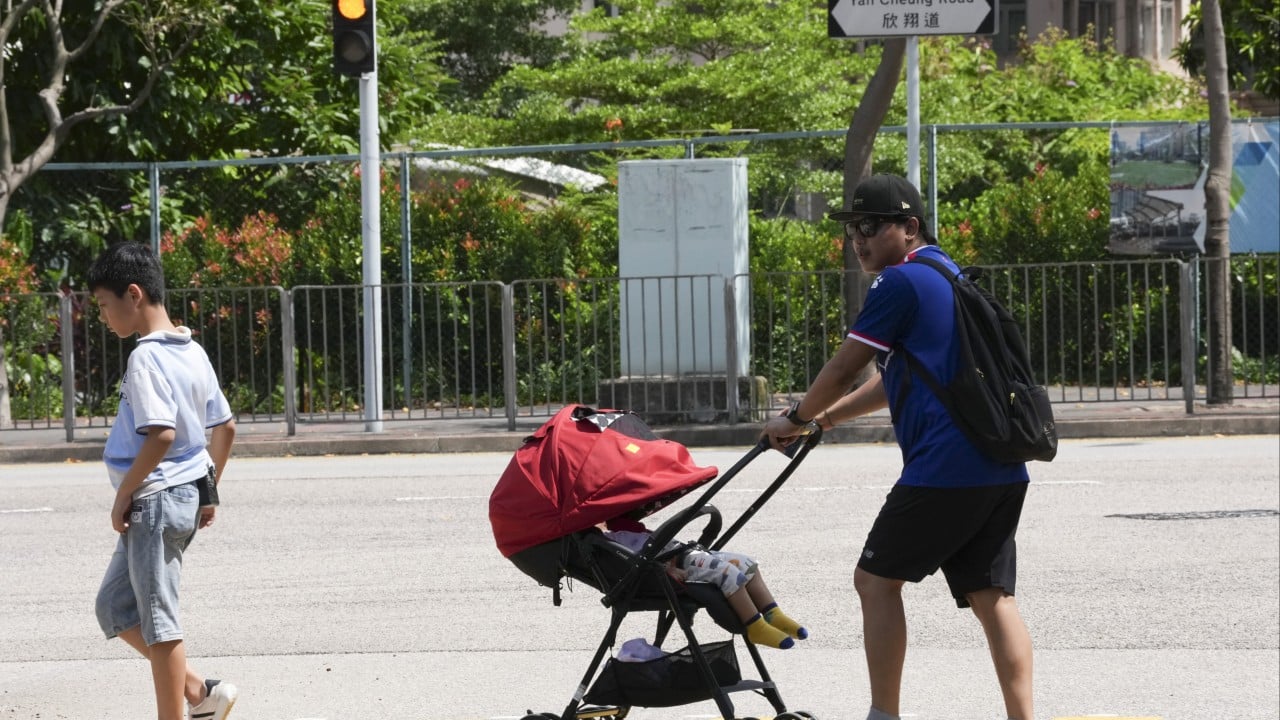
The lazy consensus among Hong Kong’s policy pundits is as predictable as it is flawed. Walk into any economic forum or read any mainstream editorial, and you will hear the same exhausted refrain: Hong Kong’s birth rate is cratering because the apartments are too small and too expensive. Give young couples a 500-square-foot flat with a subsidized mortgage, the argument goes, and they will suddenly start producing children.
It is a comforting, simplistic fantasy. It is also entirely wrong.
The belief that real estate policy is a proxy for fertility policy ignores decades of global demographic data. The property market is not the handbrake on Hong Kong’s birth rate. Treating housing as the silver bullet for population decline is a multi-billion-dollar misallocation of resources that addresses a symptom while completely misdiagnosing the disease.
To understand why Hong Kong is recording fewer than 0.8 births per woman—well below the 2.1 replacement rate—we have to stop looking at floor plans and start looking at fundamental human incentives.
The Wealth Illusion and the Fertility Paradox
The core argument of the housing-first crowd relies on a linear economic assumption: lower the cost of living, and people will consume more of everything, including children.
But children are not consumer goods.
If housing wealth or space dictated fertility, the global demographic map would look entirely different. South Korea features highly modern, spacious high-rises and heavily subsidized housing options for newlyweds in cities like Seoul, yet its fertility rate has plummeted to a world-low 0.72. Meanwhile, Nordic countries like Finland, which offer exceptional housing standards, universal childcare, and extensive parental leave, are seeing their birth rates slide to historic lows.
Conversely, look at Hong Kong’s own history. In the 1960s and 1970s, families squeezed into squatter huts or tiny tenement flats in Sham Shui Po, often sharing a single room among six or seven people. Yet, the fertility rate was comfortably above replacement levels.
Economists call this the demographic transition, a phenomenon documented heavily by researchers like Gary Becker. As a society grows wealthier and more educated, the opportunity cost of time rises exponentially. In a hyper-capitalist hub like Hong Kong, that opportunity cost is higher than almost anywhere else on Earth.
When you give a highly educated woman a bigger flat, you do not change the fact that taking two years out of a hyper-competitive corporate career in Central costs her millions of dollars in lifetime earnings. You do not change the fact that the return on investment for a child in modern society is economically negative. In agricultural societies, children were economic assets—extra hands on the farm. In a modern knowledge economy, children are expensive economic liabilities requiring decades of heavy investment.
A few extra square feet of concrete does not alter that math.
The Real Culprit: The High-Stakes Education Arms Race
If you want to know why young couples in Hong Kong are refusing to reproduce, do not look at the housing market. Look at the education system.
Hong Kong operates on a brutal, zero-sum educational model. Parents know that secure, high-paying jobs require entry into top-tier primary schools, which lead to elite secondary schools, which lead to coveted slots in medicine, law, or finance at the University of Hong Kong or the Chinese University of Hong Kong.
This creates an environment of intense competition from toddlerhood.
Imagine a scenario where the government successfully hands out spacious, affordable flats to every couple aged 25 to 35. What happens next? The financial resources saved on rent or mortgage payments do not go toward funding a second or third child. Instead, those resources are immediately weaponized in the education arms race.
Those savings are diverted into:
- Private tutoring and cram schools (Kumon, Beacon College)
- Elite kindergarten interview prep classes
- Extracurricular resumes (violin lessons, fencing, Mandarin fluency)
- International school debentures
In a hyper-competitive culture, the cost of raising a child is elastic. It expands to consume whatever disposable income the parents have. If you lower housing costs, you simply fuel the inflation of the child-rearing arms race. Parents choose to invest heavily in the "quality" of a single child rather than the "quantity" of multiple children.
I have watched colleagues and clients throw tens of thousands of dollars a month at specialized tutoring camps for their only child while living in spacious luxury apartments in Mid-Levels. Space was never their constraint. Fear of their child falling behind in a cutthroat society was.
The Flawed Premises of "People Also Ask"
Mainstream discussions about Hong Kong’s population crisis are dominated by bad premises. Let us dismantle the most common ones.
"Will building more public housing encourage young couples to marry earlier?"
No. It creates the opposite incentive. Hong Kong’s public rental housing (PRH) system is based on strict income and asset ceilings. For a young, ambitious couple, qualifying for public housing requires deliberately suppressing their income. Young professionals are forced to choose between advancing their careers or keeping their income low enough to stay on the public housing waiting list.
By linking housing security to low income, the system actively discourages the financial stability required to comfortably start a family. It forces a state of prolonged economic adolescence.
"Can cash incentives and tax breaks turn the tide?"
The government's HK$20,000 cash handout for newborns is a drop in the ocean. The HSBC Quality of Life Report previously estimated that raising a child in Hong Kong to adulthood costs roughly HK$6 million. Offering a one-time bonus or a minor tax deduction to offset a multi-million-dollar, 22-year commitment is insultingly naive. It appeals only to those who cannot do basic arithmetic.
The Upside-Down Reality of Property Ownership
There is an even deeper irony that the "housing fixes fertility" camp misses completely. For the vast majority of Hong Kong residents, the path to property ownership requires two full-time incomes.
To qualify for a mortgage on a decent-sized private flat in today's market, both partners must remain fully employed, often working 60-hour weeks in demanding corporate environments.
Here is the structural trap:
- To afford the "family-sized" flat, both parents must work exhausting hours.
- Because both parents work exhausting hours, they have neither the time nor the energy to raise children.
- They become reliant on domestic helpers, grandparents, or external childcare, which adds further logistical stress and financial strain.
The very act of acquiring the space deemed necessary for a child eliminates the lifestyle flexibility required to actually raise one. The snake eats its own tail.
What an Actionable Solution Actually Looks Like
If the goal is truly to reverse the demographic collapse, stop looking at the Lands Department and start looking at labor and societal structures. The state cannot easily manufacture a desire for children, but it can remove the structural penalties associated with parenthood.
1. Mandate the Right to Disconnect and Flexible Work
Hong Kong’s toxic overwork culture is a natural contraceptive. If employees are expected to respond to emails at 11 PM and work on Saturdays, family planning becomes an afterthought. The government should introduce legislation protecting the right to disconnect outside of official working hours and mandate flexible, remote work options for parents with children under the age of six. Time, not space, is the ultimate scarcity for young couples.
2. Abolish the High-Stakes Public Examination Culture
De-escalate the educational arms race by diversifying the metrics for success. As long as the city's psychological wellbeing hinges entirely on the Hong Kong Diploma of Secondary Education (HKDSE) results, parenting will remain an anxiety-inducing, high-cost endeavor. Subsidize alternative pathways, vocational excellence, and non-traditional careers to lower the financial and emotional barrier to entry for raising a child.
3. Radical, Direct Childcare Subsidies—Not Tax Deductions
Instead of building concrete towers hoping people fill them with babies, redirect those capital works budgets into direct, universal, state-funded childcare networks open from 7 AM to 8 PM. Provide professional, heavily subsidized care that integrates seamlessly with working life, removing the reliance on extended family or the immediate need to upgrade to a larger living space to accommodate domestic help.
The High Cost of Truth
The uncomfortable reality is that these solutions require a total overhaul of Hong Kong’s economic philosophy. It is far easier for bureaucrats to announce a new land reclamation project or an estate in the Northern Metropolis and claim they are fixing the population crisis. It looks good on a PowerPoint presentation. It keeps the construction sector happy.
But it will not work.
If Hong Kong continues to treat its citizens as mere economic units meant to service mortgages and compete in a lifelong academic sorting mechanism, the birth rate will continue its downward trajectory. You can build all the three-bedroom flats you want. Without a fundamental shift in the city's cultural and corporate DNA, those rooms will remain empty.

:max_bytes(150000):strip_icc()/parts-of-a-swamp-cooler-2718628-a477e6f0787b4f8bb62ddf2def31d495.png)