Philanthropy loves a shiny toy. Nothing excites a board room of legacy billionaires quite like the promise of bestowing digital intelligence upon the developing world. When the Gates Foundation drops a cool billion dollars on global artificial intelligence access, the headlines practically write themselves. Savior optics. Noble intent. Global equity.
It is absolute garbage.
I have watched venture capital syndicates and philanthropic mega-funds burn fortunes trying to force Silicon Valley blueprints onto regions that lack basic sanitation and reliable electrical grids. Pumping enterprise-grade large language models into developing economies without fixing foundational infrastructure is not philanthropy. It is high-tech paternalism wrapped in PR gloss.
Let us dismantle the lazy consensus.
The prevailing narrative tells a comforting story. High-powered machine learning models act as great equalizers. Give a farmer in sub-Saharan Africa or a student in rural Southeast Asia access to advanced neural networks, and watch the playing field level instantly. They will code apps, diagnose plant diseases, and leapfrog decades of industrial development straight into the digital age.
This fantasy ignores reality.
Let us look at the mechanics of what happens when you ship elite computation into resource-constrained environments.
The Energy Fallacy
Compute requires power. Massive amounts of it. A single inference query on a frontier model costs exponentially more energy than a standard database lookup. When you introduce power-hungry clusters and high-bandwidth connectivity requirements into regions plagued by rolling blackouts, grid instability, and astronomical electricity tariffs, you create a parasitic load.
Hospital ICUs lose power while server farms chew megawatts to answer trivia questions in fluent English. Municipal water pumps fail because industrial substations prioritize cooling data racks.
Proponents of these billion-dollar grants never mention the energy trade-offs because they assume electricity is an infinite background utility, like oxygen. It is not. In developing markets, energy is scarce, expensive, and politically volatile. Subsidizing token generation while local hospitals ration diesel generators is not equity. It is a crime against municipal common sense.
Cognitive Colonialism
Who builds the models? Western corporations. Who curates the training data? Western contractors filtering through Western cultural norms, idioms, and legal frameworks.
When you export these models wholesale to the Global South, you are not empowering local populations. You are colonizing their cognitive infrastructure. You are teaching millions of young minds that their local languages, dialects, agricultural wisdom, and legal traditions are secondary to an American corporate algorithm trained on Reddit, Wikipedia, and copyrighted books.
Localization is not translation. Feeding a Swahili or Hindi prompt into a transformer model trained primarily in English with a thin post-training veneer does not create local empowerment. It creates dependency. Users stop trusting local experts, local elders, and local data registries. Instead, they defer to the omniscient oracle in Seattle or Mountain View.
That is not democratization. That is digital vassalage.
The Misallocation of Capital
One billion dollars is not an infinite sum, but deployed efficiently, it can transform regional ecosystems. It can build deep-water wells, modernize cold-chain logistics for rural clinics, lay physical fiber optic trunk lines, or establish localized manufacturing cooperatives.
Instead, that capital is funneled directly back into the pockets of cloud providers, GPU manufacturers, and elite Western technical consultants.
Imagine a scenario where a local government receives a grant for advanced neural network integration. Do they keep that money? No. The funds immediately bounce back to foreign cloud giants in exchange for API credits, enterprise licenses, and proprietary hardware maintenance contracts. It is an economic funnel disguised as a donation. The money touches local soil only long enough to bounce back to the global North.
We have seen this movie before. In the nineteen-nineties, the push was computers in classrooms. Thousands of heavy, beige desktop PCs were shipped to schools that lacked roofs, running water, or textbooks. Within two years, the hardware was collecting dust, destroyed by humidity and dust, or cannibalized for spare parts.
Artificial intelligence hardware and API subscriptions are simply the modern iteration of the same useless cargo cult.
What Unconditional Access Actually Breaks
Proponents argue that lowering barriers to entry creates unstoppable grassroots entrepreneurship. Anyone can build a startup. Anyone can disrupt local monopolies.
Let us examine the second-order effects of flooding a nascent market with automated generation tools.
In emerging economies, the service sector and small-scale digital outsourcing (transcription, data labeling, basic coding, customer support) represent the primary on-ramp into the formal middle class. When you introduce hyper-efficient, zero-marginal-cost artificial intelligence agents into these markets, you do not create local jobs. You destroy the entry-level rungs of the economic ladder before young professionals can even climb them.
A freelancer in Jakarta or Nairobi cannot compete on price or speed against a zero-cost model running on a heavily subsidized grant. The billionaire-funded AI access initiative effectively prices local human labor out of the global digital marketplace. You have eliminated poverty by eliminating the poor worker's ability to sell their labor.
Brilliant. Truly a masterclass in economic theory.
The Data Sovereignty Trap
When users in developing nations interact with these subsidized models, where does their data go? Straight into the telemetry logs of foreign multinational corporations.
Agricultural yields, medical queries, local enterprise supply chains, regional trade secrets, and proprietary local business strategies are vacuumed up, anonymized according to Western legal definitions, and used to train the next generation of proprietary commercial models.
The Global South becomes the training gym for artificial intelligence systems that will eventually be monetized back to them at commercial enterprise rates once the philanthropic subsidy expires.
This is not a gift. It is data extraction with extra steps. Historically, imperial powers extracted rubber, oil, and minerals. Today, they extract behavioral telemetry, linguistic nuances, and proprietary local insights, all while convincing the host country that they are receiving a charitable blessing.
The Alternative Architecture
If you actually want to build sustainable capability in developing regions, you do what venture capitalists refuse to do: you fund boring, foundational work.
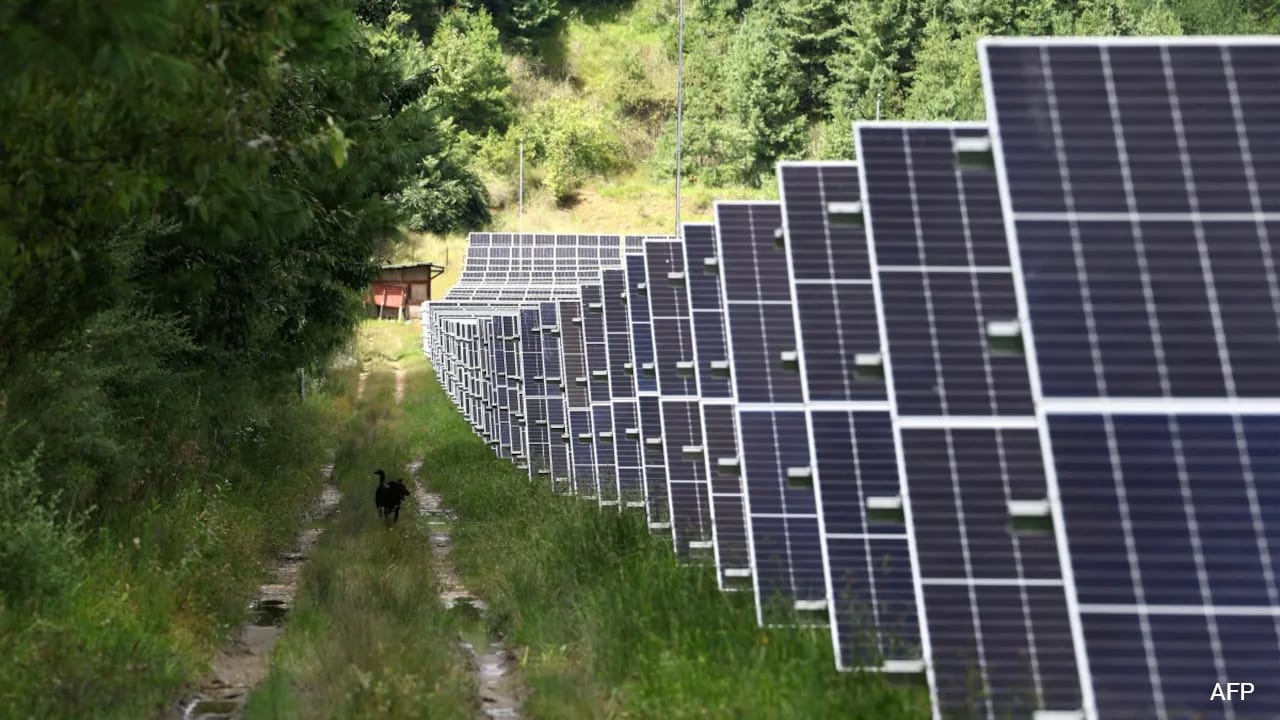
You invest in local power microgrids powered by decentralized solar and geothermal assets. You fund open-source, lightweight, edge-deployable models that can run locally on low-power hardware without requiring constant satellite or undersea cable connectivity to foreign data centers. You support indigenous data collection initiatives where local universities own, govern, and monetize their own datasets.
You build infrastructure from the bottom up, not software licenses from the top down.
Real empowerment is not handing a starving village a tablet connected to an American cloud server. Real empowerment is giving them the electricity, the legal frameworks, the manufacturing capacity, and the open-source building blocks to construct their own tools.
The Gates Foundation will issue its press releases. The panels at Davos will applaud the unprecedented generosity. Tech journalists will write breathless profiles about how algorithms are curing global inequality.
Ignore the noise. Follow the money. Trace the data pipelines.
When billionaires start throwing billions at technology they do not understand in places they have never lived, check your wallet, lock your data, and build your own infrastructure.
Stop waiting for the saviors. They brought an API key to a gunfight.