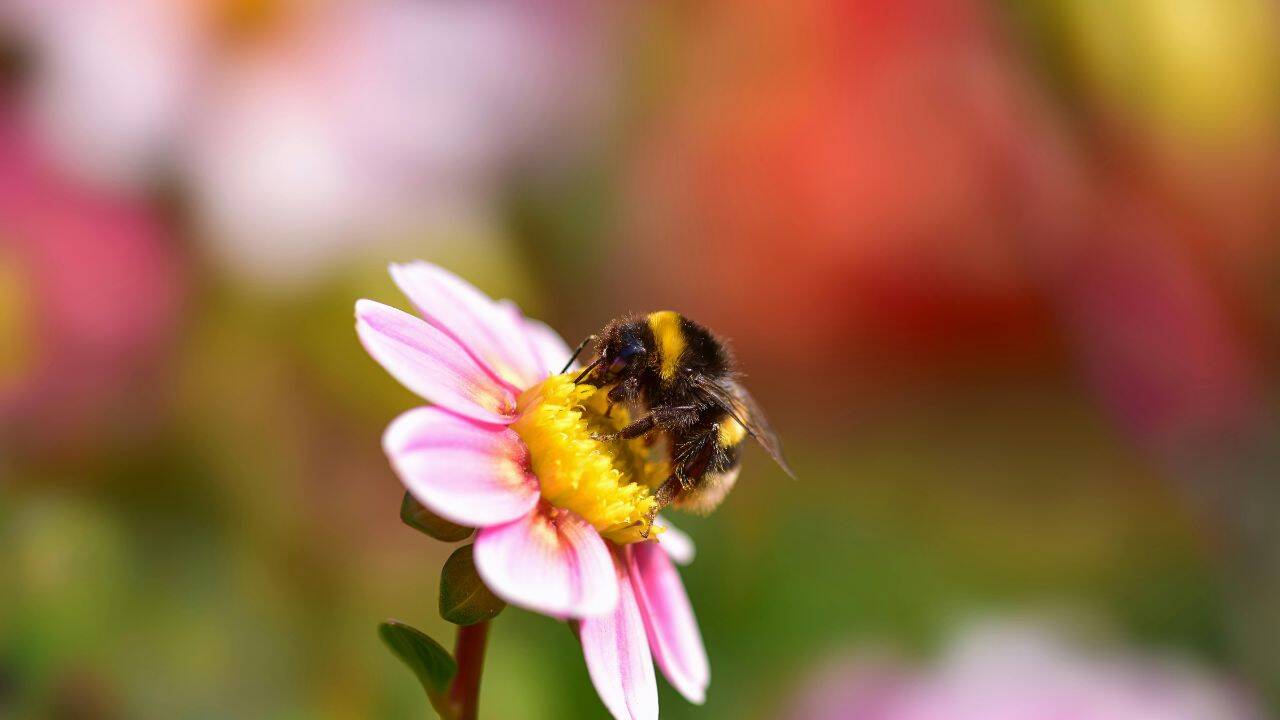
Standard ecological risk assessments frequently rely on honeybees (Apis mellifera) as systemic bio-indicators for environmental heavy metal contamination. This baseline operational paradigm is fundamentally broken. Empirical tracking data from the University of Cambridge reveals a massive asymmetry in toxic metal exposure profiles between sympatric pollinator species. Even when operating within identical geographical zones, bumblebees (Bombus terrestris) collect pollen containing between two and seven times the heavy metal concentration of honeybees, leading to a threefold spike in systemic bodily bioaccumulation.
This variance cannot be explained by ambient pollution gradients alone. Instead, it is driven by an intersection of species-specific foraging geometry, dietary dilution capacities, and physical boundary-layer mechanics. Relying on a single proxy species creates a dangerous blind spot, obscuring sub-lethal fitness collapses across wild, unmanaged pollinator populations.
The Tri-Factor Architecture of Differential Exposure
The delta in heavy metal acquisition between Bombus and Apis is dictated by three independent, interacting operational vectors: spatial foraging range, dietary broadness, and physical boundary-layer mechanics.
+-----------------------------------------------------------------+
|                    THE THREE PILLARS OF RISK                    |
+-----------------------------------------------------------------+
|  1. SPATIAL BOUNDING        | Honeybees forage up to 10 km.     |
|                             | Bumblebees restricted to 1.5 km.  |
+-----------------------------+-----------------------------------+
|  2. DIETARY DILUTION        | Honeybees: Mega-colony blending.  |
|                             | Bumblebees: Hyper-local reliance. |
+-----------------------------+-----------------------------------+
|  3. PHYSICAL FORCING        | Setae density acts as a passive   |
|                             | particulate filter for dust.      |
+-----------------------------------------------------------------+
1. Spatial Bounding and Localized Particulate Capture
The first major vector is the spatial bounding of the colony's foraging footprint. Honeybee hives operate on a wide-area extraction model, with foraging radiuses extending up to 10 kilometers from the central apiary. This distributed footprint ensures that resource extraction is averaged over a vast landscape matrix, neutralizing local point-source pollution anomalies.
Bumblebees operate on a localized extraction model, restricted to a strict foraging radius rarely exceeding 1.5 kilometers. This tight spatial constraint removes any capacity to bypass local contamination zones. If a bumblebee nest is located near a localized source of heavy metal deposition—such as roadways, agricultural runoff, or industrial dust—the entire foraging force is locked into an active contamination zone.
2. Dietary Dilution Capacity
The second vector is a direct function of colony size and social hierarchy. A mature honeybee colony functions as a mega-organism of 30,000 to 60,000 workers. This immense labor force collects vast quantities of pollen across hundreds of floral sources, mixing the intake into a massive communal pool. Any highly contaminated pollen collected from hyper-accumulating plant species undergoes immediate statistical dilution within the hive's macro-inventory.
Bumblebee colonies operate at a much smaller scale, rarely exceeding a few hundred workers. Their resource extraction stream is narrow, focused on a limited selection of local floral targets. When a bumblebee colony relies on plants that actively pull heavy metals from the soil, the absence of a large communal pool removes any opportunity for dietary dilution. The contaminated resource transfers directly and intensely into the colony's food supply.
3. Physical Boundary-Layer Forcing
The third vector is mechanical rather than behavioral. Bumblebees possess a significantly higher density of branched, plumose setae (hairs) relative to their surface area than honeybees. As a bee moves through the air, its body generates an electrostatic charge that naturally attracts airborne particulate matter.
The high-density setae of the bumblebee function as an incredibly efficient passive filter for heavy-metal-laden dust, traffic soot, and contaminated topsoil particles. During grooming phases, these trapped surface particulates are brushed directly into the pollen baskets (corbiculae), mechanically packing concentrated toxins straight into the food supply brought back to the nest.
The Sub-Lethal Toxicity Cost Function
The primary threat to these wild populations is not acute mortality, but rather a slow drop in operational fitness driven by sub-lethal concentrations of arsenic, cadmium, chromium, cobalt, lead, and tin. This continuous toxic loading triggers a cascade of functional failures within the colony.
Neurotoxic interference is the first major point of failure. Metals like lead and cadmium impair the neural pathways responsible for learning, olfactory memory, and spatial orientation in insects. This creates a dangerous feedback loop:
- Impaired navigation extends the duration of foraging trips.
- Longer trips increase metabolic stress and the time spent exposed to ambient toxins.
- Compromised spatial memory reduces the precision of resource collection, cutting the net energy return of the colony.
Simultaneously, reproductive capacity drops. Chronic exposure to heavy metals disrupts larval development and reduces overall egg-laying success. In large honeybee colonies, a minor dip in worker production can be absorbed by the sheer size of the population. In a bumblebee colony, every worker represents a critical percentage of total operational capacity. Losing even a small number of workers to neurodegenerative or developmental issues can quickly push the colony toward collapse.
Restructuring Environmental Risk Modeling
This stark asymmetry reveals why using honeybees as a universal proxy for environmental safety is a flawed approach. It creates an artificial sense of security, labeling areas with low honeybee toxicity as safe, while local wild pollinators are actually facing severe toxic stress. To protect biodiversity and secure agricultural pollination, environmental risk models must shift away from single-species testing.
The path forward requires integrating multi-species bio-assays that explicitly account for differences in body hair density, localized foraging habits, and colony sizes. Conservation strategies must focus on expanding hyper-local floral variety within 1.5 kilometers of vulnerable habitats. This expansion is critical to building a natural dilution effect, ensuring that wild pollinators are not forced to rely on contaminated, metal-accumulating plant species.