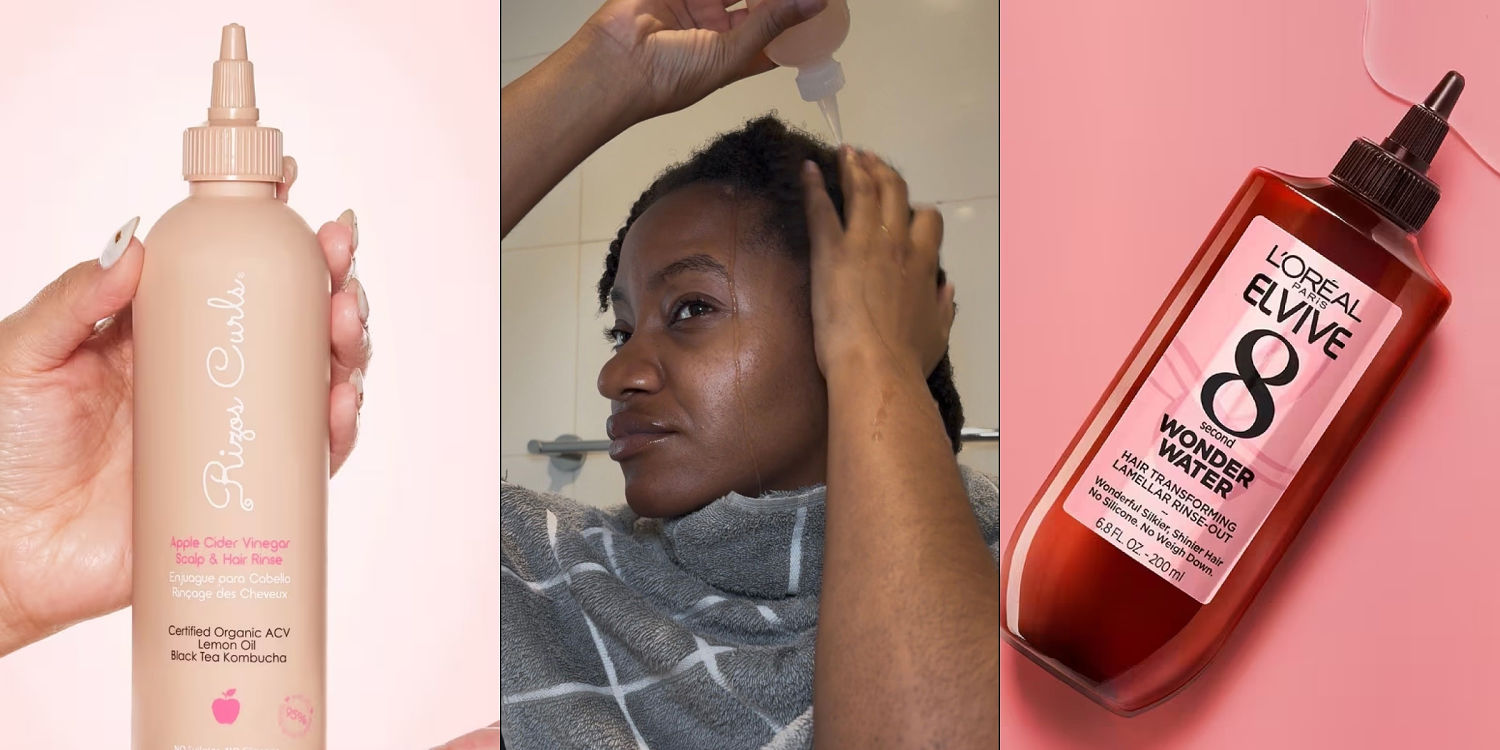
Hair rinses operate at the intersection of material science and physiological maintenance. When structural integrity degrades due to mechanical stress, chemical processing, or environmental exposure, the hair cuticle lifts, exposing the inner cortex and increasing inter-fiber friction.
This guide provides the operational framework for selecting and applying hair rinses based on quantified biophysical needs rather than marketing nomenclature.
The Structural Mechanics of Hair Degradation
The human hair fiber consists of three primary morphological regions: the cuticle, the cortex, and the medulla.
[Cuticle Layer]   --> Protects core, determines surface friction and shine.
[Cortex Layer]    --> Houses keratin chains and moisture holding capacity.
[Medulla]         --> Central core (absent in fine or vellus hair).
The Cuticle Interface
The outermost layer, the cuticle, acts as a protective armor composed of overlapping protein scales. In healthy virgin hair, these scales lie flat, overlapping tightly to seal the internal cortex. This flat architecture promotes specular reflection, perceived by the human eye as shine.
When exposed to alkaline pH environments, UV radiation, or oxidative stress, these scales swell and lift. This disruption creates several measurable operational failures:
- Increased Friction: Raised scales catch on adjacent fibers, causing tangling and mechanical breakage during styling.
- Porosity Amplification: Elevated cuticles permit moisture to escape too rapidly while absorbing humidity uncontrollably, resulting in frizz.
- Scattered Light Reflection: Diffuse reflection replaces specular reflection, creating the optical illusion of dullness.
Scalp Microenvironment Dynamics
The scalp operates as a complex dermal ecosystem regulated by the microbiome, sebaceous gland output, and epidermal cell turnover.
Sebum, a lipid mixture composed of triglycerides, wax esters, squalene, and free fatty acids, provides essential surface hydration. However, overproduction or microbial colonization of Malassezia species shifts the balance. When Malassezia metabolizes sebum triglycerides, it releases free fatty acids that irritate the stratum corneum, triggering an inflammatory cascade, accelerated corneocyte shedding, and scaling commonly identified as dandruff or persistent pruritus.
The Acid Mantle Restoration Framework
The human skin surface and healthy hair shafts possess an acidic pH ranging from 4.5 to 5.5. This natural buffer is known as the acid mantle.
Most conventional cleansing surfactants operate at an alkaline pH to facilitate grease removal, but this alkalinity neutralizes the acid mantle, leaving the hair cuticle open and vulnerable. Hair rinses function primarily as pH-balancing agents. By introducing a mild organic acid, the rinse neutralizes residual alkalinity, forces the protein scales of the cuticle to flatten, and restores surface integrity.
Acidulant Efficacy Variables
The performance of an acidic rinse is governed by three primary variables:
- Dissociation Constant (pKa): Acids with lower pKa values release hydrogen ions more readily, lowering pH efficiently at lower concentrations.
- Buffering Capacity: The resistance of the rinse solution to pH changes upon dilution with hard water minerals.
- Molecular Weight: Smaller molecular weight acids can penetrate the cuticle interface more effectively to modulate localized swelling.
Targeted Formulations for Specific Scalp and Shaft Pathology
Addressing specific hair and scalp conditions requires matching the chemical mechanism of the rinse to the underlying biological bottleneck.
Dull Hair: Optimizing Specular Reflection
Dullness is an optical deficit caused by surface roughness and mineral deposition from hard water. Calcium and magnesium ions bind to the hair matrix, forming insoluble salts that coat the fiber and absorb light.
To correct this, a chelating or acidifying rinse must be deployed:
- Chelating Rinses: Utilize ingredients like sodium gluconate or citric acid to bind divalent cations (calcium and magnesium) and lift mineral buildup without stripping structural lipids.
- Cuticle-Smoothing Rinses: Employ low-molecular-weight organic acids (such as acetic acid or apple cider vinegar derivatives) to rapidly close the cuticle structure, returning the fiber to a smooth cylinder capable of specular reflection.
Itchy Scalps: Modulating the Stratum Corneum
Pruritus (itching) without clinical infection is typically driven by micro-inflammation, xerosis (severe dryness), or lipid oxidation on the scalp surface.
A therapeutic rinse for itchy scalps must perform two distinct functions simultaneously:
- Microbial Modulation: Incorporating antimicrobial agents that suppress Malassezia overgrowth without destroying beneficial commensal bacteria.
- Keratolytic Action: Mild keratolytics (such as low-percentage salicylic acid derivatives) gently dissolve hyper-keratinized cellular bonds, preventing the formation of adherent micro-flakes that trap inflammatory mediators against the scalp.
Fine or Low-Density Hair: Weight Minimization
Finesse hair types suffer from low tensile strength and high susceptibility to product weighing. Traditional conditioning agents leave a substantive cationic polymer film that collapses the root angle, reducing volume.
Rinses for fine hair must avoid long-chain silicones and heavy plant oils. Instead, they rely on volatile delivery systems or hydrolyzed vegetable proteins that cross-link temporarily within the superficial cortex to add localized stiffness and tensile resilience without mass accumulation.
Operational Protocol for Rinse Integration
Introducing a rinse into an existing maintenance routine requires strict adherence to timing and dilution metrics to prevent cumulative protein overload or acid-induced fiber embrittlement.
Phase One: Pre-Rinse Assessment
Evaluate the baseline condition of the hair fiber using the wet-stretch test. Isolate a single strand, wet it, and stretch it gently.
- If it snaps immediately without elongation, the hair suffers from protein saturation and needs moisture-balancing hydration rather than a strengthening or clarifying acid rinse.
- If it stretches significantly and fails to return to its original length, the internal disulfide and hydrogen bonds are compromised, requiring targeted pH stabilization to arrest structural degradation.
Phase Two: Application Mechanics
- Dilution Integrity: Never apply concentrated organic acids directly to the hair shaft. High concentrations can cause localized acid hydrolysis of the peptide bonds within the keratin structure. Dilute formulations to a working pH between 3.5 and 4.5.
- Contact Duration: The dwell time of a rinse should not exceed 120 to 180 seconds. Prolonged exposure offers diminishing returns and risks stripping the internal lipid layers of the cuticle.
- Thermal Rinse Parameters: Rinse thoroughly with tepid water. High thermal energy re-swells the cuticle, nullifying the mechanical sealing achieved by the acidulant.
Quantitative Performance Metrics
To evaluate whether a hair rinse is working, measure outcomes across three parameters rather than relying on tactile feel alone.
+------------------------+----------------------------------+----------------------------------+
| Metric                 | Baseline (Compromised)           | Optimized State                  |
+------------------------+----------------------------------+----------------------------------+
| Inter-Fiber Friction   | High coefficient of friction     | Low coefficient of friction      |
| Optical Gloss          | Diffuse scattering (<20 GU)      | Specular reflection (>65 GU)     |
| Transepidermal Water   | High rate of moisture loss       | Regulated hydration barrier      |
+------------------------+----------------------------------+----------------------------------+
Implement the acid mantle restoration protocol twice weekly for two weeks. If the surface metrics fail to improve, re-evaluate the baseline water hardness and surfactant profile of the primary cleansing agent before adjusting the rinse frequency.