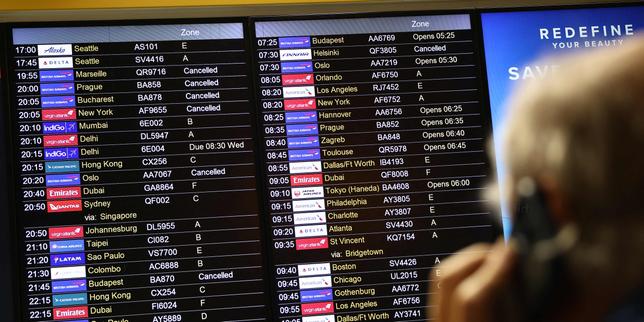
Every time a major transit hub like Heathrow or Manchester grinds to a halt, the narrative writes itself. Hundreds of flights cancelled, passengers sleeping on terminal floors, and media outlets screeching about a sudden technical issue. The public nods along, shaking fists at bad code, outdated servers, or a glitchy database. Everyone loves a digital bogeyman.
It is a convenient fiction.
I have spent decades watching aviation executives pass the buck to IT vendors whenever operations implode. The truth is much uglier and far more boring than a rogue line of code. Software rarely fails in a vacuum. What you are actually witnessing during these high-profile meltdowns is a catastrophic failure of human redundancy, brittle scheduling models, and years of corporate cost-cutting disguised as modernization.
Stop blaming the server. Blame the boardroom.
The Myth Of The Digital Catastrophe
When a scheduling or air traffic management system hiccups, the standard corporate playbook kicks in immediately. Issue a vague press release about technical difficulties. Point the finger at a third-party software provider. Hide behind industry jargon like legacy infrastructure.
Let us look at how these systems actually operate. Major aviation networks do not run on fragile house-of-cards software that collapses from a stiff breeze. They run on heavily audited, redundant architectures. When a glitch occurs, it is almost never an unrecoverable black swan event. It becomes a crisis only because modern airlines operate with razor-thin operational margins that leave zero room for error.
I have seen companies blow millions on flashy digital transformation projects while completely gutting the operational staff needed to manage manual overrides. When every single process is automated to shave three cents off a passenger seat, you eliminate the human judgment required to keep planes moving when the digital crutch wobbles.
"A technological failure is almost always a managerial failure wearing a tech-support mask."
💡 You might also like: The Architecture of Euphoria Inside the Room Where Las Vegas Builds the Fourth of July
Why The Standard Fix Makes Things Worse
The standard response to these airport meltdowns is equally predictable. Boards panic, authorize emergency software patches, and hire expensive consultants to audit their tech stacks. This is like painting the hull of a sinking ship while ignoring the gaping hole below the waterline.
When you over-index on automated recovery tools, you train personnel to become helpless spectators. Workers stop understanding the underlying mechanics of flight allocation and baggage routing because a screen tells them what to do. The moment that screen goes blank or throws an error code, operations freeze. The staff stands around waiting for a reboot instead of pivoting to analog workarounds.
Imagine a scenario where an airline's primary reservation database completely flatlines for six hours. A resilient organization shifts to pre-printed manifests, decentralized radio coordination, and manual gate assignments. A brittle organization—the kind populating most of our major hubs today—simply rolls over and cancels six hundred flights because nobody remembers how to run an airport without an iPad.
The Cost Of Efficiency Fetishism
We are suffering from an addiction to maximum efficiency. For the past twenty years, aviation executives have been obsessed with reducing turnaround times, squeezing aircraft utilization rates to the absolute limit, and minimizing buffer times between arrivals and departures.
This philosophy works wonderfully on a spreadsheet during a quiet Tuesday in April. It is suicidal when weather hits or a minor software update stalls.
Consider how aircraft and crew scheduling actually works. Airlines maintain tightly choreographed rotations where a specific crew flies a specific plane from London to Manchester, then to Frankfurt, and back. If a minor technical glitch causes a thirty-minute delay at Heathrow, that delay cascades through the entire network. A crew times out legally. A plane is stranded at the wrong gate. By evening, a localized computer hiccup has metastasized into a continental disaster.
The industry calls this an unforeseen technical issue. That is a lie. It is the entirely predictable mathematical outcome of running a complex system at ninety-nine percent capacity with zero slack.
What Actually Needs To Change
If you want to fix airport chaos, you have to abandon the worship of lean management principles in high-stakes environments.
First, introduce mandatory operational slack. Regulators should penalize airlines that schedule aircraft rotations too tightly. If you cannot absorb a thirty-minute IT glitch without cancelling flights, your schedule is unsafe for public infrastructure.
Second, reintroduce mandatory analog competency. Every ground handler, gate agent, and operations manager should be tested on manual fallback procedures twice a year. If your team cannot route a flight with pen, paper, and a radio, you do not have an operational workforce; you have a collection of data-entry clerks.
Third, stop letting executives blame engineering teams for strategic neglect. When a company underinvests in core system resilience because those dollars were diverted to stock buybacks or executive bonuses, the resulting meltdown is a governance issue, not a software bug.
The next time a major hub announces a massive tech failure, do not look at the error logs. Look at the balance sheet. Look at the staffing levels. Look at the profit margins prioritized over operational safety.
You are not watching a computer crash. You are watching a business model hit the wall.