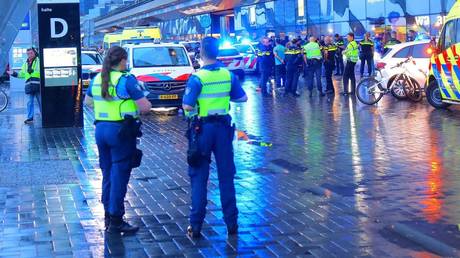
The headlines rolled in with predictable, moralizing outrage. A TikToker streams a violent attack in Amsterdam, three people get stabbed, and the global commentariat immediately seizes the low-hanging fruit. Lawmakers clutch their pearls, talking heads demand stricter content moderation, and algorithmic determinism takes the blame yet again.
Stop. The algorithm didn't plunge a knife into anyone.
This lazy narrative that social media platforms manufacture violence is comforting because it offers a clean villain. If the app made them do it, we just need better safety filters, higher age verification hurdles, and tighter bans. Problem solved.
Except the problem isn't the app. The app is merely the mirror.
I have spent years watching the mechanics of digital attention economies from the inside. I have seen founders blow millions engineering dopamine loops, and I have watched platforms morph from harmless entertainment silos into high-stakes gladiatorial arenas. The rot runs much deeper than a buggy content moderation queue. We are dealing with a structural incentive crisis that rewards human desperation with visibility, and until we stare that truth in the face, screaming at tech executives will accomplish precisely nothing.
The Algorithm Doesn't Create Sociopaths It Merely Gives Them a Stage
The standard media critique follows a tired formula. A horrific event occurs on a live broadcast. Pundits point out that the platform's engagement metrics incentivize shock value. Therefore, the platform caused the crime.
This is backward.
Algorithms optimize for what humans already crave. They do not invent human malice; they accelerate it. If a violent stream generates massive view counts, it is because millions of spectators slowed down to gawk at the wreckage. The platform is a supply chain responding to a bottomless, ravenous demand for digital car crashes.
Blaming TikTok for an Amsterdam stabbing is like blaming the highway system for a high-speed car chase. The road enables movement, but the reckless driver makes the choice. When we pretend the software is the primary actor, we absolve the individual of agency and society of its growing decay.
Let us look at the mechanics honestly. Attention is the currency of the modern era. For isolated, disenfranchised, or deeply disturbed individuals, anonymity on the street is a prison. A livestream offers instant omnipotence. You press a button, and thousands of strangers are forced to watch you exist. If normal competence cannot buy that attention, pathology will.
The Myth of Content Moderation as a Safety Shield
Every time a sensational crime hits a livestream, lawmakers demand proactive moderation. They want human armies and artificial intelligence filters scrubbing every frame of video before it hits a screen.
This is a technical impossibility born of wishful thinking.
Scale dictates reality. Platforms process millions of hours of video every single day. Achieving zero false negatives requires an Orwellian level of pre-censorship that would destroy any open communication network on earth. More importantly, real-time broadcasting defeats proactive moderation entirely. By definition, a livestream happens now. Unless you introduce a mandatory transmission delay of several minutes—which would kill the entire medium—moderation is always reactive.
When platforms take down a violent stream after the fact, critics scream that they were too slow. When they implement aggressive automated filters that mistakenly block innocent content, critics scream about censorship. The tech companies are caught in a permanent lose-lose trap, engineered by a public that wants absolute safety combined with absolute freedom of expression. You cannot have both.
The Spectator Economy Is the True Culprit
The real sickness is not the person holding the phone. It is the thousands of people swarming the chat room, spamming emojis, and egging the violence on.
We have built a spectator economy that treats human misery as interactive entertainment. Every time a crowd gathers around a digital brawl, clicks on a gore video, or watches a live-streamed breakdown, they pump oxygen into the fire. The streamer craves infamy, and the crowd provides it.
If you want to stop live-streamed violence, stop watching. Stop sharing the clips. Stop treating disturbed individuals like main-stage performers in a sick circus.
The platforms will not fix this because they cannot fix human voyeurism. Lawmakers will not fix this because grandstanding plays better than structural reform. The only variable that changes the equation is viewer behavior.
Delete the voyeurs, and the stage collapses.
Stop waiting for Silicon Valley to legislate morality.