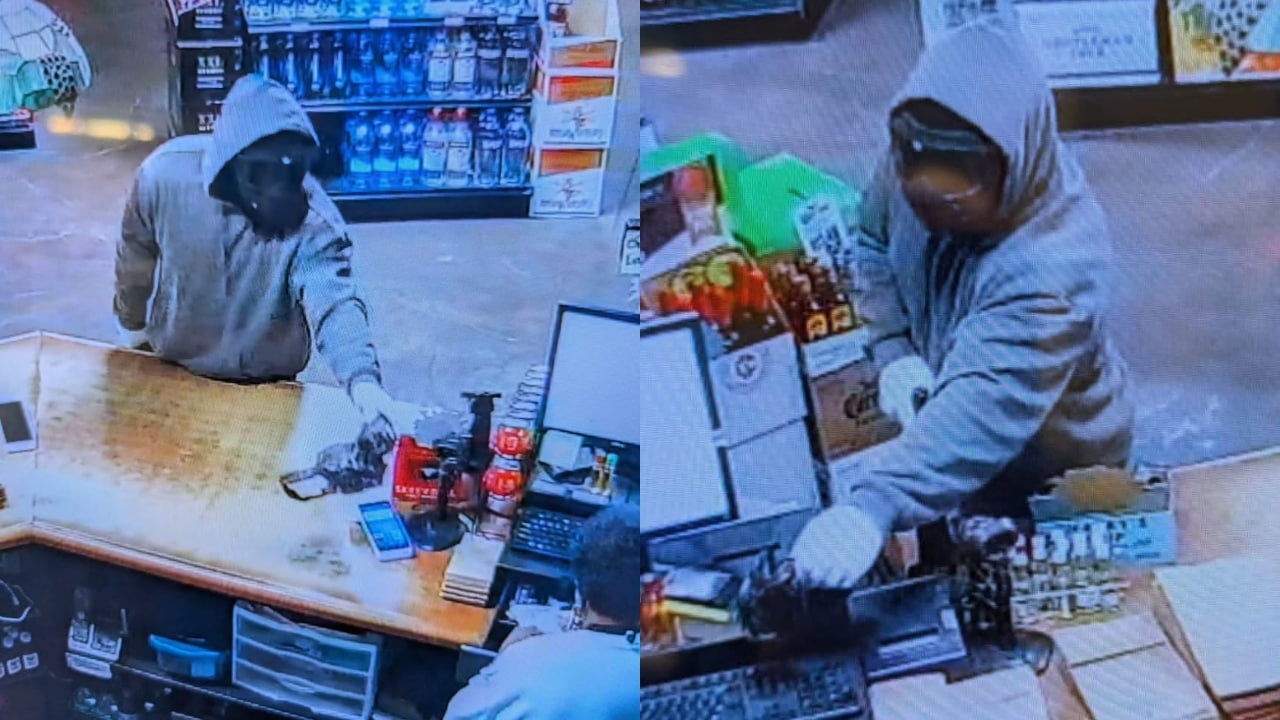
Suresh Patel survived three decades of the American immigrant grind only to die three days into his fresh start. The 56-year-old immigrant from Gujarat had just assumed ownership of Ridgecrest Cellars Wine and Spirits in Jackson, Tennessee, walking behind a counter that thousands of working-class families like his view as a gateway to stability. Instead, it became a execution chamber. At approximately nine o'clock on a Thursday night, a masked figure stepped through the glass doors, brandished a firearm, and demanded the drawer. Patel complied. The cash was handed over. Then came the gunfire. Standing mere feet away, watching her father absorb rounds of senseless violence, stood his nineteen-year-old daughter. She escaped physical injury, but her life, like her father's pulse, stopped right there on the linoleum floor.
This is not an isolated tragedy. It is part of a relentless, systemic epidemic targeting small-business owners of South Asian descent across the United States.
The Anatomy of a Routine Execution
We need to dissect the mechanics of modern retail violence. Convenience stores, liquor outlets, and gas stations form the fragile circulatory system of American roadside commerce. They operate on razor-thin margins, stay open late into the lonely hours, and are staffed disproportionately by immigrant families who pool every available dollar to buy themselves out of wage labor.
The standard script of these robberies follows a predictable, terrifying trajectory. A perpetrator enters with a face covering—in Patel's case, a paintball-style mask—demanding paper currency. In a rational criminal universe, compliance ends the threat. The drawer opens, the cash changes hands, and the assailant flees. But the baseline of American street violence has shifted. Compliance no longer guarantees survival. Increasingly, the handover of cash serves merely as the prelude to arbitrary executions.
Consider the grim ledger of recent history. In May 2025, a thirty-year-old shopkeeper named Paresh Patel was gunned down at a Tennessee gas station during a robbery, shot dead even after handing over every dollar in the register. Months prior, Meghna Patel suffered the exact same fate inside her Virginia storefront. When compliance offers zero protection, the fundamental safety contract of retail trade shatters entirely.
The Myth of the Safe Suburb
Jackson, Tennessee is supposed to be different. People move away from major metropolitan cores seeking lower crime rates, quieter neighborhoods, and a predictable rhythm of life. Yet, small-town commerce offers its own distinct vulnerability. Late-night staffing levels are dangerously low, often reduced to a single proprietor or a family member trying to save on payroll. Police response times in outlying commercial zones stretch longer than those in heavily patrolled urban centers.
Criminals know this calculus. They calculate the risk-to-reward ratio of hitting a brightly lit, isolated storefront where the owner is isolated behind bullet-resistant glass or, worse, standing unprotected in the open.
Local law enforcement agencies issue the standard post-incident bulletins. They release closed-circuit television stills of suspects in grey hoodies and work boots. They establish tip lines. They ask for community cooperation. But these reactive measures treat the symptom while ignoring the malignant environment that produces armed offenders willing to take a human life over a few hundred drawer dollars.
The Invisible Cost Borne by Families
Behind every news chyron about an overseas immigrant killed in a southern town lies a deeper structural trauma. These businesses are multi-generational survival mechanisms. When parents work sixteen-hour days, their children grow up behind the counter, doing homework on milk crates, learning the ledger before they learn algebra.
Forcing a teenager to witness the murder of her father while standing shoulder-to-shoulder in a family enterprise creates a generational scar. It shatters the foundational promise that migration narratives are built upon. Generations of families leave Gujarat, Punjab, and other regions across South Asia, trading cultural familiarity and established social circles for the promise of physical security and economic upward mobility in the West. When that security proves illusory, the psychological fallout ripples backward across oceans, plunging entire home villages into mourning.
Diaspora organizations like the North American Punjabi Association repeatedly emphasize that these storefront homicides must stop being filed away as ordinary criminal accidents. They are targeted threats against an entire class of independent merchants who keep local economies breathing while absorbing disproportionate risks.
Structural Failures and the Limits of Defense
Owners face an impossible financial and operational dilemma. Fortifying a store with heavy-duty security barriers, ballistic glass, and cashless night windows costs tens of thousands of dollars—capital that a merchant three days into a new acquisition simply does not possess. Furthermore, physical barriers change the nature of customer interaction, turning a neighborhood store into an armed fortress that discourages the casual community foot traffic essential for survival.
When protection becomes prohibitively expensive, proprietors rely on vigilance and luck. And luck is a terrible security strategy.
The white sedan carrying Suresh Patel's killer vanished into the Tennessee night, leaving behind a grief-stricken family, a community searching for answers, and another empty storefront waiting for a new owner desperate enough to try their luck behind the counter.
Indian-Origin Father-Daughter Duo Shot Dead at U.S. Convenience Store
This archival coverage provides essential context on the recurring patterns of fatal armed robberies targeting family-run convenience stores across the United States.
http://googleusercontent.com/youtube_content/1