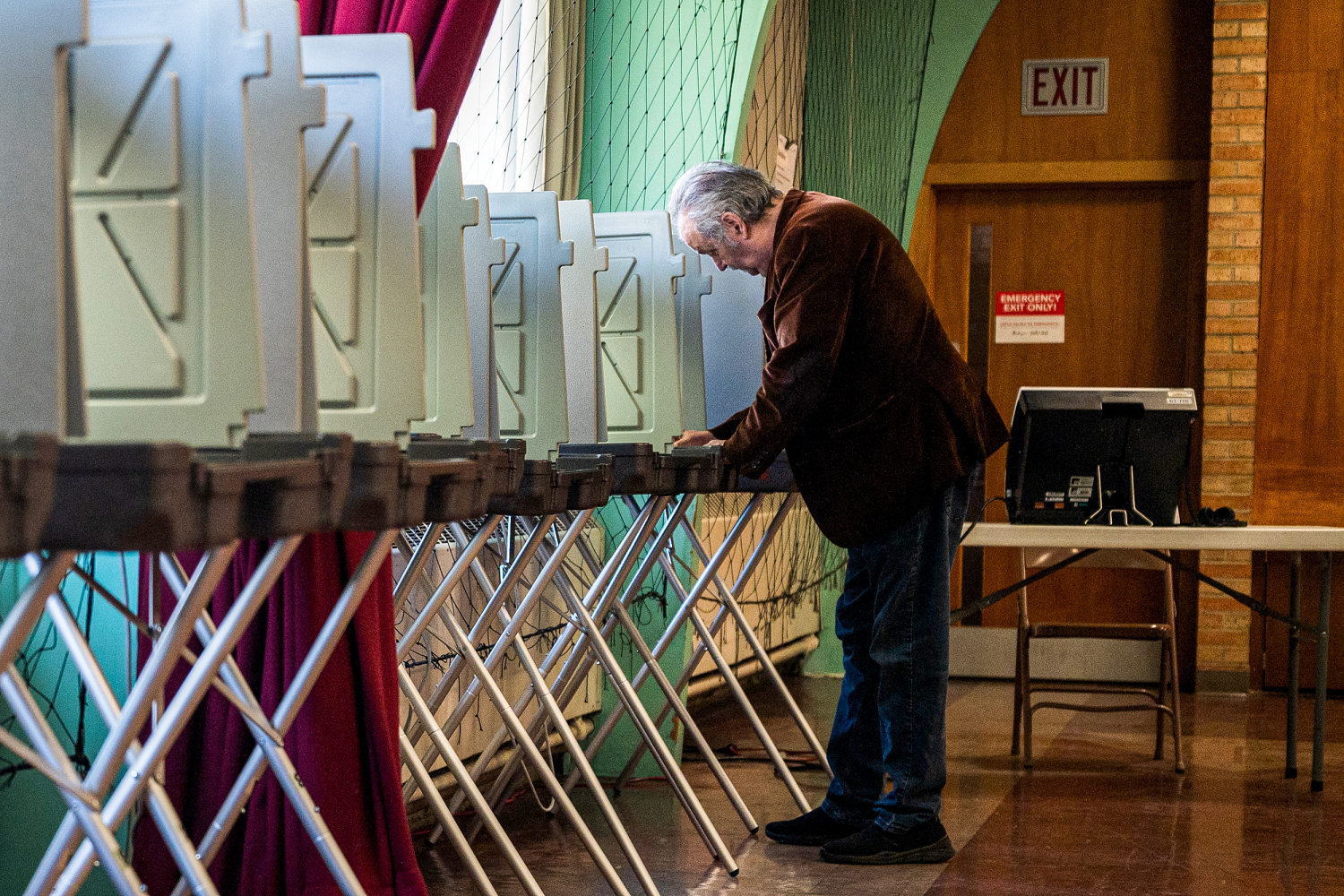
Most pundits talk about a "blue wave" like it’s a sudden tsunami that wipes the political map clean overnight. They’re wrong. In American politics, a wave election isn't just about Democrats winning a few extra seats in Congress—it’s a structural shift that flips state legislatures, alters redistricting maps for a decade, and forces the opposing party into a total identity crisis.
When people search for what a blue wave could look like, they usually want a simple headcount. How many House seats flip? Does the Senate turn blue? Honestly, those numbers are just the surface. Having spent years tracking precinct-level turnout data and historical midterm swings, I can tell you that the real story happens in the places nobody watches on election night. It happens in suburban county commissions, state attorney general offices, and down-ballot judicial races. Also making headlines in this space: Blaming E-Bikes for Organized Crime is a Failure of Urban Governance.
If you want to understand what a genuine Democratic surge looks like in practice, you have to look at the mechanics behind past waves like 2006, 2008, and 2018, and map those exact pressures onto our current political reality.
The Anatomy of a Modern Blue Wave
A true wave doesn't happen because one party suddenly becomes wildly popular. It happens because the party in power alienates its own base while accidentally uniting the opposition. More information into this topic are detailed by BBC News.
Look back at the 2018 midterm elections. Democrats gained 41 seats in the U.S. House of Representatives, their largest net gain since the post-Watergate election of 1974. According to data from the Pew Research Center, turnout surged to 50.3% of the voting-eligible population—the highest rate for a midterm since 1914. That wasn't a gentle tide. It was a massive mobilization driven by suburban college-educated voters who felt alienated by the White House, paired with younger voters showing up at rates that shocked traditional pollsters.
In a modern scenario, a blue wave requires three distinct things happening at the exact same time:
- Suburban realignment accelerates. Counties surrounding major metros—places like Maricopa in Arizona, Oakland in Michigan, or Bucks in Pennsylvania—don't just lean blue; they break heavily toward Democratic candidates across the entire ticket.
- Turnout gaps vanish. Historically, midterm and off-year elections favor older, more conservative demographics. A blue wave erases that advantage because younger voters and irregular voters treat a midterm like a presidential race.
- Unlikely districts come into play. When the generic congressional ballot favors Democrats by seven points or more, seats rated "Likely Republican" by analysts like the Cook Political Report suddenly become toss-ups.
Think about what that means on the ground. It means candidates who were originally recruited just to put a name on the ballot suddenly find themselves raising millions of dollars in October.
Why the House and Senate React Differently
People often assume a wave sweeps both chambers of Congress equally. It doesn't. The U.S. House of Representatives is designed to be a thermometer—it reacts instantly to the national mood because all 435 seats are up every two years. The Senate is more like a thermostat; it adjusts slowly, and the map dictates everything.
In 2018, while Democrats were crushing it in the House, they actually lost two seats in the Senate. Why? Because the map forced them to defend ten seats in states Donald Trump had won two years earlier, including North Dakota, Indiana, and Missouri. Even a massive national wave couldn't overcome the sheer gravity of state-level partisanship in deeply red areas.
The House Threshold
For Democrats to claim a decisive wave in the House, winning a bare majority of 218 seats isn't enough. A five-seat majority is a governance nightmare where three defectors can kill any bill. A real wave pushes the margin past 230 seats.
At that threshold, Democratic leadership gains actual breathing room. Committee chairs flip immediately. Suddenly, the House isn't just passing messaging bills; it's issuing subpoenas, launching oversight investigations into executive agencies, and controlling the federal budget process from the ground up.
The Senate Bottleneck
In the Senate, a blue wave looks much more subtle. Because only a third of the chamber is on the ballot in any given cycle, Democrats have to thread a needle. A wave year allows them to hold onto vulnerable incumbents in swing states like Pennsylvania, Michigan, or Georgia while picking off one or two reach targets in states like North Carolina, Texas, or Florida.
Even a 51-49 or 52-48 Senate majority changes the entire trajectory of federal governance. Why? Judicial confirmations. Without the Senate, a president's judicial nominees are dead on arrival. With a wave-backed Senate majority, Democrats can confirm federal district and appellate judges at a rapid clip, shaping constitutional interpretation for the next thirty years.
The Statehouse Factor Nobody Talks About
If you only watch national cable news on election night, you'll miss the most consequential part of a blue wave. State legislatures are where policy actually touches your daily life, and they're where a wave leaves its deepest mark.
Look at what happened in Michigan in 2022. Democrats didn't just re-elect Governor Gretchen Whitmer; they flipped both chambers of the state legislature for the first time in nearly 40 years. Within months of taking the "trifecta"—control of the governorship, the state House, and the state Senate—they repealed the state's right-to-work law, enacted universal background checks for gun purchases, codified abortion rights, and expanded LGBTQ+ protections.
That is what a blue wave looks like in action. It isn't abstract.
When a wave hits at the state level, it triggers immediate policy cascades:
- Voting access expands. Wave-elected Democratic majorities typically pass automatic voter registration, expand early voting windows, and make mail-in voting permanent.
- Reproductive rights get codified. Following the Supreme Court's Dobbs decision, state-level waves have become the primary vehicle for enshrining abortion access into state constitutions and statutes.
- Labor and minimum wage laws shift. Blue trifectas consistently raise state minimum wages, mandate paid family leave, and strengthen union bargaining power.
- Climate and energy targets harden. States like Minnesota, after Democrats secured a trifecta in 2022, passed laws requiring 100% carbon-free electricity by 2040.
You can't undo those changes easily. Once a state legislature passes a clean energy mandate or expands Medicaid—as several states have done via ballot measures and legislative action—the political baseline shifts permanently.
What History Tells Us About Wave Backlashes
Here is the uncomfortable truth that political operatives rarely admit publicly: every wave creates the conditions for its own demise.
Newton's third law applies to American elections. For every massive political action, there is an equal and opposite reaction. Look at the historical rhythm over the last two decades:
- 2006 and 2008: Massive Democratic waves sweep George W. Bush's Republicans out of Congress and put Barack Obama in the White House with a filibuster-proof Senate majority (briefly).
- 2010: Two years later, the Tea Party movement fuels a historic Republican wave that flips 63 House seats and reshapes state legislatures just in time for the 2010 census redistricting.
- 2018: Democrats ride a blue wave back into House power.
- 2020 and 2022: Republicans claw back House seats, eventually retaking a narrow majority in 2022 despite underperforming expectations in the Senate.
Why does this happen? Because wave coalitions are fragile.
To win in conservative or purple districts, Democrats have to run moderate candidates who appeal to independent, ticket-splitting voters. Meanwhile, the progressive wing of the party, energized by the massive victory, demands bold, sweeping legislation.
If the party governs too far to the left, those moderate freshmen in swing districts get wiped out two years later. If the party governs too cautiously, the base stays home in the next election. Managing a wave majority is arguably harder than winning it in the first place.
Misconceptions About Voter Demographics
A lot of outdated political wisdom still floats around regarding who actually powers a blue wave. The old textbook model—often called the "Obama Coalition"—assumed that demographic destiny alone would hand Democrats permanent majorities as the country became more diverse.
That theory is dead. Recent election cycles, analyzed extensively by groups like Catalist, proved that voters of color are not a monolith. Hispanic and Black voters have shown notable shifts toward Republican candidates in certain regions, particularly among non-college-educated men.
Instead, a modern blue wave is increasingly powered by the diploma divide.
College-educated voters—especially suburban women—have become the most reliable engine of Democratic turnout. They vote in every election, they donate consistently, and they volunteer for local campaigns. At the same time, Democrats have had to fight tooth and nail to keep union households and working-class voters in the Rust Belt from drifting away.
A blue wave today doesn't mean winning 90% of every minority group. It means running up massive margins in educated suburbs, holding the line in urban centers, and losing rural counties by 30 points instead of 50 points. That math—cutting losses in red areas while maximizing turnout in blue ones—is how modern waves are actually built.
How to Spot a Blue Wave Before Election Day
Polls can be noisy, and pundits love horse-race drama. If you want to know whether a blue wave is actually forming weeks before November, ignore the national cable chatter and watch the concrete indicators that political professionals track.
Special Election Overperformance
This is the single best leading indicator in politics. Between general elections, dozens of special elections happen for vacant state legislative and congressional seats. Analysts at FiveThirtyEight and independent data trackers measure how candidates perform compared to the district's partisan lean.
When Democrats consistently outperform the baseline by 8, 10, or 12 points in random off-year special elections in places like Alabama, Ohio, or New York, a wave is brewing. Special elections measure pure enthusiasm. Only the most motivated voters show up on a random Tuesday in April.
Small-Dollar Fundraising Velocity
Big corporate PAC money hedges its bets. Small-dollar grassroots donations tell you where the genuine anger or excitement lives. Platforms like ActBlue publish quarterly transparency reports detailing total dollars raised and unique donor counts.
When you see an explosion in first-time donors giving $15 or $25 to long-shot challengers in red states, pay attention. That kind of organic financial energy means campaigns can afford field offices, digital ads, and voter registration drives in places the national party usually ignores.
Candidate Recruitment and Retirements
Politicians have sensitive survival instincts. Watch who decides to retire early.
When you see a sudden wave of veteran Republican House members announcing they won't seek re-election—especially those sitting in districts that lean slightly conservative—it means their internal polling looks grim. Nobody wants to spend two years raising millions of dollars just to lose their seat and end their career in defeat. Conversely, when Democrats recruit high-profile local mayors, veterans, and prosecutors in tough districts, it signals they see a genuine opening.
What You Should Watch Moving Forward
If you're trying to track whether the political tide is genuinely turning, stop refreshing national generic ballot polls every morning. National numbers flatten out the regional dynamics that actually decide control of Congress and state capitals.
Instead, build a simple watchlist of bellwether indicators over the coming months:
- Follow state-level special elections in swing states like Pennsylvania, Wisconsin, and Virginia to see if Democratic candidates are beating their historical baselines.
- Track voter registration surges among women and voters under 30 in battleground counties, particularly following major Supreme Court rulings or state legislative battles.
- Monitor early mail-in ballot requests in states that release partisan breakdown data, such as North Carolina, Florida, and Pennsylvania, during the final four weeks before Election Day.
- Watch the "reach" races. Keep an eye on ratings shifts from nonpartisan handicappers—when solid conservative seats move to "Lean Republican" or "Toss-Up," the wave is no longer theoretical.
Understanding a blue wave comes down to looking past the dramatic headlines and focusing on the mechanics of turnout, redistricting, and down-ballot power. Keep your eyes on the suburbs, watch the special election margins, and pay attention to the statehouses—that's where the real political earthquakes happen.