The headlines are screaming about "World War III" and "Energy Armageddon" because Donald Trump threatened to flatten Iranian power plants if they touch the Strait of Hormuz. It is the same tired, linear thinking that has failed every Western intervention for forty years. The media treats the electrical grid like a "reset button" for a nation’s compliance. They are wrong.
In reality, targeting civilian infrastructure in a country with a sophisticated, decentralized industrial base isn't a masterstroke. It is an invitation to a global economic heart attack that the United States is uniquely unprepared to survive. If you think the "shock and awe" of 2003 is the blueprint for 2026, you haven't been paying attention to how modern asymmetric warfare actually functions.
The Myth of the Strategic Blackout
The prevailing "lazy consensus" among defense hawks is that if you turn off the lights in Tehran, the regime collapses. History screams otherwise. When you destroy a nation's power generation, you don't trigger a democratic uprising; you trigger a humanitarian catastrophe that cements the ruling class's grip through the total control of remaining resources.
Iranian energy infrastructure is not a single, fragile wire. It is a deeply integrated, redundant network that has been battle-hardened by decades of sanctions. Unlike the American grid—which is a patchwork quilt of aging private utilities held together by duct tape and prayers—Iran's Ministry of Energy has spent twenty years preparing for exactly this scenario. They have invested heavily in small-scale, distributed generation and underground hardened facilities.
When you strike a central thermal plant, you aren't just hitting a "military target." You are destroying the water desalination plants that keep millions alive. You are killing the refrigeration for medicine. You are creating a refugee crisis that will flood America's allies in Europe, destabilizing the very coalitions needed to contain Iran in the first place. This isn't "leverage." It’s an own goal.
The Strait of Hormuz is a Red Herring
The threat to close the Strait of Hormuz is the oldest card in the deck, and we keep falling for it. The "experts" talk about the 21 million barrels of oil that pass through that 21-mile-wide chokepoint every day as if that’s the only stake.
It isn't about the oil anymore. It’s about the insurance.
The moment a single missile is fired toward an Iranian power plant, the maritime insurance market (Lloyd’s of London and the like) will reclassify the entire Persian Gulf as a "War Risk" zone. Premiums will skyrocket by 1,000% overnight. It doesn't matter if Iran actually manages to sink a tanker or "close" the strait. The mere possibility of a kinetic exchange makes shipping economically impossible for 90% of the world’s fleet.
Why the US Loses the Attrition Game
I have watched analysts ignore the most basic law of thermodynamics in warfare: the cost of the offense must be lower than the cost of the defense.
The US spends $2 million on a single Tomahawk cruise missile to blow up a transformer that costs $150,000 to manufacture. Iran, meanwhile, uses $20,000 Shahed-series drones to target the multi-billion dollar Aegis Ashore systems or carrier strike groups protecting the region.
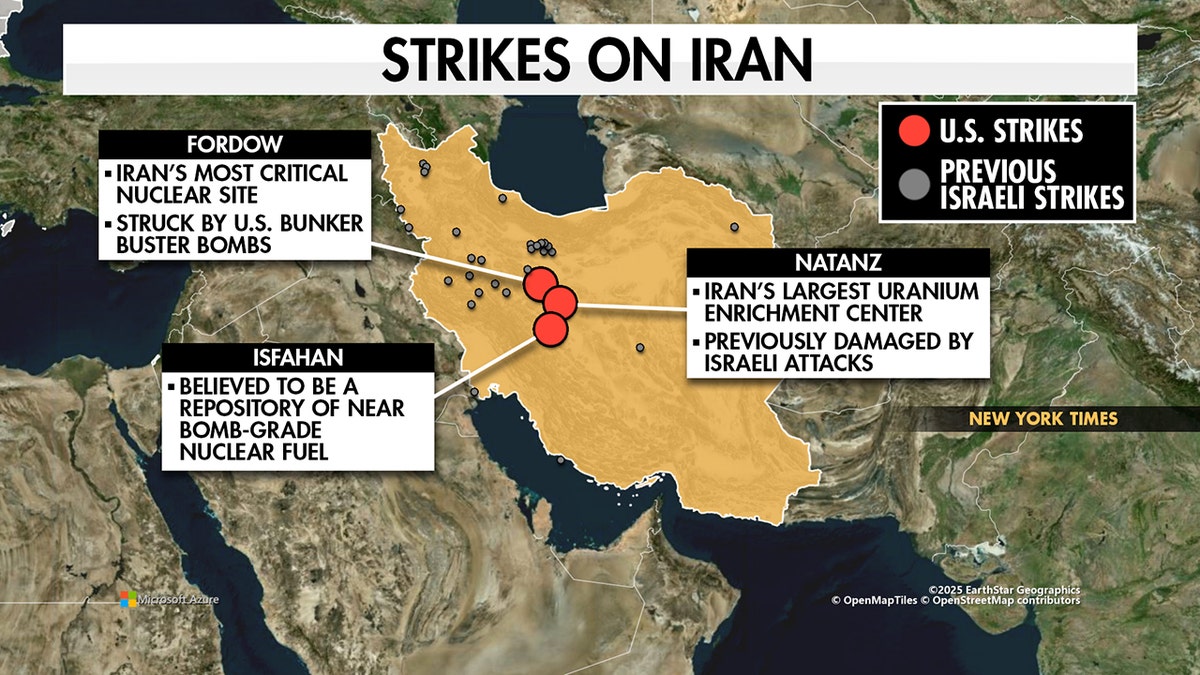
We are trying to play 18th-century "Grand Strategy" with 21st-century "Disposable Tech." If the US starts a campaign against Iranian power plants, Iran won't just sit there. They will activate "Sector 4" cyber-capabilities that have been dormant in the US Western Interconnection for years. While we are busy patting ourselves on the back for darkening a few blocks in Isfahan, the Pacific Northwest could lose its entire grid to a logic bomb that was planted back in 2019.
The "Energy Independence" Lie
"But we're energy independent now!" the pundits shout. This is a fundamental misunderstanding of how global commodities work. Oil is a fungible, globally priced asset. Even if the US produces every drop it consumes, if 20% of the world's supply is threatened, the price at a pump in Ohio goes to $8.00 a gallon.
The US economy is a debt-fueled engine that relies on low-interest rates and stable energy prices. A sustained conflict in the Gulf doesn't just "spike" prices; it breaks the back of the American middle class and sends the dollar into a tailspin as China and the BRICS nations pivot to a non-dollar settlement for the "emergency oil" they'll be buying from Russia.
Dismantling the "People Also Ask" Delusions
"Can Iran actually close the Strait of Hormuz?"
They don't have to "close" it with a chain. They can make it a "no-go zone" using thousands of smart mines and anti-ship cruise missiles hidden in the mountainous coastline. The US Navy can sweep mines, sure, but can they do it while being swarmed by 500 fast-attack boats? No.
"Would attacking power plants end the nuclear program?"
It’s the opposite. If you take away a nation's ability to generate civilian power, you provide them with the perfect moral and legal justification to accelerate uranium enrichment for "nuclear energy" (and the bombs that follow). You are literally handing them the PR victory they need to go fully kinetic.
"Is Trump just using 'Madman Theory'?"
The Madman Theory only works if the other side believes you have a plan for the "day after." Threatening to destroy the grid shows that there is no plan—only a reaction. It signals weakness, not strength. It shows that the US has run out of diplomatic and economic tools and is resorting to the blunt force of a caveman.
The Real Counter-Intuitive Play
Stop looking at Iran as a "rogue state" and start looking at it as a regional competitor that is currently winning the influence war because the US refuses to adapt.
The superior move isn't to bomb their power plants; it’s to make their power plants irrelevant.
Instead of $100 billion on a new carrier group to sit in the Gulf like a sitting duck, the US should be flooding the region with decentralized energy technology—hydrogen, modular solar, and small-scale battery storage—to the neighbors (UAE, Saudi, Kuwait). If you remove the region's reliance on centralized, vulnerable infrastructure, you remove Iran's ability to hold the world's energy supply hostage.
You don't win a fight by burning down your opponent's house when you both live in a neighborhood made of dry tinder. You win by making yourself fireproof.
The current path isn't "toughness." It's a temper tantrum with global consequences. We are one miscalculation away from realizing that the "Greatest Military in History" can be defeated by a $500 drone and a surge in insurance premiums.
Stop cheering for the blackout. You might be the one sitting in the dark.
Don't wait for the first missile to fly to hedge your portfolio against a 400% increase in maritime freight costs. All the "stability" we've enjoyed since the 1970s was built on a fragile agreement that we would never actually do what Trump just threatened. The agreement is dead. Act accordingly.
The next move isn't a diplomatic cable. It's a logistics overhaul. If you aren't prepared for a world where the Persian Gulf is a dead zone, you are the casualty of a war that hasn't even started yet.