The Illusion of Kinetic Competence
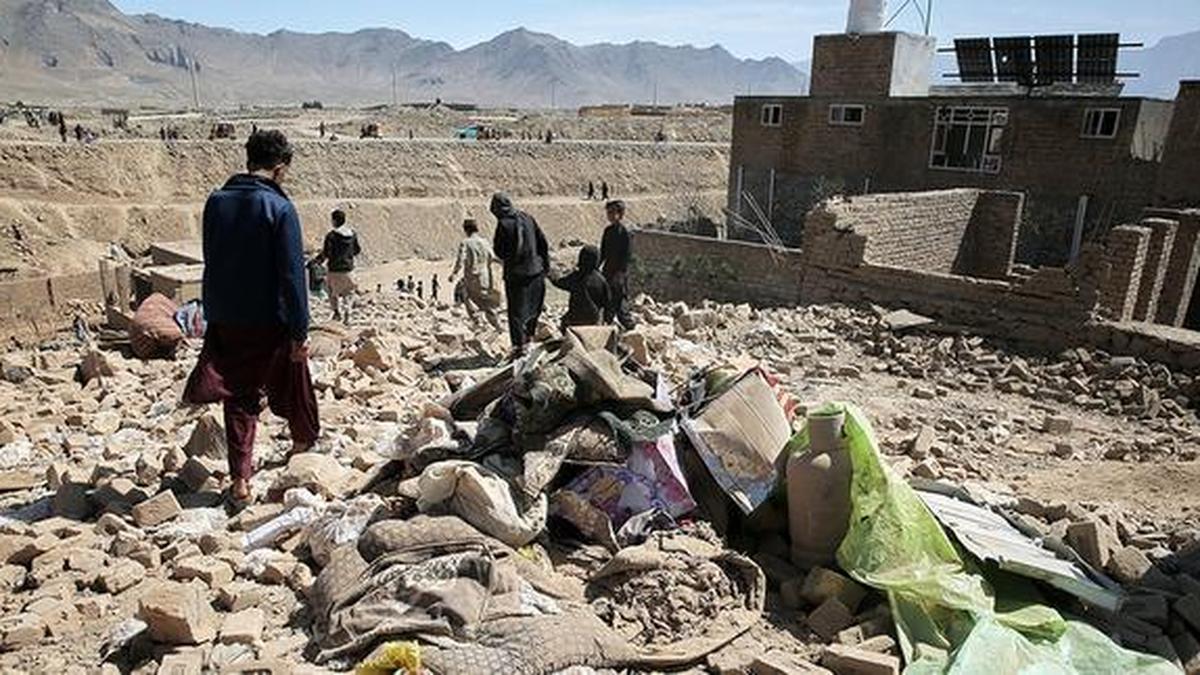
Pakistan’s recent airstrikes into Khost and Paktika provinces in Afghanistan are being framed by Islamabad as a necessary response to "terrorist hideouts." This is a lie. Not because the hideouts don’t exist—the Tehrik-i-Taliban Pakistan (TTP) is very real and very lethal—but because these strikes are a performance of strength meant to mask a total collapse of regional leverage.
For decades, the Pakistani security apparatus operated on the "Strategic Depth" doctrine. The idea was simple: ensure a friendly, or at least compliant, government in Kabul to avoid a two-front war. They got exactly what they wanted in August 2021. And now, they are finding out that winning is often more expensive than losing.
The standard media narrative focuses on the "rising tension" between two neighbors. That is a lazy consensus. The truth is far more embarrassing for the nuclear-armed state. These strikes represent the final admission that Pakistan’s multi-decade investment in the Afghan Taliban has yielded a zero-percent return.
The TTP Is Not an External Problem
If you listen to the official statements from Islamabad, the TTP is a foreign-funded entity operating from the sovereign soil of Afghanistan. This framing ignores the math of the insurgency.
The TTP is an organic, local byproduct of Pakistan's own internal contradictions. By hitting targets in Afghanistan, the military is treating the symptom while the infection continues to rot the body from the inside.
- The Sovereignty Trap: Every time a Pakistani jet crosses the Durand Line, it validates the Afghan Taliban’s nationalist credentials. It allows the Taliban in Kabul—who are currently struggling with a failing economy—to pivot to the role of "Defenders of the Soil."
- The Recruitment Loop: Kinetic operations in tribal regions have a historically high "blowback" coefficient. You kill one commander and create ten martyrs for a cause that thrives on grievances against the center.
- The Intelligence Blind Spot: You cannot bomb an ideology out of existence when that ideology shares the same DNA as the "Good Taliban" you supported for twenty years.
The military logic here is $X + Y = 0$, where $X$ is the kinetic strike and $Y$ is the inevitable retaliatory suicide bombing in Peshawar or Quetta. It is a closed loop of violence that serves no one but the hardware manufacturers.
Stop Asking if the Strikes Worked
People keep asking, "Will these strikes deter the TTP?" This is the wrong question. Deterrence requires a rational actor on the other side who fears loss. The TTP is not a state. It does not have a central bank, a power grid, or a population it needs to keep happy.
The real question is: Why did the Afghan Taliban, Pakistan's erstwhile proteges, choose the TTP over their former patrons?
The answer is simple: Blood is thicker than border checks. The Taliban in Kabul and the TTP fought side-by-side against the US-led coalition. Expecting the Taliban to hand over their brothers-in-arms to the Pakistani state was a delusion of the highest order.
I have seen this movie before. In the mid-2000s, the "border management" strategy was sold as a fix. Billions of dollars and a massive fence later, the border is more porous than ever because the people living on it don't recognize the line drawn by Sir Mortimer Durand in 1893. If a 1,600-mile fence didn't stop them, a few 500lb bombs certainly won't.
The Economic Suicide of a Two-Front War
Pakistan’s economy is currently on a ventilator provided by the IMF. The country is navigating a debt-to-GDP ratio that makes growth almost impossible. In this context, picking a fight with the only neighbor that provides a land bridge to Central Asian markets is a special kind of short-sightedness.
- Trade Disruptions: Every strike leads to border closures. Torkham and Chaman are the arteries of regional trade. When they close, Pakistani exporters lose millions, and the Afghan market simply shifts toward Iranian or Chinese goods.
- Defense Spending: A hot border in the West means the "India-centric" posture in the East becomes even more expensive. You cannot maintain a high-readiness state on two fronts when your foreign exchange reserves can barely cover two months of imports.
- Investment Chill: Capital is a coward. It doesn't flow into regions where the local air force is bombing the neighbors.
The "contrarian" truth is that Pakistan needs a stable, prosperous Afghanistan more than the Taliban needs a stable Pakistan. The leverage has flipped.
The Myth of the "Surgical Strike"
There is no such thing as a surgical strike in the mountains of Khost. The terrain is a nightmare of caves, ridges, and civilian settlements. When the Pakistani government claims "intelligence-based operations," they are usually working with human intelligence that is often compromised by local tribal feuds.
Imagine a scenario where a strike meant for a TTP cell actually hits a family compound because a local informant wanted to settle a land dispute. This isn't a thought experiment; it's the history of the Global War on Terror. The Result? You don't just miss the target; you create a decade-long vendetta (Badal) that ensures the next generation of fighters is already signed up.
Abandon the Durand Line Obsession
The international community keeps looking at the Durand Line as a fixed variable. It isn't. No Afghan government—communist, mujahideen, republic, or Taliban—has ever formally accepted it.
Pakistan’s insistence on treating this as a standard international border is the root of the friction. To the tribes on the ground, the border is an inconvenience, not a reality. Until Islamabad accepts that its Western border requires a socio-economic solution rather than a military one, the jets are just burning fuel and burning bridges.
The status quo is a slow-motion car crash. The "insiders" will tell you that the military is "re-establishing red lines." I’m telling you the red lines were erased years ago.
Stop thinking about this as a "clash of states." It is a clash between a 20th-century state model and a 14th-century tribal reality. The 20th-century model is losing.
If you want to solve the TTP problem, you don't look toward Kabul. You look toward the socio-political vacuum in the Khyber Pakhtunkhwa province. You look at the lack of schools, the absence of a functional judiciary, and the economic disenfranchisement that makes a rifle and a paycheck from the TTP look like a viable career path.
Bombing Afghanistan is the easy way out. It’s a headline. It’s a distraction. And it’s a total failure of imagination.
The next time you see a headline about "precision strikes," look at the exchange rate and the poverty levels in the border districts. That’s where the real war is being lost.