The salt air at Subic Bay smells of rust, diesel, and old promises.
If you stand near the edge of the former naval airstrip on a humid Tuesday morning, you can still feel the ghost of a superpower vibrating through the cracked asphalt. For decades, this deep-water port was the beating heart of American projection in the Pacific, a place where hulls were welded, engines were rebuilt, and local hands learned the intimate, greasy grammar of heavy industry. When the Americans left in 1992, they left behind runways long enough for bombers and a workforce hungry for the next big thing.
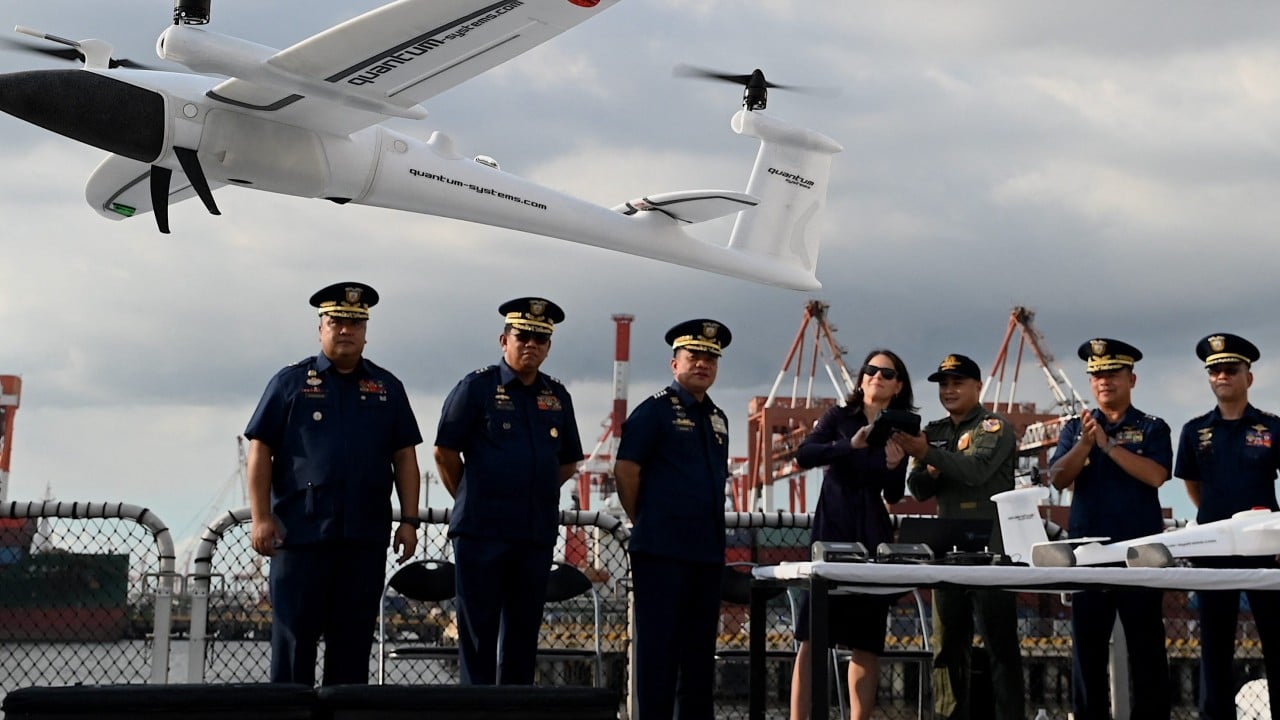
Thirty-four years later, the runways are busy again. The hum in the sky is higher-pitched now, a persistent, insectoid whine that cuts through the coastal breeze. American defense contractors and innovation hubs have returned to the Philippines, bringing sleek carbon-fiber unmanned aerial vehicles, autonomous maritime gliders, and high-altitude surveillance drones. On paper, it looks like a renaissance. Press releases celebrate historic defense cooperation, rapid modernization, and a bold new chapter for Pacific security.
Look closer at the hangars, though. They are nearly empty of local assembly lines.
The deal on the table is simple, pragmatic, and quietly devastating if you understand how nations actually build wealth. Washington’s premier defense drone accelerators are offering the Philippines a coveted role in the future of warfare and autonomous logistics. They are offering test flights. They are offering tropical proving grounds, rough sea states, dense jungle canopies, and contested airspace where American engineers can stress-test their sensors and battery packs against real-world chaos.
What they are not offering are factories.
The Runway Versus the Assembly Line
To understand why this distinction matters, consider a hypothetical character—let’s call him Mateo. Mateo is twenty-six, holds an aerospace engineering degree from a university in Manila, and spent his college nights soldering flight controllers onto homemade quadcopters. When news broke that a major US drone hub was partnering with Philippine defense officials to establish testing corridors in Luzon, Mateo updated his resume before the ink on the press release was dry. He pictured clean rooms, composite molding bays, precision CNC machines, and a career building the hardware that would patrol his own country’s fractured maritime borders.
Instead, Mateo’s prospective job description looks a lot like a glorified ground-crew valet.
He would be permitted to clear the tarmac, check wind speeds, log telemetry data into a locked tablet, and haul damaged airframes back into shipping containers to be flown back to California or Texas for actual repair. The intellectual property stays sealed inside black-box firmware. The carbon-fiber layups happen in North American facilities. The lucrative supply chains—the brush-less motors, the encrypted radios, the optical gimbals—remain tightly guarded thousands of miles away across the International Date Line.
This is the invisible divide in modern defense technology, and it is easy to miss if you only read the headlines.
In the twentieth century, when a superpower allied with a developing nation, the bargain usually involved metal-bending. Think of how South Korea and Taiwan climbed the industrial ladder during the Cold War. They did not just host American bases; they absorbed American manufacturing tolerances. They started by assembling licensed rifles, radios, and airframes under strict supervision, gradually mastering the metallurgy, the electronics, and the supply-chain discipline required to eventually build their own world-beating industries.
The twenty-first-century drone economy operates on a fundamentally different logic. Hardware is treated like a disposable shell, while the real value lives in proprietary code, restricted chipsets, and tightly held domestic manufacturing mandates back in the United States.
Why Washington Guards the Blueprints
It would be easy to paint American defense planners as villains here, hoarding their toys while asking an ally to shoulder the geopolitical risk. That would be a lazy reading of a much more complicated reality.
Spend ten minutes talking to anyone who has tried to navigate US export controls, and you quickly realize the hesitation is rooted in genuine, white-knuckle paranoia. Under the International Traffic in Arms Regulations—known in the industry simply as ITAR—sharing the blueprint for a military-grade drone motor or a secure autonomous navigation algorithm is treated almost like sharing nuclear secrets. Washington has spent the last decade watching rival powers vacuum up commercial intellectual property, reverse-engineer Western components, and flood global markets with cheap, capable knockoffs.
From the perspective of a program manager in Arlington, Virginia, keeping the factories at home is common sense. Supply chains are fragile. Congress demands that defense dollars create jobs in Ohio, Arizona, and Alabama, not Pampanga or Cebu. Furthermore, standing up a certified aerospace manufacturing facility in a new country takes five to seven years, hundreds of millions of dollars in tooling, and an army of quality-control auditors.
Meanwhile, the clock in the South China Sea is ticking right now.
American drone startups and established defense hubs do not have seven years to train a foreign supply chain. They need data today. They need to know how their salt-fog coatings hold up after forty hours of hovering over the West Philippine Sea. They need to see how their autonomous swarm algorithms behave when signal jamming spikes near disputed shoals. The Philippines offers something no desert testing range in Nevada or Arizona can ever replicate: authentic, unforgiving tropical maritime friction right next door to a peer adversary.
So the hub offers what is fast. It offers test flights.
The Illusion of Technology Transfer
I have watched this exact dynamic play out in other sectors over the last fifteen years, from semiconductor packaging to renewable energy grid deployments. The pattern is always seductive at first. A wealthy partner arrives with gleaming equipment and a rhetoric of "capacity building." Local officials cut ribbons. Photographs are taken in front of futuristic aircraft. Everyone uses words like partnership and co-development.
Then, three years pass. The grant money dries up, or the testing phase concludes. The engineers pack their Pelican cases, load the prototypes onto a cargo plane, and fly home to begin mass production. When you walk back onto the tarmac a month later, nothing remains except tire marks and a few framed certificates on a ministry wall.
Think of it like a Michelin-starred chef renting out a neighborhood kitchen for a month to test a new menu. The chef pays the electric bill, lets the local line cooks chop onions and wash the copper pans, and serves a few free samples at the end of the shift. When the menu is perfected, the chef leaves to open a flagship restaurant across town—taking the recipes, the suppliers, and all the profits along with them. The neighborhood kitchen got a burst of excitement and a little rent money, but nobody there learned how to run a restaurant.
That is the quiet trap of being a testing ground.
Testing builds familiarity, not capability. Knowing how to launch a drone, monitor its battery voltage, and catch it in a recovery net is a useful operational skill. It makes the Philippine military a smarter, more agile customer. It allows local forces to spot coast guard intrusions faster and map remote islands after typhoons. Nobody in Manila would argue that better maritime awareness is a bad thing when fishing boats are being harassed twenty miles off their coast.
Yet operational familiarity is a dead end for economic transformation. If a country never learns to wind the copper coils in the motors, etch the circuit boards, or mold the composite wings, it remains permanently dependent on foreign replenishment. In a real crisis—the exact kind of conflict these drones are being tested to deter—supply lines across the Pacific could be severed in days. A warehouse full of grounded drones waiting for spare parts from a factory six thousand miles away is just a museum of expensive plastic.
What the Headlines Miss About Industrial Sovereignty
There is an uncomfortable truth that rarely surfaces in polite diplomatic communiqués: the Philippines has been trying to build a self-reliant defense posture for decades, and it has repeatedly stumbled on the same threshold.
In the 1970s, Manila launched an ambitious program to assemble trainer aircraft and light patrol boats locally, hoping to spark an indigenous aerospace and maritime sector. Political upheaval, chronic underfunding, and the sheer gravity of cheap foreign imports stalled the effort. By the time the modern era arrived, the country possessed one of the largest shipbuilding industries in the world by tonnage—massive yards in Subic and Cebu churning out commercial bulk carriers—yet almost zero domestic capacity to build advanced defense electronics or unmanned systems.
Now, drones offer what looks like a second chance. Unlike fighter jets, which require billion-dollar wind tunnels and decades of metallurgical mastery, small and medium unmanned aircraft sit right at the intersection of commercial consumer electronics and military utility. A talented team of twenty engineers in a modest industrial park can design, prototype, and manufacture a capable reconnaissance drone—if they have access to the capital, the component ecosystem, and the anchor orders to survive their first three years.
When a powerful foreign drone hub enters the market offering free or subsidized test flights of superior American hardware, it inadvertently reshapes the local incentives. Why should a cash-strapped defense department invest ten million dollars into a fledgling, imperfect Filipino drone startup when an American accelerator will fly vastly more advanced prototypes over the same waters for a fraction of the upfront cost?
The answer is invisible on a quarterly spreadsheet, but obvious over a twenty-year horizon.
You invest in the local factory because factories create ecosystems. When a drone factory opens in Batangas or Clark, it needs local machine shops to mill aluminum brackets. It needs technical schools to train composite technicians. It needs software graduates writing ground-control interfaces. Those engineers eventually leave, start their own companies, and build agricultural spraying drones for rice farmers in Nueva Ecija or medical delivery quadcopters for isolated clinics in Palawan.
A test range creates none of that spillover. A test range is a fenced-off bubble. Data flows out through encrypted satellites; nothing of lasting industrial value leaks in.
The Friction on the Tarmac
If you speak candidly with Filipino defense thinkers and mid-level officers away from the microphones, you hear a mixture of gratitude and quiet frustration. They are deeply aware of the security umbrella the United States provides, and they welcome every sensor, radar, and unmanned platform that helps them see what is happening in their own exclusive economic zone. Pretending otherwise would be naive.
At the same time, they are tired of being treated solely as real estate.
For over a century, the geography of the Philippine archipelago has been its greatest blessing and its heaviest curse. Sitting squarely across the vital sea lanes connecting the Indian and Pacific Oceans, the islands are an irreplaceable strategic chessboard. Every foreign power that has ever sailed into these waters has wanted access to the bays, the airfields, and the vantage points. Very few have wanted to build enduring, self-sustaining industry on the shore.
When an American drone hub proposes test flights without factories, it triggers an old, familiar ache. It feels like a high-tech echo of a very old arrangement: the West brings the finished machines, the host nation provides the geography and the risk, and the underlying balance of industrial power never shifts an inch.
To be fair, the American side faces real constraints that cannot simply be wished away. Even if a US drone startup desperately wanted to open a factory in Luzon tomorrow, it would run headlong into a wall of domestic regulations, venture capital mandates requiring US-based manufacturing, and local infrastructure hurdles like high electricity costs and bureaucratic permitting delays in the Philippines. Building a factory abroad is hard, slow, and politically risky. Running a flight-test campaign is fast, photogenic, and immediately useful to both militaries.
It is easy to see why both sides signed the agreement. It solves today’s urgent tactical problem while quietly punting tomorrow’s structural problem down the road.
Changing the Terms of the Flight
Does this mean the partnership is doomed to remain an unequal exchange? Not necessarily—if Manila treats test flights as an opening bid rather than the final prize.
History shows that smaller nations only extract industrial value from security partnerships when they write hard conditions into the lease. Airspace and maritime test ranges are not commodities to be given away for free; they are scarce, high-value strategic assets. If a foreign defense hub wants to gather irreplaceable tropical flight data, stress-test its autonomous swarms in contested electromagnetic environments, and validate its hardware for billion-dollar Pentagon contracts, there should be a clear price of admission beyond a few shared telemetry feeds.
That price does not have to be an immediate, full-scale factory stamping out classified stealth drones. It can start smaller, smarter, and entirely within the bounds of export laws:
- Mandatory Maintenance and Overhaul Depots: Instead of shipping damaged airframes back to North America, require partner hubs to certify and equip local Filipino facilities to perform deep structural repairs, battery rebuilds, and sensor recalibrations.
- Dual-Use Component Co-Production: Separate the sensitive military brain from the non-classified physical body. Let Filipino manufacturers build the airframes, landing gear, launch catapults, and ground-control trailers under license while keeping restricted encryption modules locked inside US-controlled boxes.
- Joint Intellectual Property Sandboxes: Fund bilateral engineering teams where Filipino university researchers and American startup engineers co-develop non-classified software—such as typhoon-tracking algorithms, coral reef mapping tools, or search-and-rescue visual recognition—that local companies can commercialize globally.
None of these steps violate American export security. All of them force knowledge, tooling, and capital to take root in Philippine soil.
Without those guardrails, the pattern will simply repeat itself. The prototypes will fly their orbits over the turquoise shoals, beaming gigabytes of priceless operational data back to servers in Virginia and California. The algorithms will grow smarter, the airframes tougher, and the valuations of the startups behind them will climb into the billions.
And down on the tarmac at Subic Bay, when the last test flight touches down and the shipping containers are latched shut for the journey home, Mateo will still be standing beside an empty hangar, watching the cargo plane lift off into the Pacific sky, wondering when it will finally be his turn to build.